US tops India's LPG suppliers in June with 773 TMT, up 19.4%
Synopsis
The US has cemented its place as India's top LPG supplier, shipping 773.78 TMT in June alone — a 19.4% monthly jump — while a long-term 2.2-million-tonne import deal from 2026 signals this is a structural shift, not a temporary workaround. India's old playbook of routing 90% of LPG through the Strait of Hormuz is quietly being rewritten.
Key Takeaways
The United States supplied 773.78 TMT of LPG to India in June 2025 , a 19.4% rise from May, retaining the top supplier position.
India's total LPG imports rose 3% month-on-month to 1,191 TMT in June, per Kpler data.
The UAE was the second-largest supplier at 157 TMT ; Saudi Arabia and Kuwait each contributed 64 TMT .
State-run refiners have signed a long-term deal to import 2.2 million tonnes of US LPG annually from 2026 .
Before the West Asia conflict , nearly 90% of India's LPG imports passed through the Strait of Hormuz .
India has secured adequate LPG and crude oil supplies through August , according to industry sources.
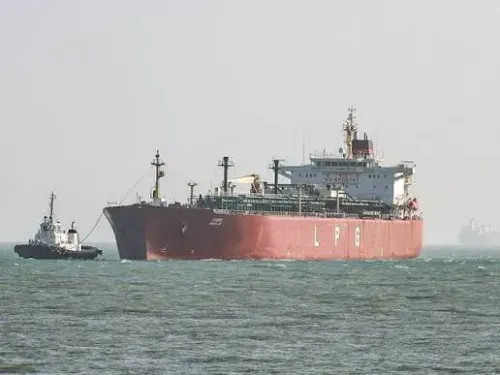
The United States retained its position as India's largest liquefied petroleum gas (LPG) supplier in June 2025, shipping 773.78 thousand metric tonnes (TMT) — a 19.4% jump from May — as New Delhi accelerated its energy import diversification amid ongoing geopolitical tensions in West Asia. Overall, India's LPG imports climbed 3% month-on-month to 1,191 TMT, up from 1,155 TMT in May, according to data from commodity analytics firm Kpler.
Key Supplier Breakdown
The UAE emerged as the second-largest LPG supplier to India in June, with shipments rising 16.6% to 157 TMT from 134.7 TMT in May. Saudi Arabia and Kuwait each contributed 64 TMT during the month. India has also broadened its sourcing basket to include Oman, Argentina, Nigeria, Algeria, and Egypt, reducing its historical concentration risk in the Gulf.
Long-Term US Energy Ties Deepening
India's growing dependence on American LPG is not incidental — state-run refiners have already signed a long-term agreement to import 2.2 million tonnes of LPG from the US beginning in 2026. The deal is designed to structurally reduce India's exposure to Gulf supply volatility while reinforcing bilateral energy ties between the two countries. Analysts view the agreement as a strategic hedge rather than a short-term pivot.
The Hormuz Factor
Before the outbreak of the West Asia conflict, nearly 90% of India's LPG imports transited through the Strait of Hormuz, underscoring the country's deep vulnerability to regional disruptions. Supply disruptions during the conflict forced state refiners to rapidly widen their sourcing mix. The subsequent reopening of the Strait has since restored the flow of Gulf energy cargoes, and industry sources indicate India has secured adequate LPG and crude oil supplies through August.
Diversification Strategy Here to Stay
Analysts believe India's multi-supplier approach is unlikely to be reversed even as regional tensions subside. The Gulf is expected to remain a critical source of both crude oil and LPG, but refiners are now structurally incentivised to maintain a broader import mix to build supply resilience. This comes amid a wider national push to insulate India's energy security from single-region concentration — a lesson the West Asia conflict reinforced sharply. The trajectory suggests India's energy import map will look meaningfully different by the time the 2026 long-term US contracts kick in.
Point of View
Gulf producers lose not just market share but leverage — and that shifts the geometry of India's energy diplomacy in ways that will outlast any single conflict.
NationPress
2 Oct 2026
Frequently Asked Questions
How much LPG did the US supply to India in June 2025?
The US supplied 773.78 TMT of LPG to India in June 2025, a 19.4% increase from May, making it India's largest LPG supplier for the month, according to Kpler data.
Why is India diversifying its LPG imports away from the Gulf?
Nearly 90% of India's LPG imports previously transited the Strait of Hormuz, making supplies vulnerable to West Asia geopolitical disruptions. The recent conflict in the region prompted Indian refiners to broaden sourcing to countries including the US, Oman, Argentina, Nigeria, Algeria, and Egypt.
What is the long-term LPG deal India signed with the US?
State-run Indian refiners have signed a long-term agreement to import 2.2 million tonnes of LPG annually from the United States, starting in 2026. The deal is aimed at reducing dependence on Gulf suppliers and strengthening bilateral energy ties.
Is India's LPG supply situation stable after the Strait of Hormuz reopened?
Yes, according to industry sources, India has secured adequate supplies of both crude oil and LPG through August 2025 following the reopening of the Strait of Hormuz, which restored the movement of Gulf energy cargoes.
Will India continue diversifying LPG sources even after tensions ease?
Analysts expect India to maintain a broader import mix even as regional tensions subside. While the Gulf will remain a key supplier, refiners are now structurally motivated to sustain multi-source procurement to enhance long-term supply resilience.