CM Sukhu launches North India's first Allied Healthcare College in Hamirpur
Synopsis
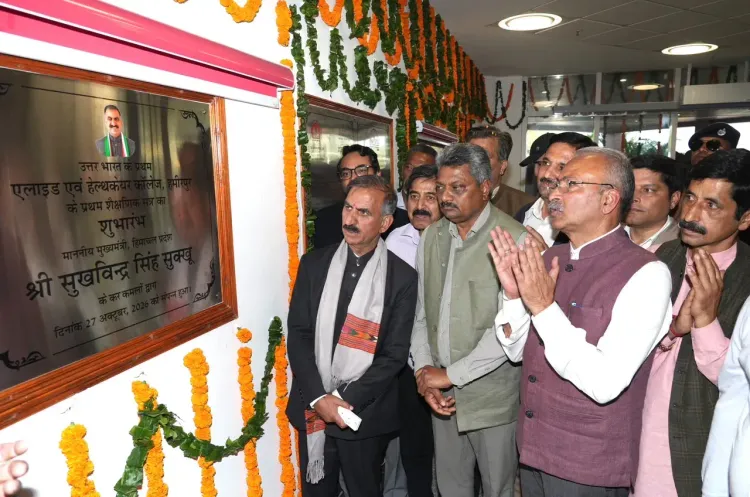
Himachal Pradesh CM Sukhvinder Singh Sukhu inaugurated North India's first Allied and Healthcare College in Hamirpur on October 27, 2026, aiming to address the state's shortage of trained paramedical workers and expand health education opportunities for local youth.
Key Takeaways
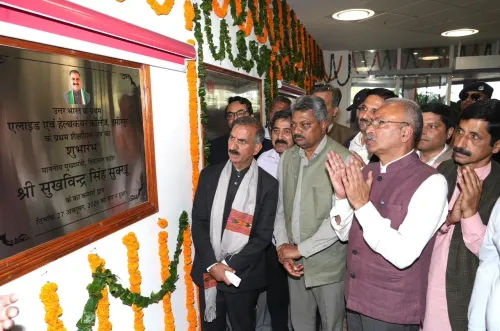
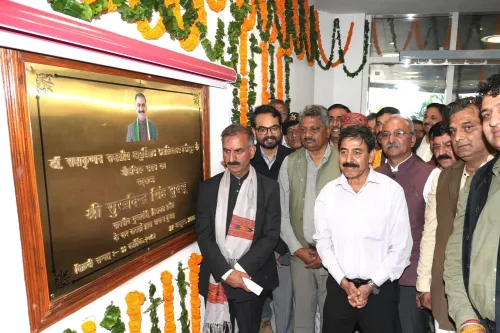
CM Sukhvinder Singh Sukhu launched the first academic session of North India's first Allied and Healthcare College in Hamirpur on October 27, 2026 .
The college is positioned as a supply-side response to the shortage of skilled allied health professionals in Himachal Pradesh .
The initiative aligns with the National Commission for Allied and Healthcare Professions Act, 2021 , which established national standards for allied health training and registration.
CM Sukhu described the institution as fulfilling a vision to provide better health-education training opportunities for the state's youth.
Hamirpur is CM Sukhu's home district and already hosts engineering and pharmacy colleges, reinforcing its higher-education profile.
Enrollment outcomes, programme range, and graduate placements in the state health system will be key indicators of the college's real-world impact.
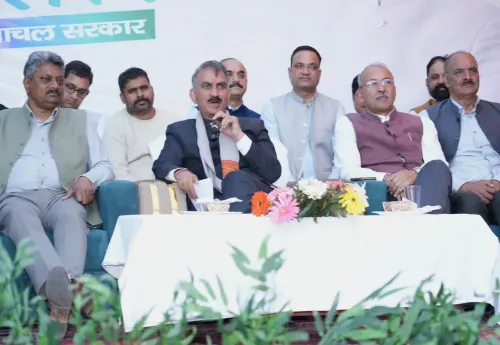
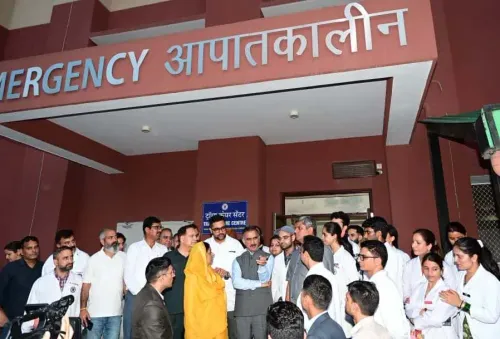
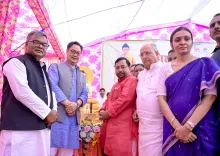
North India got its first dedicated Allied and Healthcare College on Tuesday, October 27, 2026, when Himachal Pradesh Chief Minister Sukhvinder Singh Sukhu inaugurated the institution's maiden academic session in Hamirpur — his home district — marking what the government frames as a structural fix to a chronic shortage of trained health workers across the hill state.
Posting on X in Hindi, CM Sukhu wrote: 'aaj apne grih zila Hamirpur mein Uttar Bharat ke pratham Allied and Healthcare College ke pehle shaikshanik satra ka shubharambh kiya' — 'Today I inaugurated the first academic session of North India's first Allied and Healthcare College in my home district of Hamirpur.' He added that the institution was conceptualised specifically to give the state's youth better training opportunities in health education and to ensure a supply of skilled, trained health workers to strengthen Himachal Pradesh's healthcare services.
Why Hamirpur, and why now
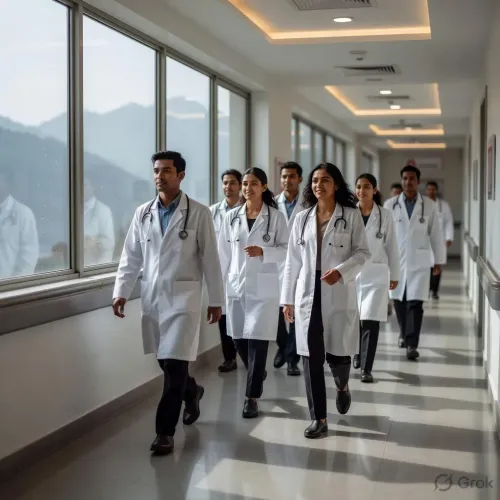
Allied and healthcare professionals — physiotherapists, radiographers, medical lab technicians, operation-theatre assistants, and dozens of other para-clinical roles — have long been the understaffed backbone of India's public health system. The National Commission for Allied and Healthcare Professions Act, 2021, enacted by the central government, created a nationwide regulatory framework for training and registration standards in these professions, effectively opening the door for states to build dedicated institutions with a clear accreditation pathway.
Several states moved quickly after the 2021 Act to plug paramedical staff gaps; Himachal Pradesh followed that trend with what it now positions as the first such standalone college in the entire northern region. Hamirpur — already home to engineering and pharmacy colleges — adds another higher-education credential to a district that punches above its size in institutional infrastructure.
What the college is meant to solve
Himachal Pradesh's dispersed mountain geography makes last-mile healthcare delivery acutely dependent on well-trained frontline workers. Without enough allied health professionals, even well-equipped district hospitals can fall short on diagnostic and therapeutic throughput. CM Sukhu's post frames the college not as a ceremonial ribbon-cutting but as a deliberate supply-side intervention: train locally, deploy locally.
'I am confident that this institution will carve out a distinct identity in the field of health education in the times to come,' he wrote — signalling an expectation of sustained growth beyond the first batch.
What to watch as the first batch begins
The real test will arrive in the next two to three years: enrollment strength in the inaugural cohort, the range of allied-health programmes on offer, state budget allocations for additional faculty and infrastructure, and ultimately placement outcomes for graduates inside Himachal Pradesh's government health system. Any expansion blueprint — a second campus, more specialisations, or a public-private model — will signal how seriously the state intends to scale the concept across the region.
For now, a regional gap has been officially closed. North India's allied healthcare education map looks different today than it did yesterday morning.
Point of View
The choice of his home district carries both administrative logic — Hamirpur already has higher-education infrastructure — and obvious political symbolism ahead of future electoral cycles. The deeper test is whether the state follows through with recurring budget support and a faculty pipeline, or whether the college remains a single-campus headline. If Himachal Pradesh can demonstrate measurable improvements in health-worker availability within its public system, the model may pressure neighbouring hill states to replicate it.
NationPress
27 Oct 2026
Frequently Asked Questions
What is the Allied and Healthcare College inaugurated in Hamirpur?
It is North India's first dedicated college for allied and healthcare professions, inaugurated by Himachal Pradesh CM Sukhvinder Singh Sukhu on October 27, 2026, to train physiotherapists, lab technicians, and other paramedical workers.
Why did CM Sukhu set up the allied healthcare college in Hamirpur?
Sukhu stated the college was conceived to provide skilled and trained health workers for Himachal Pradesh's health services and to give the state's youth better opportunities in health education; Hamirpur is also his home district.
What is the National Commission for Allied and Healthcare Professions Act 2021?
It is a central legislation enacted in 2021 to regulate and standardise education, training, and practice for allied and healthcare professionals across India, creating a uniform registration framework.
Is this the first allied healthcare college in India or just in North India?
CM Sukhu described it as North India's first Allied and Healthcare College; several other Indian states had already established similar institutions after the 2021 Act, but none in the northern region.
What courses will be offered at the Hamirpur Allied Healthcare College?
Specific programme details have not been officially confirmed in public announcements so far; the college's curriculum range and intake capacity are expected to become clearer as the first academic session progresses.