CM Rekha Gupta performs Karwa Chauth puja at Jan Seva Sadan
Synopsis
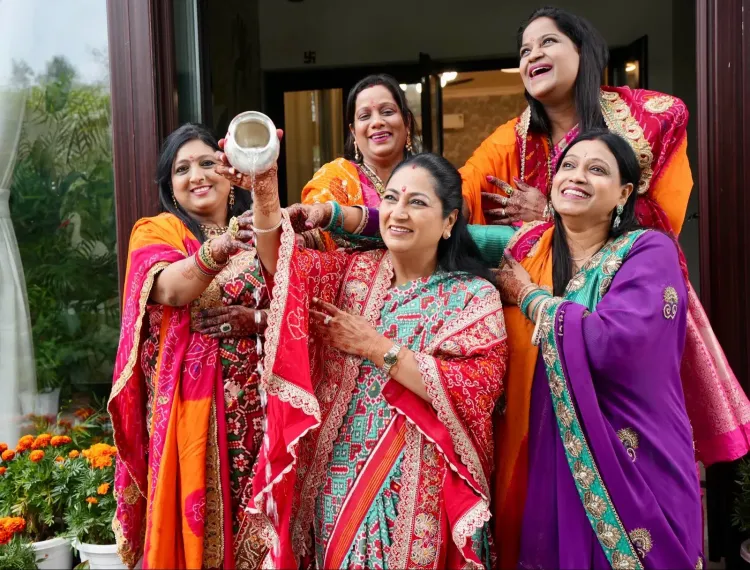
Delhi Chief Minister Rekha Gupta performed Karwa Chauth puja with family at the Chief Minister Jan Seva Sadan on 29 October 2026, calling the festival a symbol of unbreakable love, trust and devotion, and extended heartfelt wishes to all married women.
Key Takeaways
Delhi CM Rekha Gupta observed Karwa Chauth with family at the Chief Minister Jan Seva Sadan on 29 October 2026 .
She described the festival as a symbol of 'unbreakable love, mutual trust and complete devotion' rooted in Indian cultural tradition.
The CM extended wishes to all married women, praying for lives filled with love, good fortune and happiness.
Karwa Chauth is a one-day fast by Hindu married women for their husbands' longevity, broken upon sighting the moon.
Indian political leaders routinely observe and publicly mark major cultural festivals as part of long-standing practice.
With family gathered at the Chief Minister Jan Seva Sadan in Delhi, Delhi Chief Minister Rekha Gupta observed Karwa Chauth with full traditional rites on Thursday, 29 October 2026 — joining millions of married women across India in one of Hinduism's most widely observed conjugal festivals.
In her post, the Chief Minister wrote: 'आज मुख्यमंत्री जन सेवा सदन में सपरिवार करवाचौथ की विधिवत पूजा-अर्चना की' — 'Today, I performed the formal Karwa Chauth puja with my family at the Chief Minister Jan Seva Sadan.' She described the festival as 'अटूट प्रेम, आपसी विश्वास और पूर्ण समर्पण का अनूठा प्रतीक' — 'a unique symbol of unbreakable love, mutual trust and complete devotion' — and extended warm wishes to all married women, praying that their lives remain filled with love, fortune and happiness.
Karwa Chauth: the fast, the tradition, the meaning
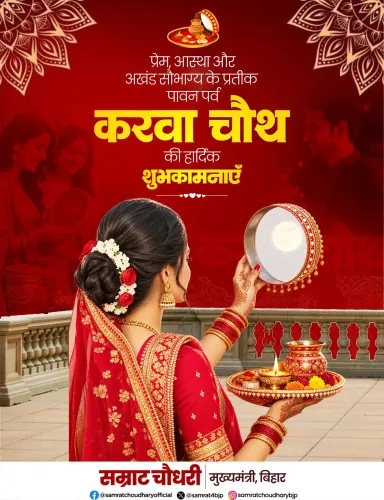
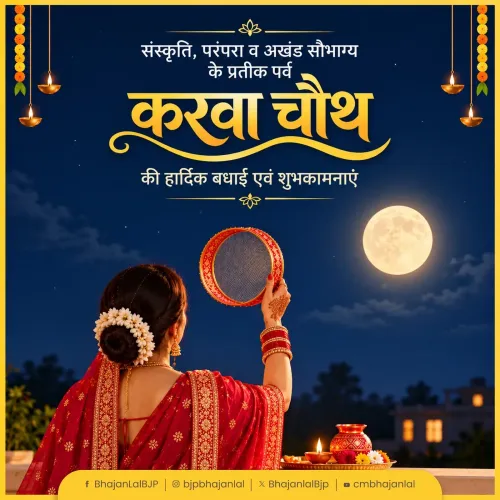
Karwa Chauth is a one-day fast observed by Hindu married women for the long life and well-being of their husbands. Observed on the fourth day after the full moon in the month of Kartik, it involves a day-long fast from sunrise until the moonrise, after which the fast is broken upon sighting the moon through a sieve. The ritual carries deep cultural resonance across North India and in Indian diaspora communities worldwide.
The festival is as much a communal celebration as a personal one — women dress in bridal finery, gather in groups for evening prayers, and exchange karwas (small clay pots). Its imagery of devotion and conjugal bond has made it one of the most visually distinct moments in the Indian festive calendar.
Political leaders and the festive calendar
Indian political figures routinely mark major cultural and religious occasions through both personal observance and public messaging — a long-established practice that bridges governance with cultural identity. For Rekha Gupta, performing the puja at the official Chief Minister's premises rather than a private residence carries a quiet symbolic weight: the office itself becomes a space where traditional values are publicly affirmed.
The gesture echoes a broader pattern seen across party lines and state capitals every festive season — leaders visibly participating in rituals to signal continuity with cultural heritage.
Point of View
Visibility at religious and cultural milestones is part of a consistent voter-connect strategy, particularly with women constituents. The move follows a well-worn template across BJP-governed states where cultural observance and governance messaging are woven together. It is routine, but its deliberateness is the point.
NationPress
29 Oct 2026
Frequently Asked Questions
Where did Rekha Gupta perform Karwa Chauth puja in 2026?
Rekha Gupta performed the Karwa Chauth puja with her family at the Chief Minister Jan Seva Sadan , the official premises associated with the Delhi Chief Minister's office, on 29 October 2026 .
What is Karwa Chauth and why is it observed?
Karwa Chauth is a Hindu festival in which married women observe a day-long fast from sunrise to moonrise for the long life and well-being of their husbands. It falls on the fourth day after the full moon in the month of Kartik and is widely observed across North India.
What did Delhi CM Rekha Gupta say about Karwa Chauth?
CM Rekha Gupta described the festival as a 'unique symbol of unbreakable love, mutual trust and complete devotion' and said it brings alive a deep tradition of India's rich culture. She extended heartfelt wishes to all married women.
Is Rekha Gupta the current Chief Minister of Delhi?
Yes, Rekha Gupta is the Chief Minister of Delhi and a BJP leader.
What is the Chief Minister Jan Seva Sadan in Delhi?
The Chief Minister Jan Seva Sadan is official premises associated with the Delhi Chief Minister's office, used for administrative and public functions. CM Rekha Gupta performed the Karwa Chauth puja there on 29 October 2026 .