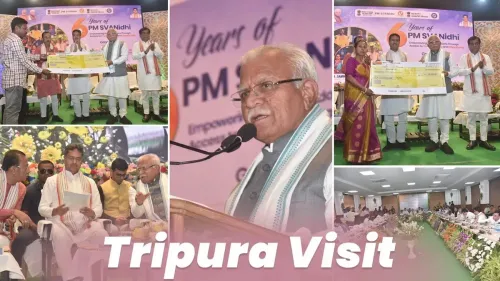
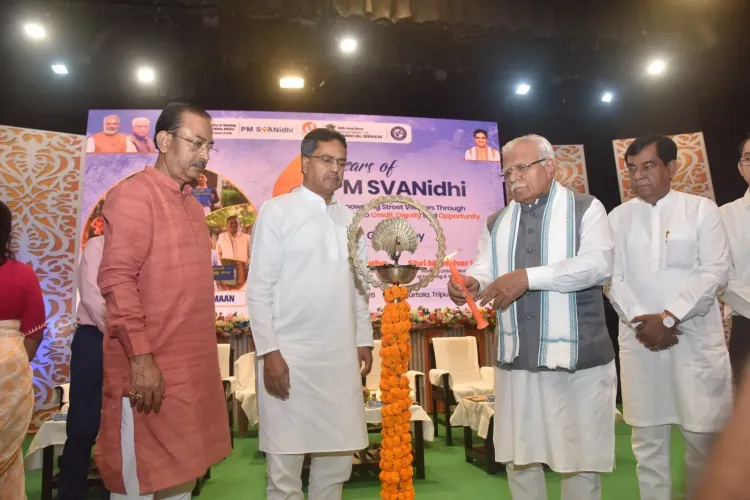
Khattar Addresses PM SVANidhi Event, Felicitates Vendors in Agartala
Synopsis
Union Minister Manohar Lal Khattar addressed the 6th PM SVANidhi Programme in Agartala on May 31, felicitating street vendor beneficiaries. He called the scheme a powerful instrument of economic inclusion, crediting it with expanding formal credit, digital transactions, and social security for millions of urban informal workers.
Key Takeaways
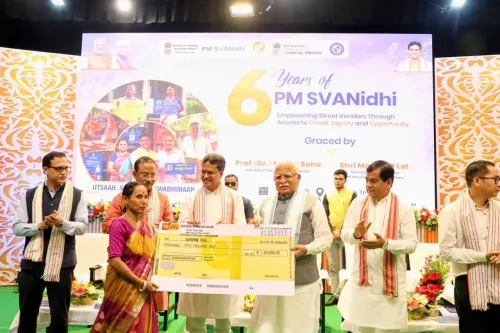
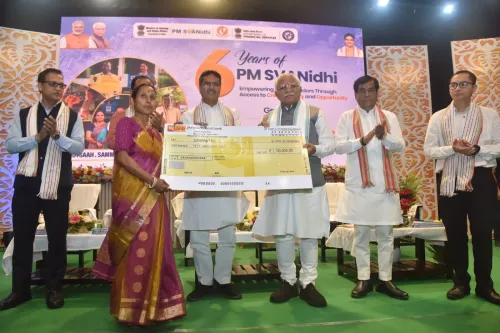
Union Minister Manohar Lal Khattar addressed the 6th PM SVANidhi Programme event in Agartala, Tripura on May 31, 2026 .
PM SVANidhi provides collateral-free working capital loans of up to Rs 50,000 to street vendors with incentives for digital transactions.
The scheme was launched in June 2020 under the Atmanirbhar Bharat package to support vendors affected by COVID-19 lockdowns.
Khattar described the programme as 'more than a loan scheme' — an instrument of Swarozgar, Svavlamban, aur Swabhimaan (self-employment, self-reliance, and self-respect).
The event reflects the central government's strategic outreach to Northeast India through flagship urban livelihood programmes.
Future policy focus is expected on expanding credit limits and insurance components, and deepening scheme coverage in smaller cities.
Union Power Minister Manohar Lal Khattar addressed the 6th PM SVANidhi Programme event in Agartala, Tripura, on Sunday, May 31, 2026, where he felicitated beneficiaries of the flagship street vendor credit scheme. The event highlighted the scheme's role in expanding formal credit access and digital financial participation among urban informal workers across India.
Context
Khattar, who holds the portfolio of Housing and Urban Affairs in addition to Power, described PM SVANidhi as 'more than a loan scheme' — calling it 'a powerful instrument of economic inclusion.' He credited the programme with empowering street vendors with what he termed Swarozgar, Svavlamban, aur Swabhimaan (self-employment, self-reliance, and self-respect). Agartala, the capital of Tripura, served as the venue for this state-level implementation event organised under the Ministry of Housing and Urban Affairs.
The minister's presence at the event underscores the central government's continued focus on taking flagship urban livelihood programmes to Northeast India, a region that has been a strategic priority for the BJP-led NDA government in recent years.
Policy Backdrop
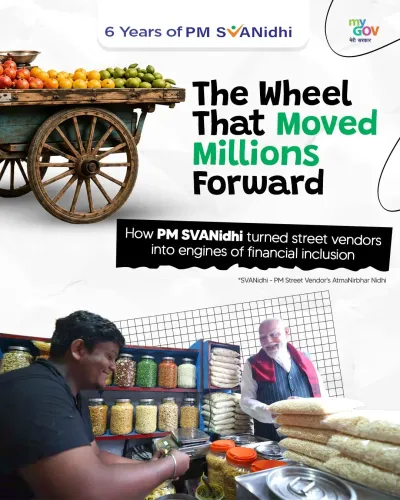
PM SVANidhi — formally the Pradhan Mantri Street Vendor's AtmaNirbhar Nidhi — was launched in June 2020 by Prime Minister Narendra Modi as part of the Atmanirbhar Bharat stimulus package, initially targeting street vendors whose livelihoods were disrupted by COVID-19 lockdowns. The scheme provides collateral-free working capital loans of up to Rs 50,000, with built-in incentives for digital transactions and interest subsidies for timely repayment.
The programme sits within a broader post-2014 financial inclusion architecture that includes Jan Dhan accounts, Mudra loans, and the expansion of UPI — together aimed at bringing the urban informal sector into the formal financial fold. SVANidhi distinguishes itself by also linking vendors to social security benefits, making it a multi-dimensional welfare instrument rather than a standalone credit line.
Stakeholders and Impact
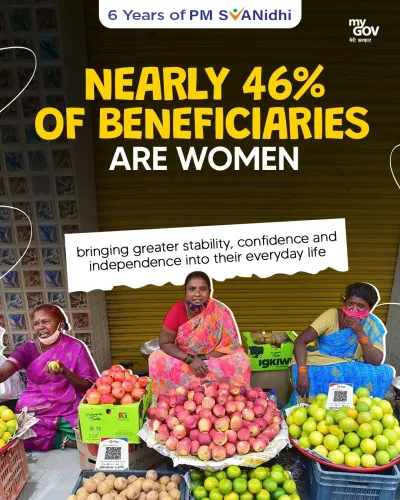
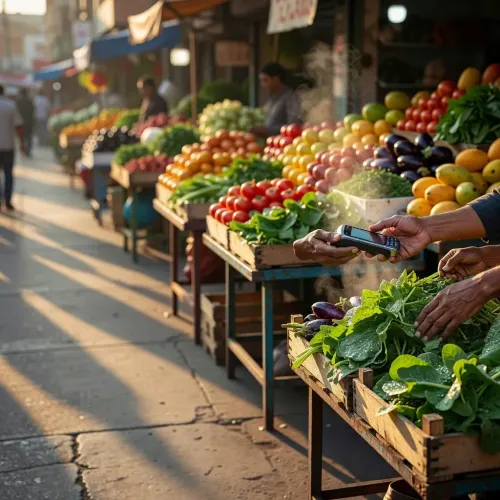
Street vendors — a large and historically underserved segment of India's urban workforce — are the direct beneficiaries of the scheme. By providing access to institutional credit, the programme aims to free vendors from dependence on informal moneylenders who typically charge usurious rates. The push for digital transactions embedded in the scheme also integrates vendors into the broader UPI ecosystem, generating a credit footprint that can support future borrowing.
State governments and urban local bodies play a critical implementation role, as they are responsible for vendor identification, certificate issuance, and liaison with lending institutions. Events such as the one held in Agartala serve both as felicitation platforms and as outreach exercises to deepen scheme penetration in states where awareness and uptake may still be growing.
What's Next
The Ministry of Housing and Urban Affairs conducts periodic performance reviews of PM SVANidhi, and policy observers will watch for potential enhancements — including higher credit ceilings or expanded insurance components — in forthcoming Union Budgets. Khattar's active engagement with beneficiary events signals that the ministry intends to keep the scheme's momentum visible ahead of any such policy deliberations.
As the government continues to position SVANidhi as a cornerstone of urban economic inclusion, the focus is likely to shift toward deepening coverage in smaller cities and underserved states, ensuring the scheme's transformative promise reaches the vendors who need it most.
Point of View
Giving the Housing and Urban Affairs ministry a visible, human-interest anchor for its policy communication. By framing the scheme around dignity — invoking Swabhimaan alongside credit access — the minister is reinforcing a political messaging strategy that ties welfare delivery to self-reliance rather than dependency. Continued ministerial-level engagement with beneficiary events suggests the government is building a grassroots visibility record that could inform both budget asks and electoral outreach in urban constituencies.
NationPress
19 Sept 2026
Frequently Asked Questions
What is PM SVANidhi scheme and who can benefit from it?
PM SVANidhi, or Pradhan Mantri Street Vendor's AtmaNirbhar Nidhi, is a central government scheme that provides collateral-free working capital loans of up to Rs 50,000 to street vendors, along with incentives for digital transactions and interest subsidies for timely repayment. Urban street vendors across India are eligible to apply through their local urban body.
What did Manohar Lal Khattar say at the Agartala SVANidhi event?
At the 6th PM SVANidhi Programme event in Agartala on May 31, 2026, Khattar described the scheme as 'more than a loan scheme' and called it a powerful instrument of economic inclusion that empowers vendors with self-employment, self-reliance, and self-respect.
When was PM SVANidhi launched and why?
PM SVANidhi was launched in June 2020 as part of the Atmanirbhar Bharat stimulus package to support street vendors whose livelihoods were severely disrupted by COVID-19 lockdowns. It aimed to provide quick, formal credit as an alternative to high-interest informal moneylenders.
How much loan does PM SVANidhi provide to street vendors?
The scheme offers collateral-free working capital loans starting at smaller amounts and scaling up to Rs 50,000 for vendors who repay on time, with each repayment cycle unlocking eligibility for a higher credit tier.
Why was the SVANidhi event held in Agartala?
Agartala, the capital of Tripura in Northeast India, hosted the 6th PM SVANidhi Programme event as part of the central government's outreach to extend flagship urban livelihood schemes to the northeastern states, a region of strategic political and developmental focus for the NDA government.