Punjab Chief Secretary served contempt notice over DA arrears non-compliance

Synopsis
The Punjab and Haryana High Court has issued a contempt notice to Punjab Chief Secretary K.A.P. Sinha after the state failed to release DA and DR arrears despite a clear August 3 court order — and the government's Supreme Court appeal, the bench ruled, does not excuse non-compliance until a stay is actually granted.
Key Takeaways
Punjab and Haryana High Court issued a contempt notice to Chief Secretary K.A.P.
Sinha on 3 November 2026 over non-payment of DA and DR arrears.
Sinha must file his response by 17 November , explaining steps taken to comply with court orders.
The original High Court judgment of 3 August directed Punjab government and PSPCL to release all pending DA/DR instalments within a fortnight.
Delayed payments attract simple interest at 6% per annum from the prescribed deadline until actual disbursement.
The court clarified that the Punjab government's pending Supreme Court appeal does not suspend the High Court's directions unless a formal stay is granted.
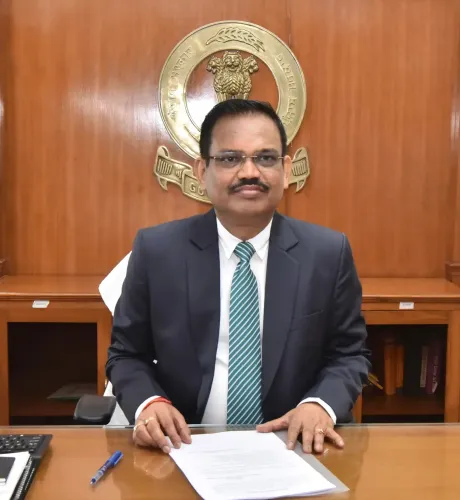
The Punjab and Haryana High Court on Tuesday, 3 November 2026, issued a contempt notice to Punjab Chief Secretary K.A.P. Sinha for the state government's continued failure to comply with judicial directions ordering the release of pending Dearness Allowance (DA) arrears and Dearness Relief (DR) instalments to government employees and pensioners. Sinha has been directed to file his response by 17 November, detailing the concrete steps taken to implement the court's orders.
Background: The August 3 Judgment
The contempt proceedings stem from a High Court judgment dated 3 August, which directed the Punjab state government and the Punjab State Power Corporation Ltd (PSPCL) to release all pending DA and DR instalments to their employees and pensioners. The court had ordered that payments be made at rates equivalent to those applicable to All India Services officers serving in Punjab, in line with the Central Government pattern. A fortnight was prescribed as the deadline, with a stipulation that any delay beyond it would attract simple interest at 6% per annum until actual payment.
What Transpired in Court
Chief Secretary Sinha appeared before the court during Tuesday's proceedings; however, the government's explanation for the delay failed to satisfy the bench. The government informed the court that it had challenged the High Court's earlier directions before the Supreme Court and that procedural defects in its appeal had since been rectified. It also indicated that the matter was likely to be listed before the apex court shortly.
The High Court, however, made its position unambiguous: merely filing an appeal before the Supreme Court does not suspend the operation of its judgment. Unless the Supreme Court explicitly stays the directions, the state government remains legally bound to comply. The court further questioned the government's failure to take any concrete steps towards clearing the outstanding dues, particularly given that repeated opportunities had already been extended.
Legal Position on Contempt
The contempt petition was filed by the affected government employees and pensioners, who alleged that despite clear judicial instructions, the Punjab government had not released their outstanding DA and DR dues. The court's strong displeasure reflects a pattern seen in similar disputes across Indian states, where fiscal constraints are cited to defer court-mandated salary and pension revisions, only to be met with escalating judicial intervention.
Notably, the High Court's stance that a pending Supreme Court challenge does not automatically stay compliance is settled law — a position consistently upheld by courts across the country. This places the Punjab government in a precarious position: it must either demonstrate compliance or secure a formal stay from the Supreme Court before 17 November.
What Happens Next
All eyes are now on the Punjab government's response affidavit due 17 November and on whether the Supreme Court grants a stay on the High Court directions in the interim. If neither materialises, the court could proceed with coercive contempt action against the Chief Secretary. The PSPCL, also named in the original judgment, remains bound by the same directions.
Point of View
But the burden of that stretch is being offloaded onto pensioners and employees who secured their entitlements through years of litigation. If the Supreme Court does not grant a stay before November 17, the Punjab government faces a stark choice — comply or risk coercive action against its top bureaucrat.
NationPress
3 Nov 2026
Frequently Asked Questions
Why was Punjab Chief Secretary K.A.P. Sinha served a contempt notice?
The Punjab and Haryana High Court issued a contempt notice to Chief Secretary K.A.P. Sinha on 3 November 2026 because the Punjab government failed to release pending Dearness Allowance and Dearness Relief arrears to state employees and pensioners, despite a clear court order dated 3 August directing payment within a fortnight.
What did the August 3 High Court judgment order?
The judgment directed the Punjab state government and PSPCL to release all pending DA and DR instalments at rates equivalent to those applicable to All India Services officers in Punjab, in line with the Central Government pattern. Any delay beyond the prescribed fortnight deadline was to attract simple interest at 6% per annum.
Does the Punjab government's Supreme Court appeal suspend the High Court's orders?
No. The High Court explicitly ruled that merely filing an appeal before the Supreme Court does not suspend the operation of its judgment. The state remains legally bound to comply unless the Supreme Court specifically grants a stay on the High Court's directions.
What happens if the Punjab government does not comply by November 17?
Chief Secretary Sinha must file a response by 17 November explaining the steps taken to implement the court's orders. If the government fails to demonstrate compliance and the Supreme Court has not granted a stay, the High Court could proceed with coercive contempt action.
Who is affected by the non-payment of DA and DR arrears in Punjab?
The non-payment affects Punjab state government employees and pensioners, as well as employees and pensioners of the Punjab State Power Corporation Ltd (PSPCL), all of whom were entitled to DA and DR instalments under the court's August 3 order.