Khattar lays foundation for Gurugram waste, water projects
Synopsis
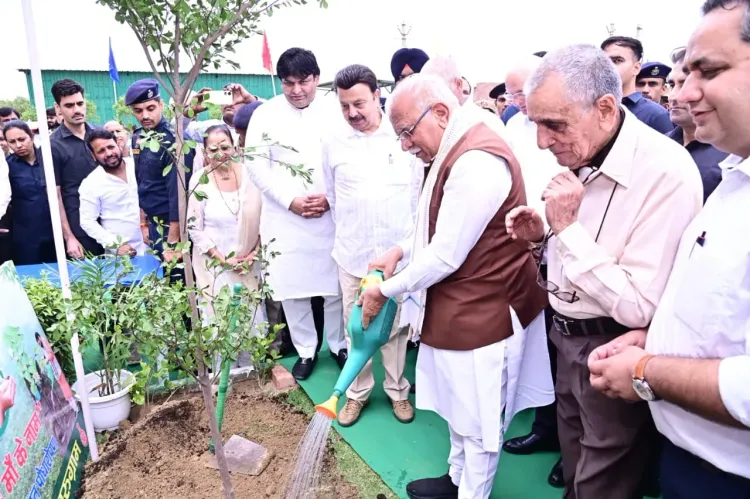
On World Environment Day 2026, Union Minister Manohar Lal Khattar laid foundation stones in Gurugram for a treated-wastewater pipeline to city parks and a new Material Recovery Facility at Sector 109 — two projects aimed at sustainable water use and circular waste management in the rapidly urbanising NCR city.
Key Takeaways
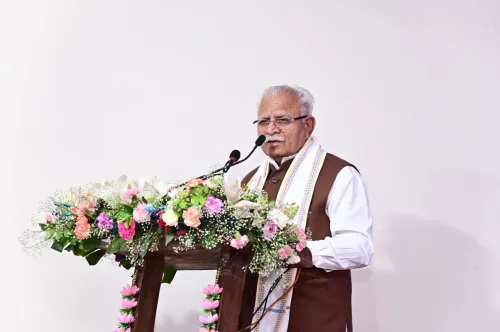
Union Minister Manohar Lal Khattar attended a World Environment Day event at Lions Public School, Gurugram on 5 June 2026 .
He laid the foundation stone for a treated-wastewater pipeline by the Municipal Corporation Gurugram to supply recycled water to city parks.
A state-of-the-art Material Recovery Facility (MRF) was also inaugurated at Sector 109, Gurugram to improve dry-waste segregation and recycling.
Both projects align with national schemes — AMRUT 2.0 (wastewater reuse) and Swachh Bharat Mission (scientific waste processing).
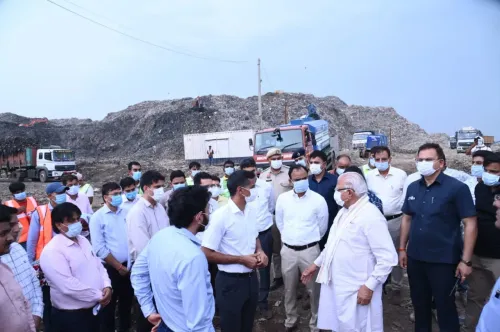
The initiatives target Gurugram's twin urban challenges of groundwater depletion and landfill overflow caused by rapid urbanisation.
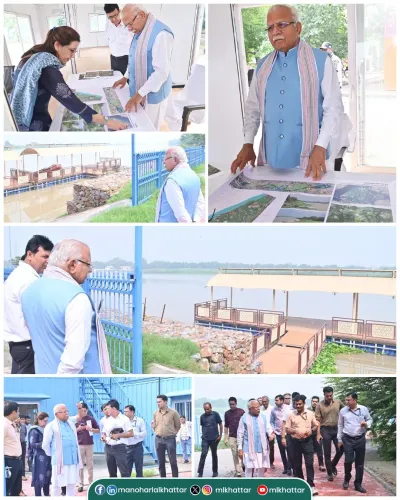
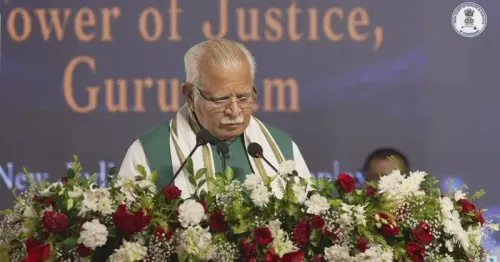
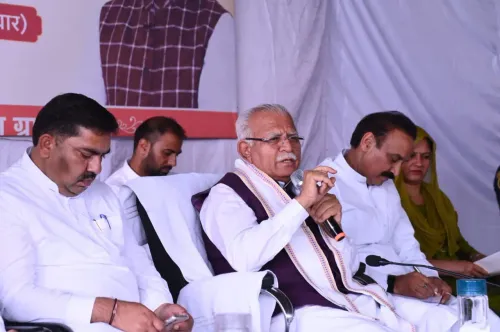
Union Minister of Housing and Urban Affairs Manohar Lal Khattar on Friday, 5 June 2026 — World Environment Day — attended a civic function at Lions Public School, Gurugram, where he laid the foundation stones for two urban infrastructure projects initiated by the Municipal Corporation Gurugram.
In a post on X, Khattar wrote: 'विश्व पर्यावरण दिवस के शुभ अवसर पर गुरुग्राम स्थित लायंस पब्लिक स्कूल में आयोजित कार्यक्रम में सहभागिता का अवसर मिला' ['On the auspicious occasion of World Environment Day, I had the opportunity to participate in an event held at Lions Public School, Gurugram']. He described the two projects — a treated-wastewater pipeline to city parks and a state-of-the-art Material Recovery Facility (MRF) at Sector 109 — as significant steps toward 'water conservation, resource recycling, and clean, green and sustainable urban development.'
Context
World Environment Day, observed annually on 5 June under the United Nations framework, focuses on environmental awareness and sustainable development. The choice of the date to launch these two projects signals a deliberate alignment of municipal infrastructure investment with the global sustainability agenda.
Gurugram, one of the fastest-growing cities in the National Capital Region (NCR), faces acute pressures from rapid urbanisation — including declining groundwater tables, overburdened landfills, and inadequate green-space maintenance. Both projects directly address these pressure points.
Policy Backdrop
The treated-wastewater pipeline project fits squarely within the objectives of AMRUT 2.0 (launched 2021), which specifically promotes the recycling of treated wastewater for non-potable uses such as irrigation of parks and green belts, reducing dependence on freshwater sources. The initiative also aligns with the broader mandate of the Ministry of Housing and Urban Affairs, which Khattar currently heads at the Centre.
The Material Recovery Facility at Sector 109 is consistent with the scientific waste-processing goals of the Swachh Bharat Mission, launched in 2014. MRFs are designed to segregate dry waste into recoverable streams — plastics, metals, paper — feeding a circular economy and reducing the volume of waste destined for landfills.
Stakeholders and Impact
Gurugram's residents stand to benefit directly: parks supplied with treated wastewater will reduce the city's draw on potable groundwater, while the MRF is expected to improve waste segregation outcomes and reduce landfill overflow in a city that generates substantial daily municipal solid waste. The Municipal Corporation Gurugram will be the implementing agency for both projects.
As Union Minister of Housing and Urban Affairs, Khattar's presence at a municipal-level foundation-stone ceremony underscores the Centre's interest in accelerating NCR cities' compliance with national urban sustainability targets. His dual role — overseeing urban affairs at the Centre while remaining a prominent political figure in Haryana — gives these announcements both administrative and political weight.
What's Next
The key milestones to watch will be the commissioning of the treated-water pipeline network and the operational launch of the Sector-109 MRF once construction is complete. The pace of execution will be a test of the Municipal Corporation Gurugram's capacity to deliver on circular-economy commitments. If successful, these projects could serve as replicable models for other rapidly urbanising NCR cities grappling with similar water and waste challenges.
Point of View
Who retains a strong political base in Haryana, the event also reinforces his continued engagement with the state's urban constituencies even from a Central ministerial role. The real test, however, lies in execution timelines and whether Gurugram's civic body can operationalise both facilities at scale.
NationPress
20 Oct 2026
Frequently Asked Questions
What projects did Manohar Lal Khattar launch in Gurugram on World Environment Day 2026?
Khattar laid the foundation stones for two projects: a treated-wastewater pipeline to supply recycled water to Gurugram's parks, and a Material Recovery Facility (MRF) at Sector 109 — both initiated by the Municipal Corporation Gurugram.
What is a Material Recovery Facility and why is it important for Gurugram?
A Material Recovery Facility (MRF) is a plant that segregates dry waste — plastics, metals, paper — into recoverable streams for recycling, reducing the volume of waste sent to landfills. For Gurugram, which generates large quantities of municipal solid waste, the Sector-109 MRF is intended to ease landfill pressure and support a circular economy.
How does the Gurugram wastewater pipeline project relate to AMRUT 2.0?
AMRUT 2.0, launched in 2021, specifically promotes recycling of treated wastewater for non-potable uses such as park irrigation. The Gurugram pipeline project, which will supply treated water to city parks, directly aligns with these objectives and reduces dependence on groundwater.
Why did Khattar attend a municipal-level event in Gurugram?
As Union Minister of Housing and Urban Affairs, Khattar oversees national urban development programmes. His presence at the Gurugram ceremony underscores the Centre's interest in accelerating NCR cities' compliance with national sustainability targets under schemes like AMRUT 2.0 and Swachh Bharat Mission.
What are the main environmental challenges Gurugram faces that these projects address?
Gurugram faces rapid groundwater depletion and landfill overflow driven by fast urbanisation. The treated-wastewater pipeline reduces the city's draw on potable groundwater for parks, while the MRF improves waste segregation to cut landfill volumes.