Khattar Inspects Yamuna Ghats, Flags Flood-Mitigation Push
Synopsis
Union Minister Manohar Lal Khattar inspected Vasudev Ghat, Yamuna Bazaar floodplains, and the barrage on 29 July 2026, calling for war-footing flood mitigation and priority riverfront redevelopment, with the Centre and Delhi government working in coordination.
Key Takeaways
Manohar Lal Khattar conducted an on-ground inspection of Vasudev Ghat , Yamuna Bazaar floodplains , the barrage, and the riverfront zone on 29 July 2026 .
The minister described Yamuna development as encompassing environmental conservation, public amenities, cultural heritage, and sustainable urban growth — not mere beautification.
Flood-mitigation structural and management measures are being executed at 'war footing' to minimise Yamuna flood impact on Delhi .
The Union government and the Delhi government are working in coordinated tandem on river revival and flood preparedness.
Ghat and riverfront redevelopment is being prioritised, with cultural and civic significance — including events like Chhath Puja — central to the planning rationale.
The Yamuna Action Plan , first launched in 1993 , forms the long-running policy backdrop to these current efforts.
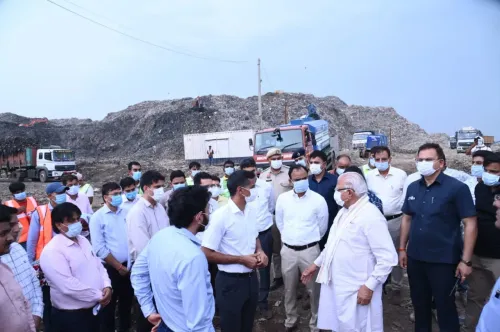
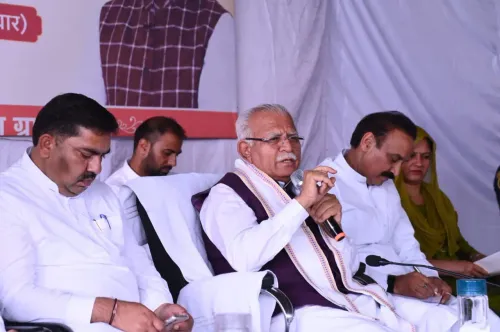
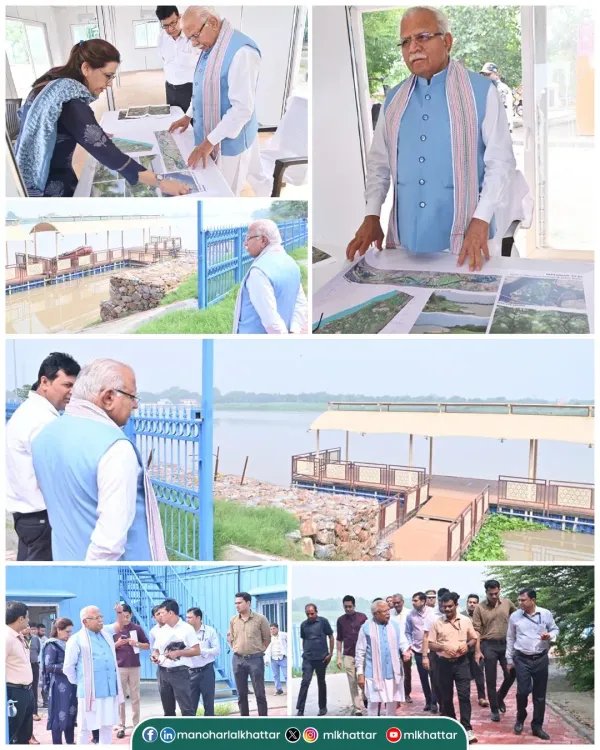
Walking the floodplains of the Yamuna on Wednesday, 29 July 2026, Union Minister of Housing and Urban Affairs Manohar Lal Khattar carried out a detailed on-ground inspection of Vasudev Ghat, the Yamuna Bazaar floodplains, the barrage, and the riverfront zone — assessing cleanliness, civic amenities, and the pace of revival and development works.
Khattar framed the visit in terms that go well beyond beautification. 'The holistic development of the Yamuna's banks,' he wrote, 'is not merely a matter of aesthetics — it is a vital effort linked to environmental conservation, expansion of public amenities, enrichment of cultural heritage, and sustainable urban development.' Riverfront and ghat redevelopment, he said, is being pushed forward on a priority basis with that larger vision in mind.
War-Footing Measures Against Yamuna Floods
The inspection also trained a sharp lens on flood risk. Khattar said that structural and management-level measures to minimise the impact of Yamuna flooding are being executed at 'war footing' — a phrase that signals urgency ahead of peak monsoon stress on the river. The Yamuna Bazaar floodplains and the barrage stretch are among the most flood-vulnerable corridors in the capital, and any structural intervention there carries direct consequences for millions of Delhi residents.
This is not a new battle. The Yamuna Action Plan, launched in 1993, first formalised the Centre's commitment to reversing the river's ecological decline. More than three decades on, the challenge has only grown more complex — layered with encroachments, industrial discharge, monsoon flooding, and the relentless pressure of a megacity on a single river artery.
Centre and Delhi Government Working in Tandem
Khattar was explicit about the governance architecture driving the effort: the Union government and the Delhi government are working in coordinated tandem to make the capital safer and better managed. That joint framing matters. Yamuna-related projects have historically been flashpoints for central-state friction in Delhi; the minister's emphasis on coordination signals a deliberate attempt to project unified ownership of both the riverfront's promise and its problems.
'The Yamuna is the lifeline of our faith, culture, and heritage,' Khattar wrote. 'The resolve we have taken to make it clean, pure, and free-flowing is being fulfilled with full commitment.' The language of sankalp (resolve) and pratigya (pledge) places this firmly within a broader national river-rejuvenation narrative that has defined BJP governance at both the Centre and in states.
What the Ghat Redevelopment Actually Means for Delhi
For Delhi's residents — particularly the communities that live, pray, and earn their livelihoods along the Yamuna's banks — the stakes are tangible. Ghat redevelopment, when done well, means safer bathing steps, better lighting, improved drainage, and public spaces that can hold the weight of festivals like Chhath Puja, which draws enormous crowds to the riverbank each year. Flood mitigation infrastructure, meanwhile, protects low-lying colonies that face inundation almost every monsoon.
Progress on both fronts — ghat redevelopment timelines and the specific flood-mitigation structures now under construction — will be the real measure of whether this inspection translates into outcomes on the ground.
Point of View
The minister signals a post-election reset in central-state relations on urban infrastructure. The 'war footing' language on flood mitigation is notable: it raises the political cost of inaction if the monsoon season brings the flooding that has historically displaced thousands. Longer term, the visit fits a pattern of the BJP-led Centre using river rejuvenation as a visible, culturally resonant governance deliverable ahead of urban election cycles.
NationPress
13 Sept 2026
Frequently Asked Questions
What did Manohar Lal Khattar inspect along the Yamuna on 29 July 2026?
Khattar inspected Vasudev Ghat , the Yamuna Bazaar floodplains , the barrage, and the riverfront zone, reviewing cleanliness, civic amenities, and the progress of revival and development works.
What flood measures are being taken along the Yamuna in Delhi?
The minister stated that structural and management-level flood-mitigation measures are being executed at 'war footing' to minimise the impact of Yamuna flooding, particularly in vulnerable floodplain and barrage areas.
Are the Centre and Delhi government working together on Yamuna development?
Yes. Khattar explicitly stated that the Union government and the Delhi government are working in coordinated tandem to make the capital safer and better managed through Yamuna-related projects.
What is the Yamuna Action Plan and how does it relate to current efforts?
The Yamuna Action Plan was launched in 1993 to address pollution and ecological degradation in the river. Current ghat redevelopment and flood-mitigation works build on this long-running policy framework.
Why is Yamuna ghat redevelopment significant for Delhi residents?
Ghat redevelopment improves safety, lighting, drainage, and public space along the river — critical for daily users and for large religious gatherings such as Chhath Puja — while flood mitigation protects low-lying colonies from annual monsoon inundation.