Khattar Marks World Environment Day, Cites Modi Govt Push
Synopsis
Union Power Minister Manohar Lal Khattar marked World Environment Day on 5 June 2026 by crediting PM Modi's leadership for accelerating India's work on sustainable development, sanitation, water conservation and green infrastructure, and calling for a pledge to secure a clean future for coming generations.
Key Takeaways
Union Power Minister Manohar Lal Khattar posted on X on World Environment Day, 5 June 2026 , citing India's environmental progress under PM Narendra Modi .
The post highlights four pillars: sustainable development, cleanliness, water conservation and green infrastructure .
Key government schemes underpinning the message include the Swachh Bharat Mission (2014) and the Jal Jeevan Mission (2019) .
India has pledged net-zero emissions by 2070 and 500 GW of non-fossil fuel capacity by 2030 , commitments made at COP26 in 2021 .
As minister overseeing both power and urban affairs, Khattar's portfolio is central to delivering on India's renewable energy and green-city targets.
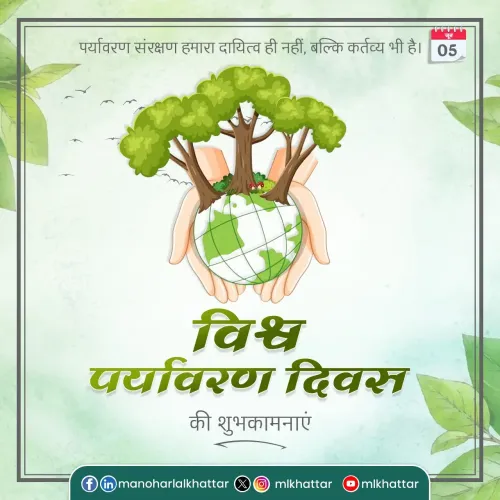
Union Power Minister Manohar Lal Khattar on World Environment Day, 5 June 2026, posted a message on X highlighting India's progress on sustainable development, sanitation, water conservation and green infrastructure under the leadership of Prime Minister Narendra Modi.
In his post, the minister wrote: 'आदरणीय प्रधानमंत्री श्री @narendramodi जी के नेतृत्व में भारत पर्यावरण संरक्षण की दिशा में संवेदनशीलता से आगे बढ़ते हुए सतत विकास, स्वच्छता, जल संरक्षण और हरित अवसंरचना को नई गति दे रहा है।' [Under the leadership of respected Prime Minister Shri Narendra Modi, India is moving forward with sensitivity in the direction of environmental protection, giving new momentum to sustainable development, cleanliness, water conservation and green infrastructure.] He added that World Environment Day inspires a pledge to build 'a clean and safe future for coming generations.'
Context
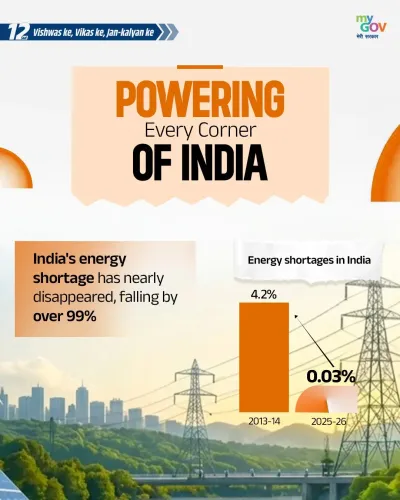
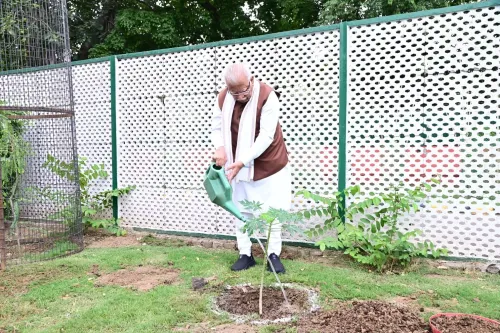
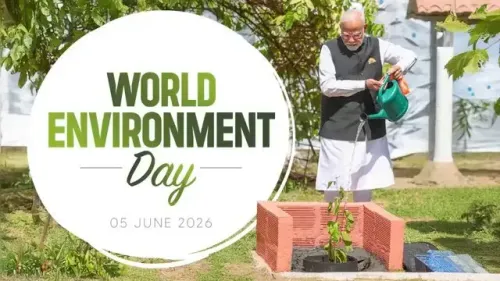
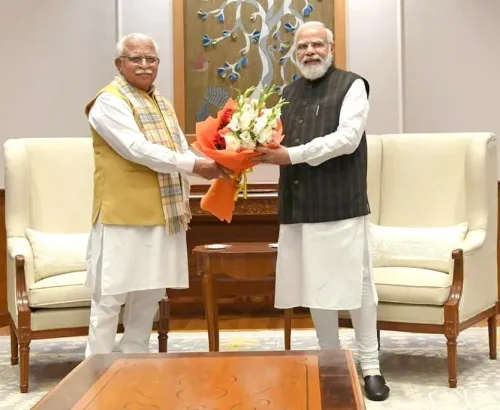
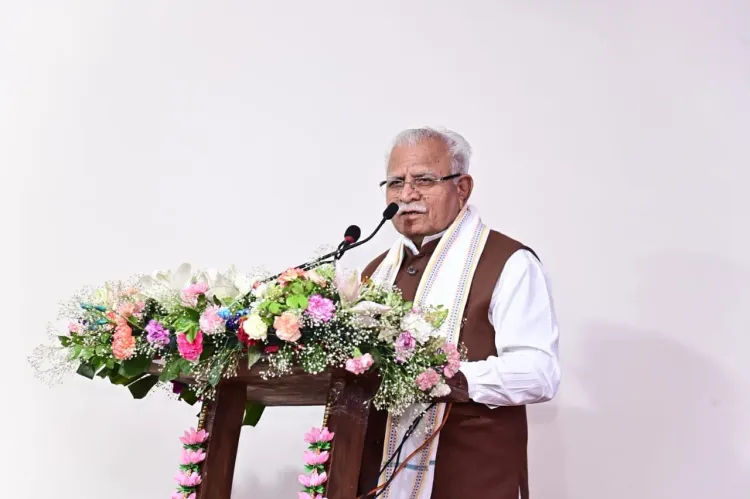
World Environment Day is observed annually on 5 June, a date established by the United Nations in 1972 to promote global awareness and action on environmental issues. For Indian ministers, the occasion has become a regular platform to communicate the government's environmental commitments and connect ongoing domestic schemes to broader sustainability goals. Khattar's post, accompanied by three images, follows this established pattern.
Policy Backdrop
The themes Khattar invokes — sanitation, water conservation and green infrastructure — map directly onto several flagship central programmes. The Swachh Bharat Mission, launched in 2014, anchors the cleanliness agenda across urban and rural India, linking waste management to public health outcomes. The Jal Jeevan Mission, announced in 2019, targets piped water supply to rural households while promoting conservation practices.
On the energy and climate front, India co-founded the International Solar Alliance in 2015 to accelerate solar deployment globally. At COP26 in 2021, India pledged to reach net-zero emissions by 2070 and to achieve 500 GW of non-fossil fuel power capacity by 2030. As Union Minister of Power, Khattar sits at the centre of efforts to meet those targets through renewable capacity addition and grid modernisation.
Stakeholders and Impact
The minister's portfolio directly touches two of the sectors most relevant to the day's themes: the power sector, where a shift to renewables reduces carbon emissions, and housing and urban affairs, where green building codes and urban local bodies shape city-level sustainability outcomes. Renewable energy developers and urban local bodies are among the key actors expected to translate policy intent into on-ground results.
Khattar's message explicitly frames environmental action as an obligation to future generations, a framing consistent with India's long-term climate commitments. Civil society groups and state governments that implement central schemes are the primary intermediaries between ministerial messaging and citizen-level impact.
What's Next
Observers will watch for progress reports on state-level green building codes and renewable energy integration targets as India moves closer to its 2030 non-fossil fuel capacity milestone. Parliamentary discussions on environment-related budget allocations in the coming session could provide a clearer picture of how the government intends to resource these ambitions. The next major multilateral checkpoint will be the upcoming COP cycle, where India's delivery against its 2021 pledges will face international scrutiny.
Point of View
The message performs the dual function of party messaging and ministerial positioning ahead of what will be a closely watched period for India's COP commitments. The reference to 'coming generations' signals that the government is aware of the long-horizon political stakes of climate inaction. Taken alongside the policy lineage of Swachh Bharat, Jal Jeevan and the International Solar Alliance, the post reflects a settled government strategy of weaving domestic schemes into a broader environmental identity — one that will face harder scrutiny as the 2030 renewable capacity deadline approaches.
NationPress
20 Oct 2026
Frequently Asked Questions
What did Manohar Lal Khattar say on World Environment Day 2026?
Khattar posted on X that under PM Modi's leadership, India is advancing sustainable development, cleanliness, water conservation and green infrastructure, and called on citizens to pledge a clean and safe future for coming generations.
What is India's net-zero emissions target?
India has pledged to achieve net-zero emissions by 2070, a commitment made at the COP26 climate summit in 2021, alongside a target of 500 GW of non-fossil fuel power capacity by 2030.
What is the Jal Jeevan Mission?
The Jal Jeevan Mission, announced in 2019, aims to provide piped drinking water connections to rural households across India while promoting water conservation practices.
Why is World Environment Day observed on 5 June?
World Environment Day is observed on 5 June every year, a date established by the United Nations in 1972 to promote global awareness and action on environmental protection.
What schemes does the Indian government run for environmental protection?
Key schemes include the Swachh Bharat Mission for sanitation and waste management (2014), the Jal Jeevan Mission for water supply and conservation (2019), and participation in the International Solar Alliance (2015) for accelerating solar energy deployment.