Karnataka backs ₹1 lakh crore Krishna-Cauvery-Godavari river link plan
Synopsis
Karnataka has formally backed a ₹1 lakh crore Centre-led plan to interlink the Krishna, Cauvery, and Godavari rivers — with the Centre picking up 90% of the tab. Chief Minister D.K. Shivakumar also revealed a rare three-state consensus on the Tungabhadra silt crisis, while flagging that the Mahadayi dispute remains unresolved despite five meetings with Union ministers.
Key Takeaways
Karnataka has conveyed consent to the Centre's proposal to link the Krishna , Cauvery , and Godavari rivers at an estimated cost of ₹1 lakh crore .
The Centre will fund 90 per cent of the project cost; Karnataka will contribute 10 per cent .
Karnataka , Telangana , and Andhra Pradesh have reached a first-ever consensus on addressing 33 TMC silt loss at the Tungabhadra reservoir .
A Central technical committee will study the Tungabhadra silt issue and submit a report before further action is taken.
CM Shivakumar says the Mahadayi river dispute remains unresolved despite five meetings with Union ministers.
Karnataka reaffirmed its commitment to protecting territorial interests amid renewed activity by Maharashtra on the border dispute.
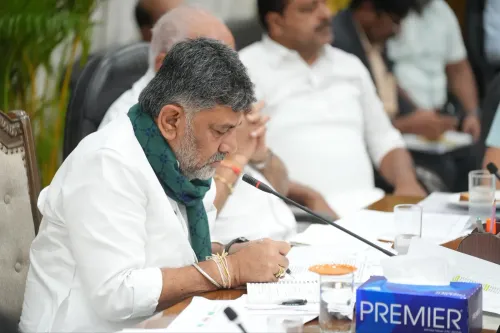
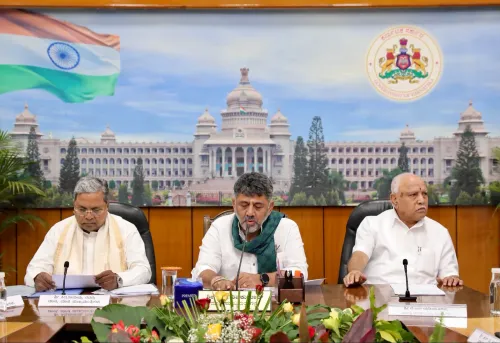
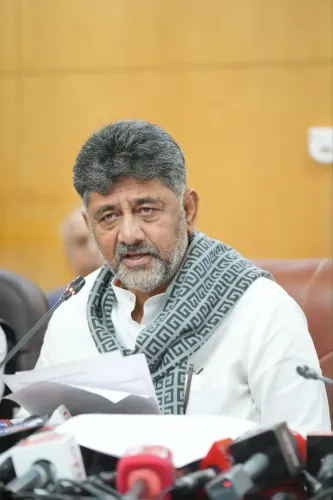
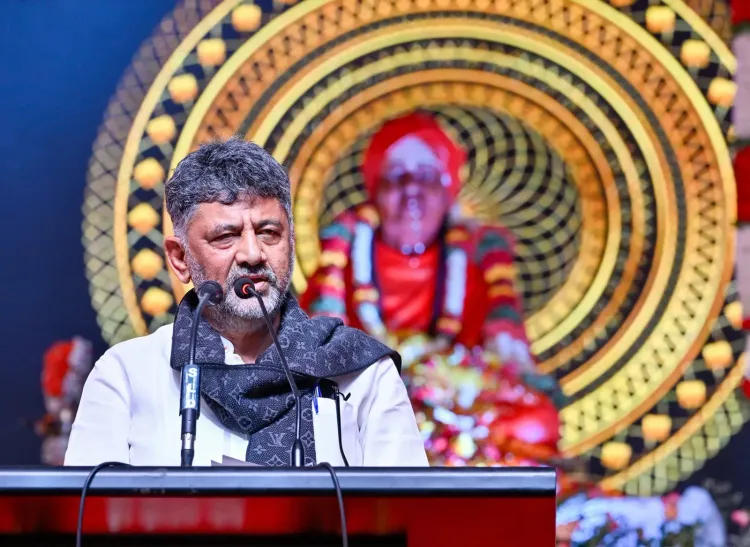
Karnataka Chief Minister D.K. Shivakumar on 9 July announced that the state has formally conveyed its consent to the Centre's proposal to interlink the Krishna, Cauvery, and Godavari rivers — a project estimated to cost ₹1 lakh crore and designated as a National Project. The announcement, made in Belagavi, signals a significant step toward addressing long-term water security in Karnataka.
Key Developments on the River-Linking Project
Under the proposed funding structure, the Centre will bear 90 per cent of the project cost, with Karnataka contributing the remaining 10 per cent. Shivakumar confirmed the state's formal agreement in principle, though implementation timelines and detailed project reports are yet to be finalised.
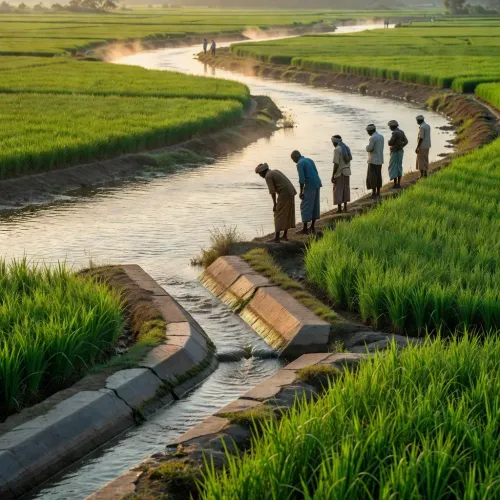
The river-linking initiative is part of a broader push to secure water availability for farmers and address chronic shortages in rain-dependent regions of the state.
Tungabhadra Reservoir: A Three-State Consensus
Shivakumar also highlighted a rare trilateral agreement on the Tungabhadra reservoir, which has been losing nearly 33 TMC of water storage capacity due to heavy silt accumulation. He said Karnataka, Telangana, and Andhra Pradesh have, for the first time, reached a consensus on addressing the issue — under the leadership of Union Jal Shakti Minister C.R. Patil.
'Our priority is to protect farmers. Due to heavy silt accumulation in the Tungabhadra reservoir, the state is losing nearly 33 TMC of water storage capacity. To find a permanent solution, Karnataka, Telangana and Andhra Pradesh have, for the first time, reached a consensus under the leadership of Union Jal Shakti Minister C.R. Patil,' Shivakumar said.
A technical committee constituted by the Central government will study the silt problem and submit its report, after which further decisions will be taken. In the interim, priority has been given to constructing a balancing reservoir to improve water management. Notably, following a gate breach at the Tungabhadra reservoir last year, the government restored operations within a week and subsequently replaced all 33 reservoir gates.
Mahadayi Dispute: Shivakumar Flags Lack of Response
On the long-pending Mahadayi river water dispute involving Karnataka, Goa, and Maharashtra, Shivakumar expressed frustration over the absence of a response from the Centre. He said he has met Union Minister Pralhad Joshi and the Union Minister for Environment, Forest and Climate Change five times on the matter, but is yet to receive a substantive reply.
'BJP leaders celebrated before the elections claiming the issue had been resolved, but my efforts to secure a solution are continuing,' he said, signalling that the dispute remains unresolved despite political claims to the contrary.
Karnataka's Stand on the Border Dispute with Maharashtra
Responding to reports of Maharashtra convening a meeting on the inter-state border issue, Shivakumar said Kannada organisations have submitted representations to the Karnataka government. He emphasised that the state would obtain a comprehensive report before making any decision and that all stakeholders would be kept in confidence.
'Just because Maharashtra has held a meeting does not mean the issue is settled. We will also take into account the legal aspects pending before the court. Karnataka's interests will be fully protected,' he said. The border dispute between Karnataka and Maharashtra has been a long-standing legal and political flashpoint, with matters pending before the courts.
With the river-linking consent now formally conveyed, the next critical milestone will be the Centre's technical committee report on the Tungabhadra silt issue and the formal launch of the interlinking project framework.
Point of View
But consent is not a project. The ₹1 lakh crore estimate, the 90:10 funding split, and the National Project tag are all Centre-driven framing — Karnataka has agreed in principle, not signed a detailed project report. The Tungabhadra trilateral consensus is genuinely notable: three riparian states agreeing on anything is rare in Indian water politics. But the Mahadayi situation exposes the limits of that goodwill — five ministerial meetings with no response suggests the Centre is selectively engaging on inter-state water issues. Shivakumar's public frustration on Mahadayi, combined with his firmness on the Maharashtra border dispute, reflects a CM managing multiple water and territorial fronts simultaneously, with elections always in the background.
NationPress
8 Oct 2026
Frequently Asked Questions
What is the Krishna-Cauvery-Godavari river-linking project?
It is a Centre-proposed National Project to interlink the Krishna, Cauvery, and Godavari rivers at an estimated cost of ₹1 lakh crore. The Centre will fund 90 per cent of the cost, with Karnataka contributing the remaining 10 per cent. Karnataka has formally conveyed its consent to the proposal.
Why is the Tungabhadra reservoir a concern for Karnataka?
The Tungabhadra reservoir is losing nearly 33 TMC of water storage capacity due to heavy silt accumulation, directly affecting water availability for farmers. Karnataka, Telangana, and Andhra Pradesh have reached a first-ever consensus on addressing the issue, and a Central technical committee will study the problem and recommend solutions.
What is the current status of the Mahadayi river water dispute?
The Mahadayi dispute between Karnataka, Goa, and Maharashtra remains unresolved. CM Shivakumar has met Union ministers five times on the issue but says no substantive response has been received. He also dismissed earlier BJP claims that the matter had been settled before elections.
What is Karnataka's position on the Maharashtra border dispute?
Karnataka has reaffirmed its commitment to protecting its territorial interests. CM Shivakumar said the state will obtain a comprehensive report before taking any decision, will factor in pending legal proceedings, and will keep all stakeholders informed. He made clear that Maharashtra holding a meeting does not resolve the dispute.
What happens next on the river-linking and Tungabhadra projects?
The Central technical committee will submit its report on the Tungabhadra silt issue, after which further decisions will be taken. Construction of a balancing reservoir has been prioritised in the interim. For the river-linking project, formal implementation steps will follow the Centre's project framework and detailed planning.