Kishau Dam Project Gets Green Light at Amit Shah Meeting
Synopsis
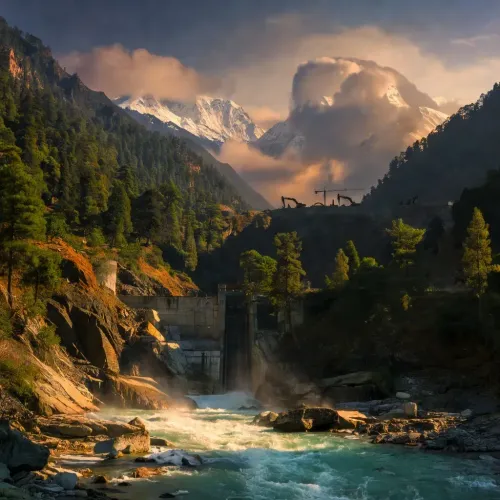
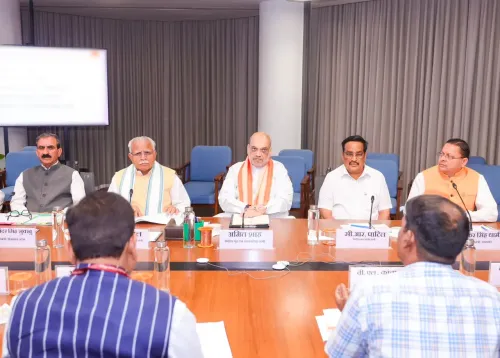
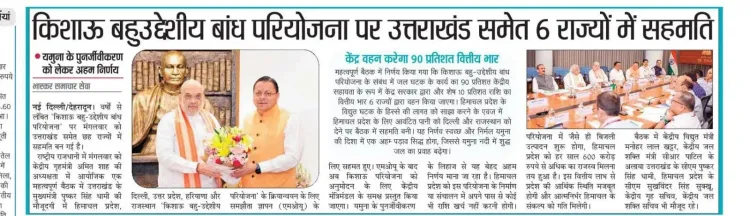
The Kishau Dam Project on the Tons river received central approval at a meeting chaired by Union Home Minister Amit Shah in New Delhi on 17 June 2026, with Chief Minister Pushkar Singh Dhami in attendance. The multipurpose dam, long agreed upon by Uttarakhand and Himachal Pradesh, promises hydropower, irrigation, and drinking water benefits.
Key Takeaways
The Kishau Dam Project on the Tons river received central approval on 17 June 2026 .
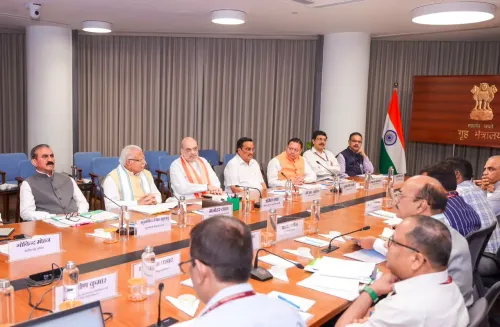
The clearance came at a meeting chaired by Union Home Minister Amit Shah in New Delhi .
Chief Minister Pushkar Singh Dhami of Uttarakhand attended the high-level meeting.
The project is a joint multipurpose scheme between Uttarakhand and Himachal Pradesh , agreed upon in 2010 .
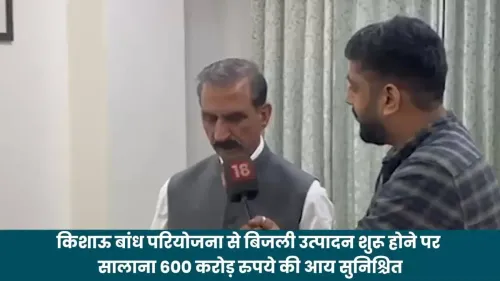
The dam is designed to generate hydropower and provide irrigation and drinking water to both states and downstream areas.
Funding finalisation, environmental clearances, and land acquisition remain the next steps before construction can begin.
The Chief Minister's Office of Uttarakhand announced on Wednesday, 17 June 2026 that the Kishau Dam Project has received central approval, describing it as a major gift to the state. The clearance came at a high-level meeting chaired by Union Home Minister Amit Shah in New Delhi, which Chief Minister Pushkar Singh Dhami also attended.
The official post stated: 'Kishau baandh pariyojana ko hari jhandi' — the Kishau Dam Project has been given the green light — calling it a 'saugaat' (gift) for Uttarakhand. The meeting was presided over by Amit Shah in his capacity as Union Home Minister, underscoring the project's inter-ministerial significance.
Context
The Kishau Dam Project is a multipurpose scheme proposed on the Tons river, a tributary of the Yamuna that flows through both Uttarakhand and Himachal Pradesh. The dam is intended to generate hydropower, support irrigation, and supply drinking water to communities in both states and downstream regions. Uttarakhand and Himachal Pradesh had signed an inter-state agreement for the joint implementation of this project as far back as 2010, making its revival a long-pending priority for both state governments.Policy Backdrop
Central approvals for large Himalayan storage and hydropower schemes have historically been coordinated through high-level inter-ministerial mechanisms, often chaired by the Home Ministry when inter-state dimensions are involved. The Kishau Dam Project fits squarely into this pattern — a multipurpose river-basin project that requires alignment between two states, multiple central ministries, and regulatory bodies overseeing environmental and forest clearances. India's broader push for energy security and river-basin development has kept such projects on the national agenda, even as individual proposals have faced delays spanning decades. The Home Minister's direct chairmanship of this meeting signals that the Centre is treating the project's revival as a priority coordination exercise.Stakeholders and Impact
The project's beneficiaries span a wide geography. Residents of Uttarakhand stand to gain from enhanced hydropower capacity, improved irrigation for agricultural land, and more reliable drinking water supply. Downstream communities in Himachal Pradesh and the plains are also expected to benefit from the dam's flood-moderation function. The hydropower sector, which has long eyed the Tons river basin for its generation potential, will watch closely as project contours are finalised. Chief Minister Dhami's presence at the meeting reflects his administration's sustained advocacy for hydropower and infrastructure investment in the hill state.What's Next
The green light from the 17 June 2026 meeting is a political and administrative milestone, but several procedural steps remain before construction can begin. Authorities will need to finalise the funding pattern — including the share to be borne by the Centre, Uttarakhand, and Himachal Pradesh — and secure environmental and forest clearances from the relevant regulatory bodies. Land acquisition and tendering processes are also expected to follow in the coming months. The speed with which these steps are completed will determine whether the project moves from approval to ground-breaking within this political cycle.Point of View
Steered personally by Home Minister Amit Shah, is a significant political signal that the BJP-led Centre is willing to use its inter-ministerial authority to unblock long-stalled state infrastructure projects ahead of electoral cycles. For Chief Minister Dhami, the clearance is a tangible deliverable that reinforces Uttarakhand's positioning as a hydropower-forward state under his administration. The project also fits into a broader pattern of reviving Himalayan multipurpose dams — a strategy that serves both energy security and the Centre's infrastructure-led growth narrative. The real test will be in the execution: whether funding, clearances, and land acquisition proceed at a pace that translates political momentum into construction activity.
NationPress
16 Sept 2026
Frequently Asked Questions
What is the Kishau Dam Project?
The Kishau Dam Project is a multipurpose scheme proposed on the Tons river, a Yamuna tributary, jointly developed by Uttarakhand and Himachal Pradesh to generate hydropower, support irrigation, and supply drinking water.
Who chaired the meeting that approved the Kishau Dam Project?
Union Home Minister Amit Shah chaired the high-level meeting held in New Delhi on 17 June 2026 at which the Kishau Dam Project received its green light.
Was Chief Minister Dhami present at the Kishau Dam approval meeting?
Yes, Uttarakhand Chief Minister Pushkar Singh Dhami attended the meeting chaired by Amit Shah in New Delhi where the project was approved.
When was the inter-state agreement for Kishau Dam signed?
Uttarakhand and Himachal Pradesh signed an inter-state agreement for the joint implementation of the Kishau multipurpose project in 2010.
What are the next steps for the Kishau Dam Project after central approval?
The next steps include finalising the funding pattern between the Centre and the two states, obtaining environmental and forest clearances, and initiating land acquisition and tendering processes.