Amit Shah Brokers Kishau Dam Consensus Among 6 States
Synopsis
Union Home Minister Amit Shah chaired a high-level meeting in New Delhi on 16 June 2026 where six states — Uttarakhand, Himachal Pradesh, Delhi, Uttar Pradesh, Haryana and Rajasthan — agreed to sign an MoU for the long-pending Kishau Multipurpose Dam Project on the Yamuna tributary, with 90 per cent of the water-component cost to be borne by the Centre.
Key Takeaways
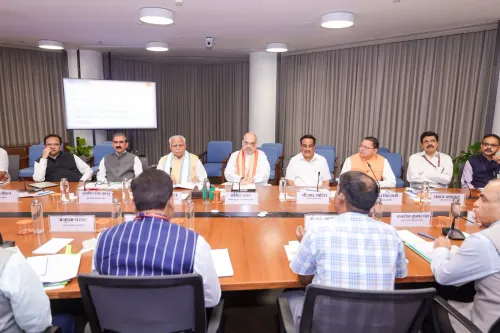
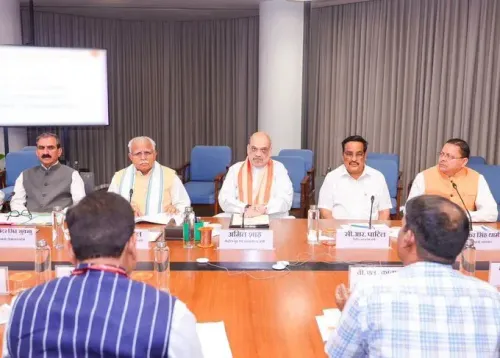
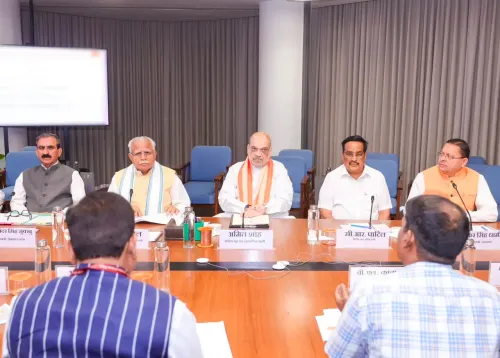
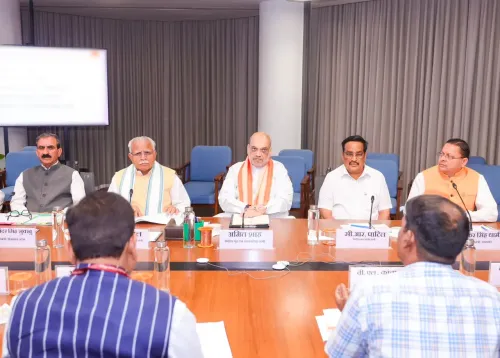
Amit Shah chaired the meeting in New Delhi on 16 June 2026 that broke the decades-long deadlock on the Kishau project.
All six Upper Yamuna basin states — Uttarakhand, Himachal Pradesh, Delhi, Uttar Pradesh, Haryana and Rajasthan — agreed to sign an MoU for the project's implementation.
The Centre will fund 90 per cent of the water-component cost; the remaining 10 per cent will be shared among the six states.
After the MoU is signed, the project will be placed before the Union Cabinet for formal approval.
The project is intended to rejuvenate the Yamuna River through water storage, irrigation, hydropower and drinking water supply.
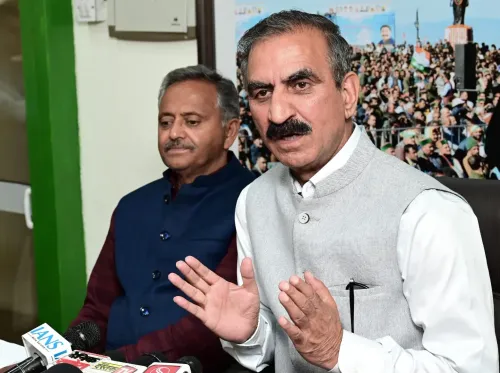
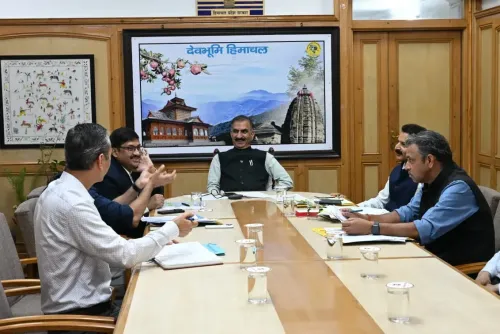
Uttarakhand CM Pushkar Singh Dhami and Himachal Pradesh CM Sukhvinder Singh Sukhu were among the senior leaders present at the meeting.
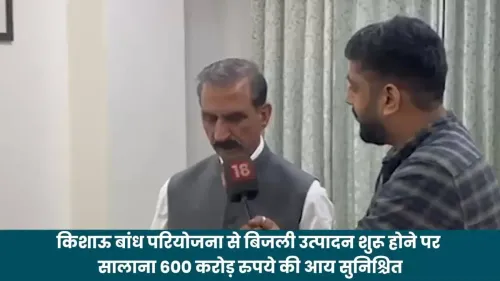
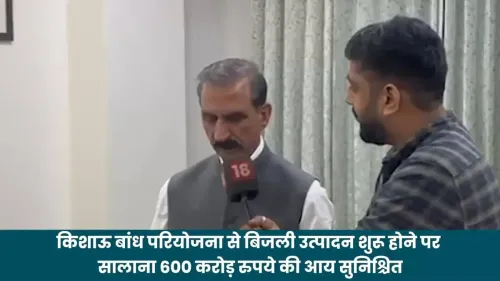
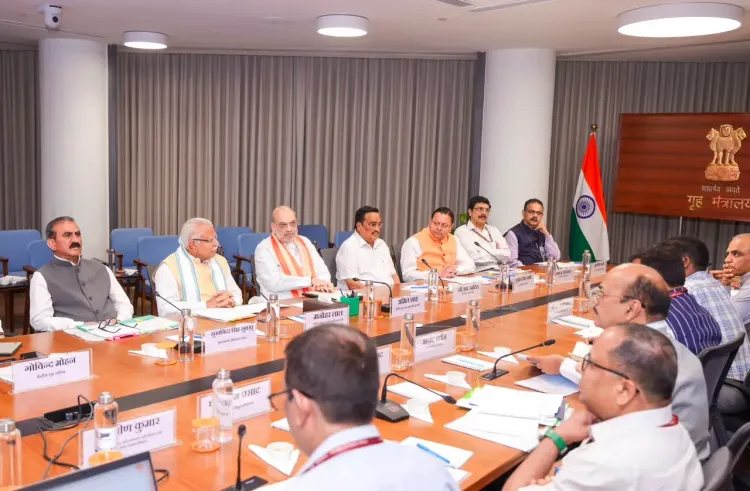
The Chief Minister's Office of Uttarakhand announced on Tuesday, 16 June 2026 that a landmark consensus has been reached on the long-pending Kishau Multipurpose Dam Project at a high-level meeting chaired by Union Home and Cooperation Minister Amit Shah in New Delhi. Six basin states have agreed to sign a Memorandum of Understanding (MoU) to advance the project, which is aimed at the rejuvenation of the Yamuna River.
Context
The post states that at the meeting chaired by Amit Shah, consensus was reached among the concerned states on the 'Kishau Bahuddesheey Bandh Pariyojana' (Kishau Multipurpose Dam Project) — described as a proposal 'pending for years' in the context of Yamuna rejuvenation. Uttarakhand, Himachal Pradesh, Delhi, Uttar Pradesh, Haryana, and Rajasthan have all agreed to the MoU for the project's implementation. Once the MoU is formalised, the project will be placed before the Union Cabinet for approval.
The Kishau dam is proposed on the Tons River, a major tributary of the Yamuna, in the upper Himalayan reaches straddling Uttarakhand and Himachal Pradesh. The project is designed to serve multiple objectives: water storage, irrigation, hydropower generation, and drinking water supply for downstream states — benefits that span the entire Upper Yamuna basin.
Policy Backdrop
Inter-state water-sharing in the Upper Yamuna basin has been governed by the 1994 Upper Yamuna Agreement, which established allocation principles among the six basin states. Despite that framework, multiple rounds of technical discussions under the Upper Yamuna River Board since the early 2000s failed to produce a financial consensus on the Kishau project, leaving it stalled for decades.
The breakthrough funding formula agreed at the meeting allocates 90 per cent of the water-component cost as central government assistance, with the remaining 10 per cent shared among the six states. This 90:10 pattern mirrors arrangements used for earlier Himalayan storage schemes where downstream benefits are distributed across multiple states, making unilateral state financing impractical.
The post notes that under Prime Minister Narendra Modi's leadership, the central government has been working to build consensus on long-pending national-interest issues through the principle of 'Samvad se Samadhan' (resolution through dialogue).
Stakeholders and Impact
The meeting brought together a high-powered group of officials and elected leaders. Union Power Minister Manohar Lal, Union Jal Shakti Minister C R Patil, Uttarakhand Chief Minister Pushkar Singh Dhami, and Himachal Pradesh Chief Minister Sukhvinder Singh Sukhu were all present. Senior officials from the Union Home Ministry, the Prime Minister's Office, and the Jal Shakti Ministry also attended, alongside the Chief Secretaries of Uttarakhand and Himachal Pradesh, including Uttarakhand Chief Secretary Anand Bardhan.
The project's beneficiaries span a wide geography: farmers in western Uttar Pradesh and Haryana stand to gain improved irrigation water, while Delhi's water-stressed population could see augmented drinking water supply. Downstream flow augmentation in the Yamuna — a river under severe ecological stress — is the overarching environmental objective.
What's Next
The immediate next step is the formal signing of the MoU among the six states, after which the project file will be submitted to the Union Cabinet for approval. Cabinet clearance would then trigger the finalisation of detailed project reports and the pursuit of statutory environmental and forest clearances — processes that typically define the actual construction timeline for large Himalayan infrastructure projects.
Central facilitation of inter-state water infrastructure has become a defining mechanism of the present government's approach to resolving legacy disputes. The Kishau breakthrough, if translated into a signed MoU and Cabinet approval swiftly, could set a template for other long-stalled basin-level storage projects across the Ganga and Brahmaputra systems.
Point of View
A model that could be replicated for other stalled basin-level projects. With the Yamuna's ecological crisis a politically sensitive issue, particularly for Delhi, fast-tracking this project also carries electoral optics ahead of multiple state cycles. The speed at which the MoU and Cabinet approval are formalised will be the real test of whether this consensus translates into concrete construction or remains a well-publicised agreement on paper.
NationPress
19 Sept 2026
Frequently Asked Questions
What is the Kishau Multipurpose Dam Project?
The Kishau Multipurpose Dam Project is a long-pending proposal to build a dam on the Tons River, a tributary of the Yamuna, on the Uttarakhand-Himachal Pradesh border. It is designed to provide water storage, irrigation, hydropower generation and drinking water supply to six Upper Yamuna basin states.
Which states agreed to the Kishau dam MoU?
Six states — Uttarakhand, Himachal Pradesh, Delhi, Uttar Pradesh, Haryana and Rajasthan — agreed at the 16 June 2026 meeting to sign a Memorandum of Understanding for the implementation of the Kishau Multipurpose Dam Project.
Who will fund the Kishau dam project?
The central government will bear 90 per cent of the water-component cost as central assistance, while the remaining 10 per cent will be shared among the six participating states.
What happens after the Kishau dam MoU is signed?
Once the MoU is formally signed by the six states, the Kishau project will be submitted to the Union Cabinet for approval. Cabinet clearance will then initiate detailed project report finalisation and statutory environmental clearances.
Why has the Kishau dam been pending for so long?
The Kishau dam proposal has been under discussion since the early 2000s under the Upper Yamuna River Board, but repeated rounds of technical talks failed to produce a consensus on financial burden-sharing among the basin states. The 16 June 2026 meeting resolved this by adopting a 90:10 Centre-to-states funding formula.