Amit Shah announces MoU breakthrough on Kishau Dam
Synopsis
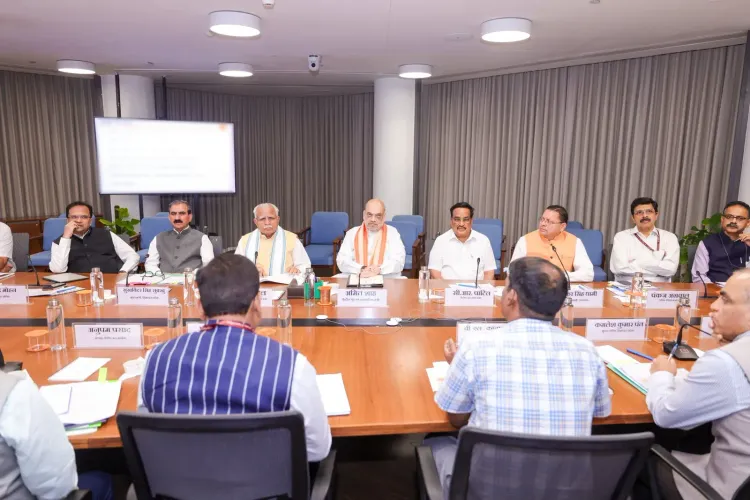
Union Home Minister Amit Shah on 16 June 2026 announced a landmark MoU agreement among six Yamuna basin states — Himachal Pradesh, Uttarakhand, Delhi, Uttar Pradesh, Haryana, and Rajasthan — to implement the long-stalled Kishau Multipurpose Dam project on the Tons river, ending decades of inter-state deadlock.
Key Takeaways
Six states — Himachal Pradesh, Uttarakhand, Delhi, Uttar Pradesh, Haryana, and Rajasthan — agreed on 16 June 2026 to sign an MoU for the Kishau Multipurpose Dam.
The Kishau Dam is proposed on the Tons river , a Yamuna tributary, and is designed for irrigation, hydropower, and drinking water storage.
The project was first conceived in the 1960s-70s but remained stalled for decades due to inter-state disputes over cost and benefit sharing.
A previous 1994 MoU among the same six states had established proportional Yamuna water shares, forming the basis for current negotiations.
The agreement advances the government's stated goal of a 'clean and rejuvenated Yamuna' and unlocking river-valley infrastructure across northern India.
Formal MoU signing, updated benefit-sharing ratios, and Union Cabinet or NITI Aayog approvals for funding are the key next steps to watch.
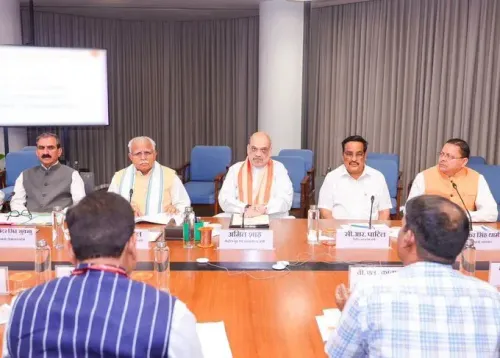
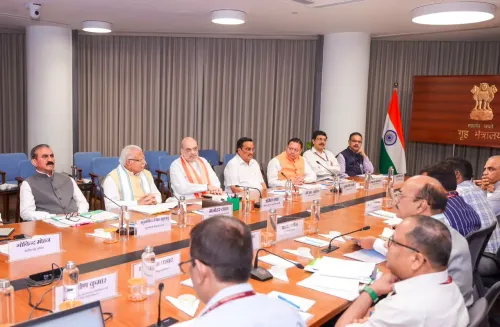
Union Home Minister Amit Shah on Tuesday, 16 June 2026 announced a landmark breakthrough on the long-stalled Kishau Multipurpose Dam project, with six stakeholder states agreeing to sign a Memorandum of Understanding for its implementation. The agreement brings together Himachal Pradesh, Uttarakhand, Delhi, Uttar Pradesh, Haryana, and Rajasthan — all states sharing the Yamuna river basin — under a common framework for equitable benefit-sharing.
Context
Shah posted on X that 'a landmark breakthrough was achieved today on issues related to the Kishau Multipurpose Dam,' describing the six-state consensus as a step towards 'the vision of a clean and rejuvenated Yamuna.' The minister framed the development within the Modi government's broader agenda of resolving long-pending inter-state disputes to accelerate infrastructure development.
The Kishau Dam is proposed on the Tons river, a major tributary of the Yamuna, in the Himalayan foothills. It is designed to serve multiple purposes — irrigation, hydropower generation, and drinking water storage — for the northern river basin states.
Policy Backdrop
The Kishau project was first conceived in the 1960s and 1970s as part of Yamuna basin master plans but remained stalled for decades over disputes on cost and benefit sharing among basin states. A 1994 MoU among the same six states had established proportional Yamuna water shares, laying the groundwork that underpins the current round of negotiations.
The Upper Yamuna River Board, a statutory body constituted to regulate Yamuna water allocation, has historically overseen inter-state agreements in this basin. Successive central governments have prioritised clearance of such multi-state river-valley projects to unlock irrigation and power potential while also addressing pollution in the Ganga-Yamuna river system. The present agreement continues a pattern of high-level political facilitation to resolve disputes on Himalayan tributaries.
Home Minister Shah, who also holds the portfolio of Minister of Cooperation, has been a key figure in facilitating centre-state coordination on infrastructure and development projects under the current government.
Stakeholders and Impact
The six states party to the MoU collectively represent a vast population dependent on the Yamuna basin for agriculture, drinking water, and power. The dam's multipurpose design means its benefits — once construction proceeds — would span irrigation for farmers, hydropower for the grid, and water storage for urban and rural consumers across the basin.
Shah stated the resolution 'will benefit millions by ensuring the equitable sharing of project benefits.' The Yamuna, which flows through Uttarakhand, Himachal Pradesh, Haryana, Delhi, and Uttar Pradesh, has been the subject of repeated inter-state disputes and pollution-control efforts, making a unified basin-wide agreement politically significant.
What's Next
The immediate next step is the formal MoU signing ceremony among the six states. Observers will watch for the release of updated cost-benefit sharing ratios among the stakeholder states, as the exact terms of the June 2026 agreement are yet to be made public. Follow-up approvals from the Union Cabinet or NITI Aayog for project funding and a construction schedule are also expected as the agreement moves towards implementation.
The breakthrough, if translated into a binding agreement and subsequent construction, could mark the end of a decades-long impasse on one of northern India's most consequential river infrastructure projects.
Point of View
Which has sought to position itself as a resolver of inter-state disputes that previous administrations left unaddressed. By bringing six states — governed by different parties — to a common table on a project stalled since the 1960s, Home Minister Shah is reinforcing his role as the government's chief centre-state coordinator. The Yamuna revival narrative also serves a dual political purpose: it addresses a core environmental concern for voters in Delhi ahead of any future electoral cycle while delivering tangible infrastructure benefits to agrarian constituencies in Haryana, UP, and Rajasthan. Whether the MoU translates into ground-level construction will depend on the speed of formal approvals and the durability of the cost-sharing formula among the six states.
NationPress
16 Sept 2026
Frequently Asked Questions
What is the Kishau Multipurpose Dam project?
The Kishau Multipurpose Dam is a long-pending infrastructure project proposed on the Tons river, a tributary of the Yamuna, designed to provide irrigation, hydropower, and drinking water storage to six northern Indian states. The project was first conceived in the 1960s-70s but remained stalled for decades over inter-state disputes.
Which states are part of the Kishau Dam MoU?
Six states — Himachal Pradesh, Uttarakhand, Delhi, Uttar Pradesh, Haryana, and Rajasthan — agreed on 16 June 2026 to sign an MoU for the implementation of the Kishau Multipurpose Dam project.
What did Amit Shah announce about the Kishau Dam?
Union Home Minister Amit Shah announced on 16 June 2026 that all six Yamuna basin stakeholder states had agreed to sign an MoU for the Kishau Dam, calling it a 'landmark breakthrough' that would benefit millions through equitable water sharing and contribute to a clean and rejuvenated Yamuna.
Why was the Kishau Dam project stalled for so long?
The Kishau Dam project was stalled primarily due to inter-state disputes over cost and benefit sharing among the six basin states. Though a 1994 MoU had established proportional Yamuna water shares, disagreements prevented the project from moving to implementation for decades.
What happens after the Kishau Dam MoU is signed?
After the formal MoU signing, the key next steps include the release of updated cost and benefit-sharing ratios among the six states, followed by Union Cabinet or NITI Aayog approvals for project funding and a construction timeline.