Amit Shah Chairs Meet on Kishau Dam, Pending Since 2018
Synopsis
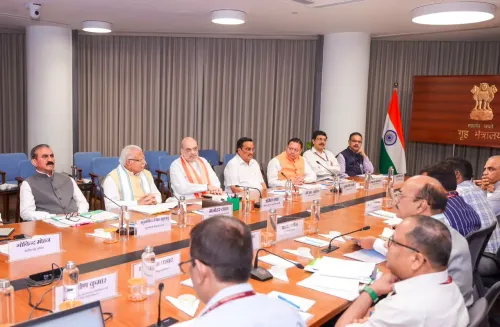
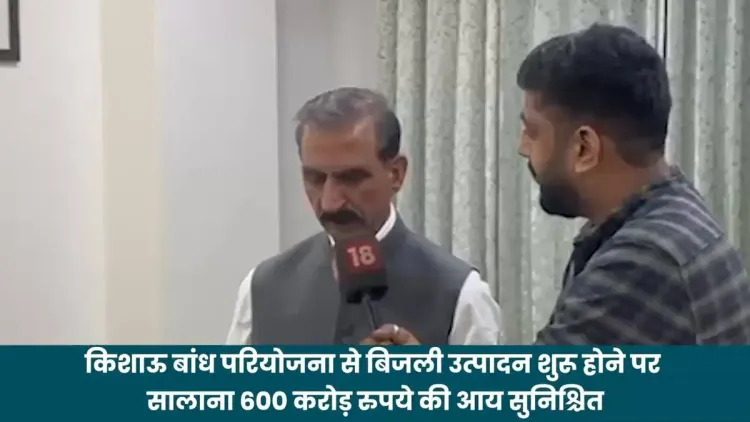
Union Home Minister Amit Shah chaired a detailed meeting on 16 June 2026 to address pending issues on the Kishau Dam Project, a national-importance scheme on the Tons River stalled since 2018, as announced by the Chief Minister's Office of Himachal Pradesh.
Key Takeaways
The Kishau Dam Project on the Tons River was declared of national importance in 2018 but has remained pending for over eight years.
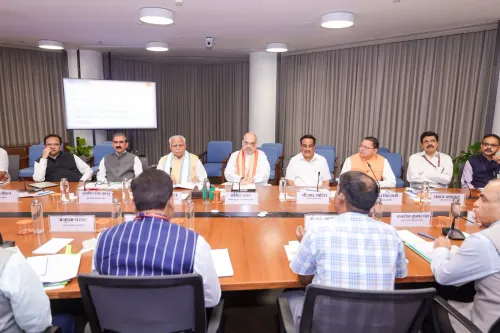
Union Home Minister Amit Shah chaired a meeting on 16 June 2026 to discuss various issues related to the project.
The project is a multi-purpose scheme covering hydropower, irrigation, and drinking water for Himachal Pradesh and Uttarakhand .
Inter-state disputes over cost-sharing, power allocation, and rehabilitation have been the primary obstacles to progress.
The meeting signals renewed Central government push to resolve the long-standing inter-state logjam.
Possible outcomes include formation of a joint implementation committee and resolution of funding formulas between the two states.
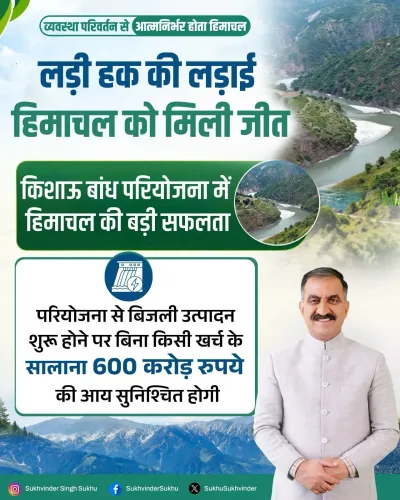
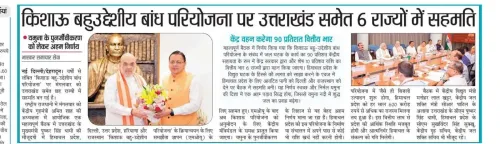
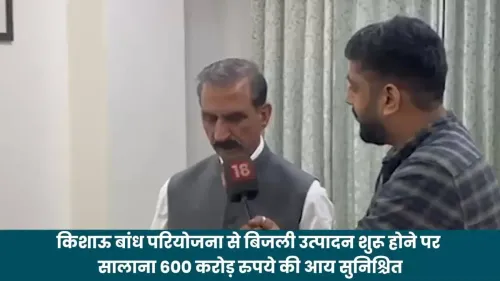
The Chief Minister's Office of Himachal Pradesh announced on Tuesday, 16 June 2026 that a high-level meeting chaired by Union Home Minister Amit Shah was convened to discuss the long-pending Kishau Dam Project, a scheme of national importance that has remained stalled since 2018.
The official post stated: 'वर्ष 2018 से राष्ट्रीय महत्व की किशाऊ बांध परियोजना लंबित थी। आज केंद्रीय गृह मंत्री श्री अमित शाह जी की अध्यक्षता में आयोजित बैठक में इस परियोजना से जुड़े विभिन्न मुद्दों पर विस्तार से चर्चा हुई।' ('The Kishau Dam Project, of national importance, has been pending since 2018. Today, at a meeting chaired by Union Home Minister Amit Shah, various issues related to this project were discussed in detail.')
Context
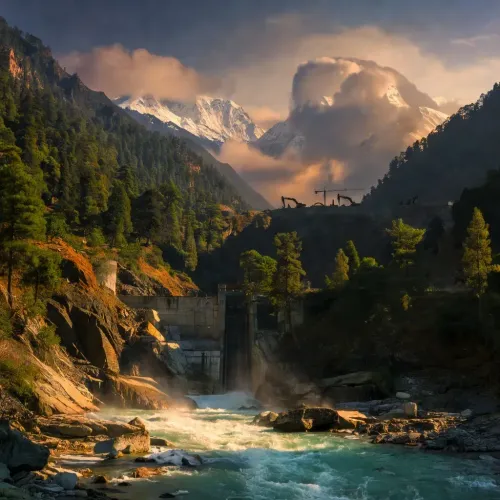
The Kishau Dam Project is a multi-purpose infrastructure scheme proposed on the Tons River, a tributary of the upper Ganga basin. The project is designed to generate hydropower and provide irrigation and drinking water to communities across two Himalayan states. It was formally designated a project of national importance in 2018, but inter-state coordination between Himachal Pradesh and Uttarakhand — the two co-riparian states — stalled progress in the years that followed. The Tons River forms a natural boundary between the two states, making any dam project on its course subject to bilateral negotiation on benefit-sharing, cost apportionment, and site-related decisions. These complexities have historically slowed execution even after national-importance status was conferred.Policy Backdrop
Central government intervention in inter-state Himalayan river disputes follows a well-established pattern. When two states fail to resolve issues bilaterally — particularly on water-sharing ratios, power allocation, environmental clearances, and rehabilitation of affected communities — the Union government steps in through ministerial-level meetings to break the logjam. The Home Ministry has been a key facilitator in such disputes, given its constitutional role in managing inter-state relations. The renewed emphasis on storage-based hydropower in the upper Ganga basin has added urgency to projects like Kishau, which are seen as critical to India's clean energy and water security goals. The meeting chaired by Amit Shah signals that the Centre is actively seeking to move the project out of its eight-year impasse.Stakeholders and Impact
The primary stakeholders include the governments of Himachal Pradesh and Uttarakhand, riparian communities along the Tons River, and downstream populations dependent on Ganga basin water resources. Farmers, urban water utilities, and power distribution companies in both states stand to benefit if the project moves to implementation. For Himachal Pradesh, which derives a significant portion of its revenue from hydropower royalties, the Kishau project represents both an energy asset and a long-standing inter-governmental commitment. Uttarakhand similarly has stakes in the power and irrigation benefits that the dam promises to deliver to its western districts.What's Next
The meeting chaired by Amit Shah on 16 June 2026 is expected to set the stage for follow-up decisions, potentially including the formation of a joint implementation committee between the two states, resolution of cost-sharing formulas, and a fresh timeline for environmental and rehabilitation clearances. Whether the Centre moves to directly fund or co-fund the project — a mechanism used in other stalled Himalayan hydro schemes — will be a key indicator of how seriously the logjam is being addressed. If the political momentum from this meeting translates into actionable agreements, the Kishau Dam Project could finally move from the drawing board toward ground-level execution, with significant implications for water and energy security across the upper Ganga corridor.Point of View
Not merely advisory coordination. The timing, coming amid renewed national focus on storage-based hydropower and water security in the Himalayan belt, suggests the Centre is packaging stalled river projects as deliverables within a broader infrastructure push. Whether this meeting produces binding commitments or remains another consultative exercise will determine if Kishau finally escapes its eight-year holding pattern.
NationPress
18 Sept 2026
Frequently Asked Questions
What is the Kishau Dam Project?
The Kishau Dam Project is a multi-purpose scheme proposed on the Tons River, shared between Himachal Pradesh and Uttarakhand, designed to generate hydropower and supply irrigation and drinking water to communities in both states.
Why has the Kishau Dam been pending since 2018?
The project was declared of national importance in 2018 but stalled due to unresolved inter-state disputes between Himachal Pradesh and Uttarakhand over cost-sharing, power allocation, environmental clearances, and rehabilitation of affected communities.
Why did Amit Shah chair the Kishau Dam meeting?
As Union Home Minister, Amit Shah chairs inter-state dispute resolution meetings; the Home Ministry holds constitutional responsibility for managing disputes between states, making it the appropriate forum when bilateral talks between Himachal Pradesh and Uttarakhand have not produced results.
Which river does the Kishau Dam sit on?
The Kishau Dam is proposed on the Tons River, a tributary of the Yamuna that flows along the border between Himachal Pradesh and Uttarakhand in the upper Ganga basin.
What could come out of the 16 June 2026 Kishau Dam meeting?
Possible outcomes include the formation of a joint implementation committee between the two states, agreement on cost and benefit-sharing ratios, and a fresh timeline for environmental and rehabilitation clearances needed to restart the project.