Jal Shakti Minister Paatil Highlights PM Modi on Cooperative Farming

Synopsis
Jal Shakti Minister C. R. Paatil amplified PM Modi's call for cooperative-led farmer prosperity, spotlighting Banaskantha's globally recognised potatoes and Banas Dairy as models for cluster-based agri-processing across India.
Key Takeaways
Paatil posted on 30 October 2026 amplifying PM Modi's remarks on cooperative farming and agri-processing.
Banaskantha district in Gujarat is highlighted for both its large-scale potato cultivation and its Banas Dairy cooperative legacy.
Banas Dairy is one of India's largest dairy cooperatives and a benchmark for the cooperative development model.
The Ministry of Cooperation , established in July 2021 , is the central institutional vehicle for replicating cooperative and processing-cluster successes nationwide.
PM Modi has cited the Amul-Banas template repeatedly since 2014 as a scalable model for raising farmer incomes through value addition.
New cooperative-based food-processing clusters and potential potato/dairy export schemes are being watched ahead of the next Union Budget.
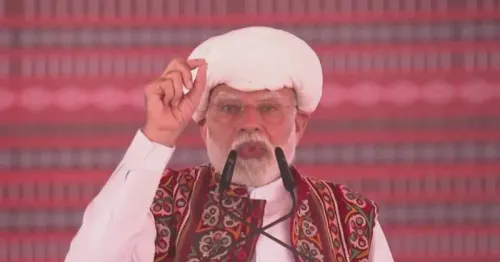
Cooperatives are rewriting the economics of farming in Banaskantha — and Union Jal Shakti Minister C. R. Paatil wants that story told loudly. On Friday, 30 October 2026, Paatil took to X to amplify Prime Minister Narendra Modi's remarks on how cooperative structures, agri-processing, and cluster-based development are opening new frontiers of prosperity for India's farmers.
Posting in Hindi, the senior BJP leader wrote: 'सहकारिता की शक्ति से किसानों की समृद्धि को मिल रहा नया विस्तार!' — ('The prosperity of farmers is finding new dimensions through the power of cooperatives!') He specifically noted that PM Modi had highlighted the global recognition earned by Banaskantha's potatoes and the contribution of Banas Dairy as proof that the cooperative model can transform rural livelihoods far beyond milk.
Banas Dairy and Banaskantha's Potato Belt: A Model in Motion
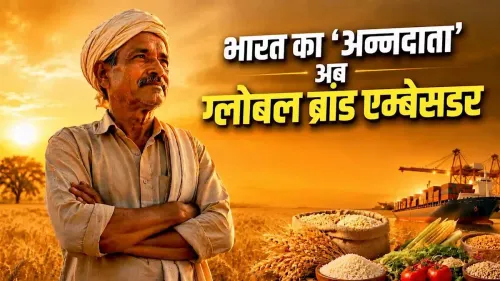
Banas Dairy, headquartered in Banaskantha district of northern Gujarat, is one of India's largest dairy cooperatives, a cornerstone of the state's celebrated white revolution legacy. The same district also hosts a vast potato-growing belt, and efforts have been underway to build an international identity for its produce — positioning Banaskantha alongside its dairy success with a second agri-commodity on the global map.
PM Modi has consistently pointed to the Amul-Banas cooperative template as a replicable model since 2014 — one where collective farmer ownership, processing infrastructure, and assured market linkages drive income far above what raw produce alone can fetch. The argument is simple and sharp: value addition, not just primary production, is the ladder out of agrarian distress.
The Ministry of Cooperation's Role in Scaling the Template
The institutional backbone for this push was laid in July 2021, when the Centre created a standalone Ministry of Cooperation — the first time independent India had one — to revitalise the cooperative sector and knit it into agri-processing policy. The ministry has since worked to link cooperative societies with food-processing clusters, training pipelines, and export-readiness programmes.
Paatil's post lands at a moment when policymakers are watching closely to see which crops and districts emerge as the next cluster-development success stories. Potato processing and dairy exports from Gujarat sit near the top of that watchlist, with new cooperative-based food-processing clusters and potential export-incentive announcements expected in the coming parliamentary and budget cycles.
If Banaskantha can do for potatoes what Anand did for milk, India's cooperative movement will have found its second iconic chapter — and the political case for cluster-based rural development will be nearly impossible to argue against.
Point of View
The framing argues that the cooperative model is crop-agnostic and infinitely replicable — a powerful political counter to opposition charges of neglecting small farmers. The July 2021 creation of a dedicated Ministry of Cooperation signalled that this is a long-game institutional bet, not a one-off Gujarat showcase. Whether that bet yields measurable income gains for non-dairy farmer cooperatives nationally will define the model's true legacy.
NationPress
31 Oct 2026
Frequently Asked Questions
What is Banas Dairy and why is it significant for farmers?
Banas Dairy is a major dairy cooperative society based in Banaskantha, Gujarat , that collects, processes and markets milk while supporting farmer incomes — making it a flagship example of India's cooperative rural-economy model.
Why is Banaskantha known for potatoes?
Banaskantha district in northern Gujarat is one of India's large-scale potato-growing regions, and recent efforts by cooperative and government bodies have sought to give its produce a distinct global identity.
What is India's Ministry of Cooperation?
The Ministry of Cooperation was established in July 2021 as a standalone central ministry to revitalise India's cooperative sector and integrate it with agri-processing and rural development policy.
What did PM Modi say about cooperative farming and Banaskantha?
According to C. R. Paatil's post, PM Modi highlighted the global recognition of Banaskantha's potatoes and Banas Dairy 's contribution as evidence that cooperatives, agri-processing, and cluster-based development open new opportunities for farmers.
What is cluster-based development in agriculture?
Cluster-based agricultural development groups farmers in a region around a shared crop or product, links them to processing infrastructure and markets through cooperatives, and aims to raise incomes via value addition rather than raw-commodity sales alone.