HP CM Office Flags Unfair Cost Split in Multipurpose River Project
Synopsis
The Chief Minister's Office of Himachal Pradesh has publicly objected to the cost-sharing structure of a multipurpose river project, arguing it is unfair that states must bear all power-generation costs while the Centre funds water benefits for downstream states.
Key Takeaways
The Chief Minister's Office of Himachal Pradesh posted its formal disagreement on June 16, 2026 over a multipurpose river project's funding arrangement.
The Centre currently provides grants to downstream states receiving water from the project but does not extend equivalent support for the power-generation component.
Himachal Pradesh argues that bearing the full cost of power generation — while downstream states receive subsidised water — is inequitable.
The dispute reflects a structural fault line in India's federal river-management framework, rooted in the River Boards Act, 1956 .
Similar funding conflicts have arisen in other shared Himalayan river basins where power and water benefits accrue to different states.
Resolution may depend on revised guidelines from the Ministry of Jal Shakti , the Ministry of Power , or a NITI Aayog task force.
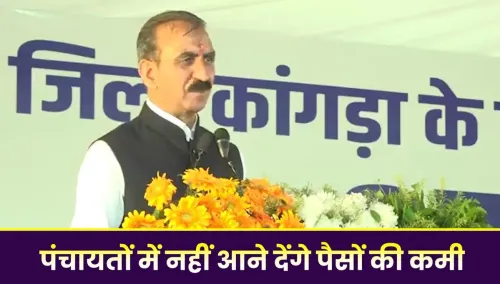
The Chief Minister's Office of Himachal Pradesh on Tuesday, June 16, 2026, publicly registered its dissent over the funding structure of a multipurpose river infrastructure project, arguing that the current cost-sharing arrangement between the Centre and state governments is inequitable.
Context
The CMO's post, shared in Hindi, states: 'Hamari sarkar ka mat hai ki jin rajyon ko is pariyojana se paani milega, unhe kendra sarkar anudan de rahi hai, lekin jis paani se bijli ka utpadan hoga, uska pura kharch rajya sarkaren vahan karen, yeh uchit nahin hai.' In English: 'Our government's view is that while the Centre is providing grants to states that will receive water from this project, it is not fair that state governments alone must bear the entire cost of the power generated from the same water. We have therefore expressed our disagreement with this arrangement.'
The statement underscores a structural grievance that Himachal Pradesh, as an upstream Himalayan state, has long held regarding how multipurpose river projects are financed across jurisdictions.
Policy Backdrop
India's federal river-management framework, rooted in the River Boards Act, 1956 and subsequent tribunal awards, has historically separated funding for irrigation and water-supply components — which often attract central grants — from hydroelectric components, which states are typically expected to finance themselves.
The core tension is geographic: downstream states such as Punjab, Haryana, and Delhi receive irrigation and drinking-water benefits from storage infrastructure built in Himachal Pradesh, and the Centre subsidises those benefits. Yet the power generated from the same water — which flows through Himachal Pradesh's turbines — draws no equivalent central support, leaving the upstream state to shoulder those capital and operational costs alone.
The Ministry of Jal Shakti and the Ministry of Power together govern the policy guidelines that determine how costs are apportioned in such shared-basin projects, making any revision to those norms a matter of inter-ministerial coordination.
Stakeholders and Impact
Himachal Pradesh is home to some of India's most significant hydroelectric potential, and the state's revenues are substantially tied to power royalties and generation. When the Centre funds only the water-delivery side of a project while the state bears the power-side investment, the fiscal asymmetry can strain state finances and slow project execution.
Downstream states, which receive subsidised water access, have a different calculus — their agricultural and urban water security depends on these projects moving forward. Any renegotiation of cost-sharing terms could affect project timelines and, by extension, water availability for millions of beneficiaries across the northern plains.
The broader pattern is not unique to Himachal Pradesh: upstream states across India's Himalayan river basins have raised similar objections when power benefits and water benefits accrue to different jurisdictions under an uneven funding regime.
What's Next
The Himachal Pradesh government's formal dissent signals that negotiations over this project's financing are ongoing and unresolved. The next inflection points will likely be deliberations at the relevant river board, a NITI Aayog task force on Himalayan projects, or direct Centre-state discussions under the Ministry of Jal Shakti.
If the Centre revises its funding-pattern guidelines to extend grants to the power component — or if a special cost-sharing formula is negotiated — it could set a precedent for how future multipurpose Himalayan projects are structured, with significant implications for both upstream state finances and downstream water security.
Point of View
Leveraging social media to frame the dispute in equity terms before formal talks conclude. The post crystallises a recurring asymmetry in Indian federal water governance: upstream Himalayan states generate hydropower and store water for the nation but are expected to self-finance the power side of shared infrastructure. If the Centre concedes even a partial grant for the power component, it would mark a meaningful shift in the cost-allocation doctrine that has governed multipurpose projects for decades. The timing also signals that the Himachal government is unwilling to let the arrangement pass quietly, raising the political stakes for any inter-ministerial resolution.
NationPress
19 Sept 2026
Frequently Asked Questions
Why is Himachal Pradesh objecting to the river project cost sharing?
Himachal Pradesh argues it is unfair that the Centre gives grants to downstream states that receive water from the project, while the state must bear the entire cost of power generated from the same water. The CMO formally expressed this disagreement on June 16, 2026.
Which states receive water from the project Himachal Pradesh is disputing?
The post does not name the specific project, but downstream states that typically benefit from Himalayan multipurpose projects include Punjab, Haryana, and Delhi, which receive irrigation and drinking-water supplies.
What is the Centre's current policy on funding multipurpose river projects?
Under the existing framework, the Central Government provides grants for irrigation and water-supply components of inter-state river projects, while the hydroelectric or power-generation component is generally expected to be financed by the concerned state government.
What law governs cost sharing in India's river projects?
The River Boards Act, 1956, along with subsequent inter-state tribunal awards, established the foundational principles for allocating costs between power and irrigation components in multipurpose river projects.
What could change after Himachal Pradesh's objection?
The dispute may be taken up at the relevant river board, a NITI Aayog task force on Himalayan projects, or through direct Centre-state talks under the Ministry of Jal Shakti, potentially leading to revised funding-pattern guidelines.