Rahul Gandhi Slams Education System, Launches 'Chhatron Ki Goonj'
Synopsis
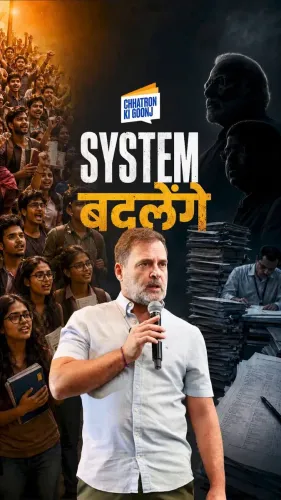
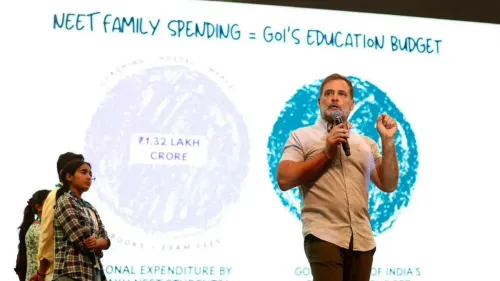
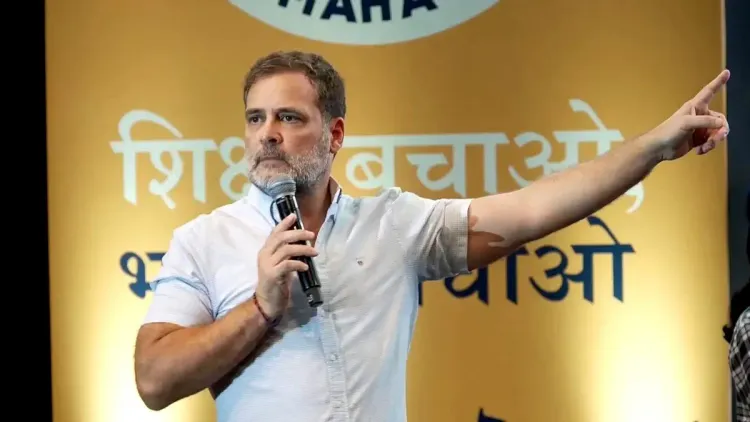
Congress leader Rahul Gandhi on June 17 launched 'Chhatron Ki Goonj,' calling India's education system an extortion mechanism and claiming NEET coaching expenditure by families rivals the government's entire education budget, demanding systemic reform for student aspirants.
Key Takeaways
Rahul Gandhi pinned a post on June 17, 2026 declaring India's education system a 'mere extortion mechanism.' He claimed aggregate family spending on NEET preparation equals the entire central government education budget — a figure not corroborated by official published data.
Gandhi launched the 'Chhatron Ki Goonj' (Echo of Students) campaign, describing it as a 'revolution' rather than a routine outreach drive.
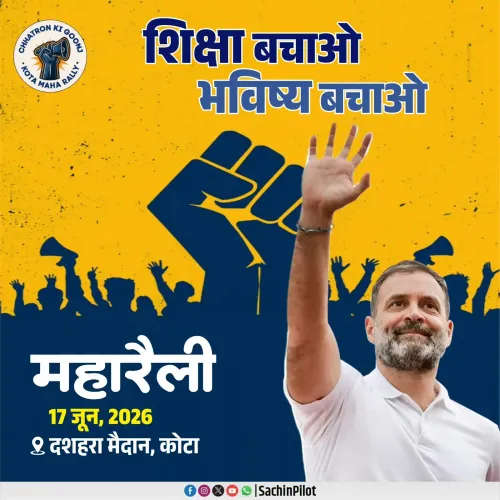
Kota , Rajasthan's coaching hub, was cited as a symbol of the systemic pressure on student aspirants across India.
The campaign targets structural inequities in the NEET framework that critics argue disadvantage students from smaller towns and lower-income families.
The next Union Budget education debate and any NEET restructuring proposals will be the key policy moments to watch.
Congress leader and Leader of the Opposition Rahul Gandhi on Wednesday, June 17, 2026, launched a sharp attack on India's education system, calling it a 'mere extortion mechanism' and announcing the 'Chhatron Ki Goonj' campaign as a push for systemic reform — with Kota, Rajasthan's coaching capital, serving as a symbolic anchor for the message.
In a Hindi-language post pinned to his official profile, Gandhi wrote: 'Bharat ki shiksha vyavastha aaj sirf ek vasuli tantra ban gayi hai' — 'India's education system has today become nothing more than an extortion racket.' He claimed that the total amount families across the country spend on NEET preparation alone equals the entire education budget of the Government of India — a striking comparison flagged as unverified in official data.
Context
Gandhi's post is pinned to his profile, signalling that the Congress party intends Chhatron Ki Goonj — translated as 'The Echo of Students' — to be a sustained political campaign rather than a one-off statement. The post invokes Kota directly, the Rajasthan city that has become synonymous with high-pressure residential coaching for NEET and JEE aspirants, and extends the message to students 'from every corner of the country.'
Gandhi framed the campaign as a 'revolution,' writing: 'Chhatron ki goonj sirf abhiyan nahin — ek kranti hai' — 'The Echo of Students is not just a campaign — it is a revolution.' He called for a system that gives young people the right to dream big and supports them in achieving those dreams 'without mortgaging their lives.'
Policy Backdrop
The National Eligibility cum Entrance Test (NEET) was introduced as the single national exam for undergraduate medical admissions from 2016, replacing a patchwork of state-level tests. The stated goal was standardisation, but critics argue the shift accelerated the transfer of preparation costs from public institutions onto private coaching chains and middle-class families.
The National Education Policy 2020 envisioned reducing dependence on high-stakes entrance examinations, yet the NEET-JEE framework remained largely intact. Kota grew into India's largest coaching hub in this environment, with tens of thousands of students relocating there annually, often under intense academic and financial pressure. The city has also drawn attention for student mental-health crises linked to the high-stakes coaching culture.
Stakeholders and Impact
The campaign targets medical aspirants and their families — predominantly middle-class households that bear the cost of coaching fees, hostel accommodation, and repeated exam attempts. Students from smaller towns and rural areas have long argued that the national entrance format advantages those with access to expensive urban coaching, creating a structural inequity in medical college admissions.
Gandhi's post explicitly acknowledges this divide: 'Every young person is different, but the story is the same for all — either they were not allowed to dream, or the dreams they dared to have were shattered.' The #ChhatronKiGoonj hashtag positions the Congress party as the political voice for this constituency ahead of future electoral cycles.
What's Next
The immediate political test for Chhatron Ki Goonj is whether it translates into concrete legislative proposals — such as a restructuring or decentralisation of NEET, or a demand for a higher Union Budget allocation for education. The next Union Budget debate on education outlays will be a key moment for the Opposition to press these demands on the floor of the Lok Sabha, where Gandhi serves as Leader of the Opposition.
With the campaign pinned and hashtagged, Congress appears to be building a dossier of student testimonies from Kota and beyond — a grassroots mobilisation strategy that could intensify pressure on the government to revisit the design and cost structure of national entrance examinations.
Point of View
Not a reactive comment. The NEET controversy — scarred by paper-leak scandals and rising coaching costs — has already demonstrated its capacity to animate public anger, making it fertile ground for Opposition mobilisation. By anchoring the narrative in Kota and invoking the emotional language of broken dreams, Gandhi is also countering the BJP's own youth-outreach framing. Whether the campaign yields legislative traction in the Lok Sabha will determine if it is remembered as a policy intervention or a campaign slogan.
NationPress
19 Sept 2026
Frequently Asked Questions
What is 'Chhatron Ki Goonj' launched by Rahul Gandhi?
'Chhatron Ki Goonj' — meaning 'Echo of Students' — is a Congress-led outreach campaign announced by Rahul Gandhi on June 17, 2026, aimed at highlighting student grievances over education access, NEET coaching costs, and mental health pressures, particularly in cities like Kota.
What did Rahul Gandhi say about NEET and India's education budget?
Gandhi claimed that the total money Indian families spend on NEET preparation alone equals the entire education budget of the Government of India, calling the education system an 'extortion mechanism.' This specific figure has not been corroborated by official government data.
Why did Rahul Gandhi mention Kota in his post?
Kota, a city in Rajasthan, is India's largest hub for residential coaching institutes preparing students for NEET and JEE. Gandhi cited Kota as a symbol of the intense financial and psychological pressure placed on medical and engineering aspirants across the country.
What is NEET and why is it controversial?
NEET (National Eligibility cum Entrance Test) is the single national exam for undergraduate medical admissions, introduced in 2016. It has been controversial due to alleged paper leaks, the high cost of private coaching it incentivises, and concerns that it disadvantages students from smaller towns and rural areas.
What reforms to NEET is the Congress party demanding?
While the 'Chhatron Ki Goonj' campaign calls for a system that allows students to pursue their dreams without financial burden, specific legislative proposals — such as decentralising or restructuring NEET — are expected to be pressed during the next Union Budget education debate in the Lok Sabha.