Rahul Gandhi flags ₹3.5 lakh crore exam prep burden on families
Synopsis
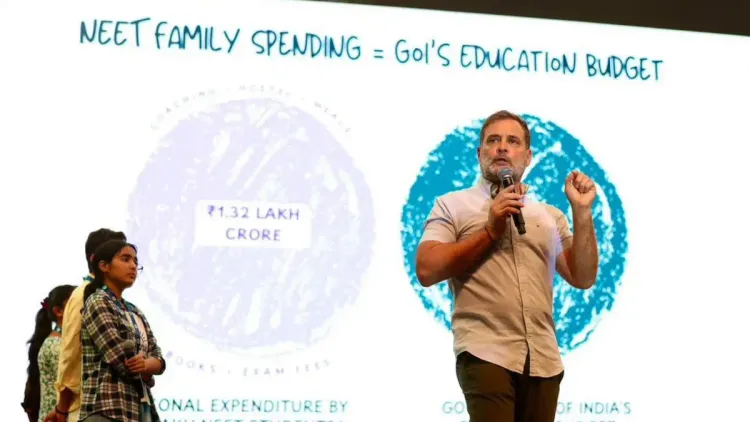
Congress leader Rahul Gandhi has flagged that Indian families spend an estimated ₹3.5 lakh crore annually on coaching for just five exams — NEET, JEE, SSC, UPSC, and RRB — roughly three times the Union education budget, calling it a burden the government has failed to shoulder.
Key Takeaways
Rahul Gandhi posted on 17 June 2026 that Indian families spend an estimated ₹3.5 lakh crore per year on preparation for five major competitive exams.
The five exams cited are NEET, JEE, SSC, UPSC, and RRB — covering medical, engineering, civil services, and government job aspirants.
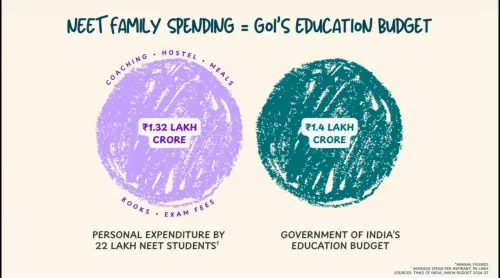
Gandhi claims this figure is approximately three times the Union government's total education budget .
He equates the amount to the combined budgets of five ministries : Education, Health, Labour, Science, and Women and Child Development.
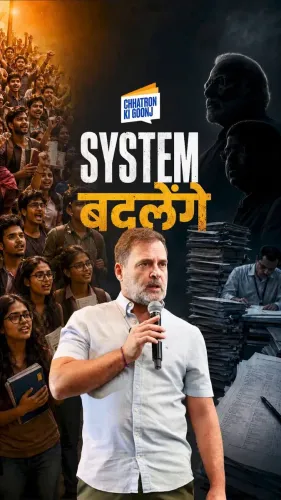
The post argues that a financial responsibility belonging to the state is being transferred onto ordinary families, leaving youth with 'stress, uncertainty, unemployment, and broken dreams.' The post was shared under #ChhatronKiGoonj , signalling a broader Congress campaign around student welfare and examination reform.
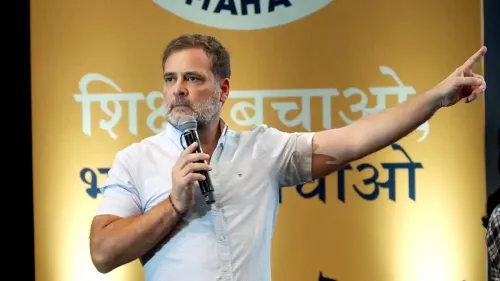
Congress leader Rahul Gandhi, Leader of the Opposition in the Lok Sabha, on Wednesday, 17 June 2026, posted a sharp critique on X highlighting the staggering financial burden Indian families bear to prepare for five major competitive examinations — NEET, JEE, SSC, UPSC, and RRB — arguing the cost, estimated at ₹3.5 lakh crore annually, represents a systemic failure of public responsibility.
Context
Gandhi's post, shared under the hashtag #ChhatronKiGoonj ('the echo of students'), states that Indian students and their families collectively spend ₹3.5 lakh crore every year just on coaching and preparation for these five exams. He frames this figure as approximately three times the Union government's entire education budget, and comparable to the combined budgets of five ministries — Education, Health, Labour, Science, and Women and Child Development.
Translated from Hindi, Gandhi wrote: 'And what do crores of young people get in return? Stress, uncertainty, unemployment, and broken dreams. The burden that is the government's responsibility is today being borne by families.'
Policy Backdrop
India's competitive examination ecosystem has grown dramatically over the past decade. NEET, introduced in 2016 as a single national medical entrance test, replaced dozens of state-level exams. The Joint Entrance Examination (JEE) has been conducted in its current two-stage format since 2013. UPSC remains the gateway to the Indian Administrative Service, Indian Police Service, and other top civil posts, while SSC and RRB govern recruitment to a large share of central government and railway jobs.
As these high-stakes national exams consolidated access to limited government seats and jobs, a vast private coaching industry emerged to fill the gap left by under-resourced public schools and colleges. Cities like Kota in Rajasthan became synonymous with intensive coaching culture — and, tragically, with rising student suicides. The National Education Policy 2020 had recommended reducing reliance on high-stakes single examinations and restructuring assessment frameworks, though implementation has been uneven.
Successive governments have expanded single-window national exams while public educational infrastructure grew at a slower pace, effectively shifting preparation costs from the state onto households. Private coaching has thus evolved into a parallel, multi-lakh-crore system that critics argue entrenches inequality, favouring families with greater financial resources.
Stakeholders and Impact
The sheer scale Gandhi cites — ₹3.5 lakh crore in household spending — underscores how deeply the examination economy penetrates family finances, particularly among the middle class and aspirational lower-income groups. Students from smaller towns and rural areas often relocate to coaching hubs, adding living costs to already steep tuition fees.
For the coaching industry, this represents enormous revenue, but for families it often means depleted savings, loans, and years of deferred income. Youth job aspirants face a prolonged period of economic inactivity while preparing, contributing to what economists describe as 'exam-locked' unemployment — where candidates are neither formally employed nor counted as dropouts.
The post arrives in a political environment where youth unemployment and examination irregularities — including past controversies around paper leaks in NEET and other exams — have kept student welfare high on the opposition's agenda.
What's Next
Parliamentary scrutiny of the Union Budget 2026-27 education outlay is expected to intensify, with opposition parties likely to use Gandhi's framing to demand a higher allocation and a formal regulatory framework for coaching centres. Proposals for a coaching regulation bill have been discussed in policy circles but not tabled in Parliament. Gandhi's post signals that the Congress party intends to keep student welfare and examination reform central to its political messaging ahead of upcoming legislative sessions.
Point of View
A framing that is politically potent because it shifts blame from students to the state. By anchoring the argument in a single, striking rupee figure and comparing it to ministry budgets, he translates an abstract structural critique into a concrete indictment that resonates with middle-class families stretched thin by coaching fees. The timing, ahead of Budget session scrutiny, suggests a deliberate effort to set the terms of the education spending debate. Whether the ₹3.5 lakh crore estimate withstands independent verification will determine how durable this line of attack proves to be.
NationPress
19 Sept 2026
Frequently Asked Questions
How much do Indian families spend on NEET JEE UPSC coaching every year?
Congress leader Rahul Gandhi has cited an estimate of ₹3.5 lakh crore spent annually by students and families on preparation for five major exams — NEET, JEE, SSC, UPSC, and RRB. This figure has not been independently verified from official government data.
What is India's education budget compared to coaching spending?
Gandhi's post claims the ₹3.5 lakh crore annual coaching spend is approximately three times the Union government's total education budget , and equivalent to the combined budgets of the Education, Health, Labour, Science, and Women and Child Development ministries.
What is #ChhatronKiGoonj?
#ChhatronKiGoonj translates to 'the echo of students' in English. It is a hashtag used by the Indian National Congress to anchor its campaign around student welfare, examination stress, and education policy reform.
Why are competitive exams like NEET and JEE so expensive to prepare for?
As high-stakes national exams became the sole gateway to limited government seats and jobs, a large private coaching industry emerged to fill gaps left by under-resourced public schools and colleges. Families bear tuition, accommodation, and material costs that can run into lakhs of rupees per student.
What has the government done to regulate coaching centres in India?
A formal coaching regulation bill has been discussed in policy circles but has not been tabled in Parliament as of mid-2026. The National Education Policy 2020 recommended reducing reliance on high-stakes single exams, though comprehensive implementation remains pending.