Rahul Gandhi Rallies Students After Kota Event on Fee Exploitation
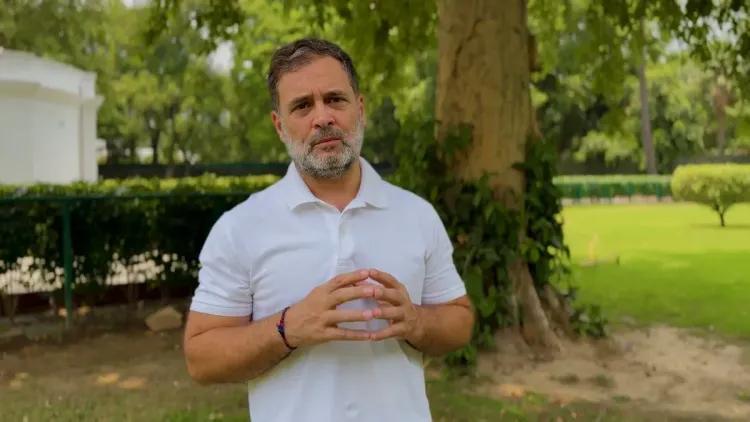
Synopsis
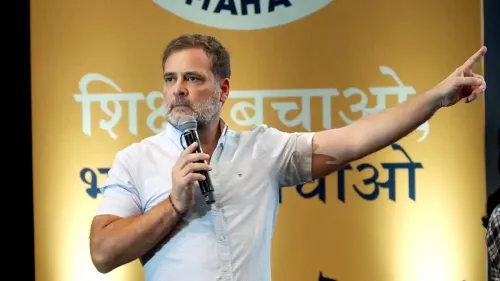
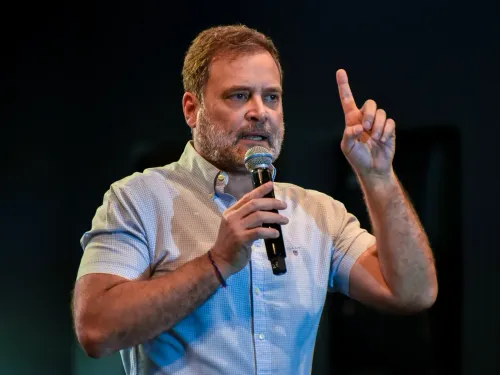
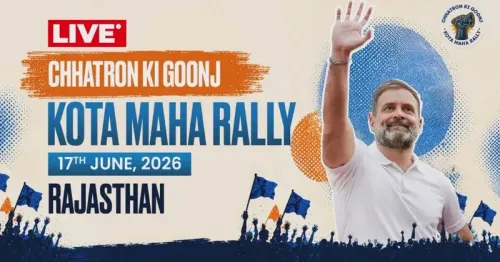
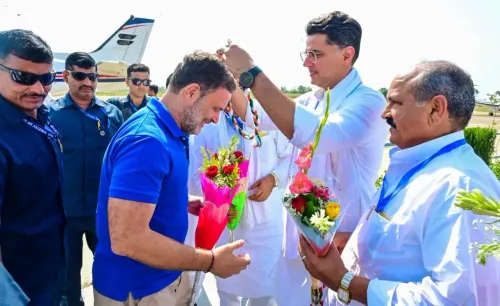
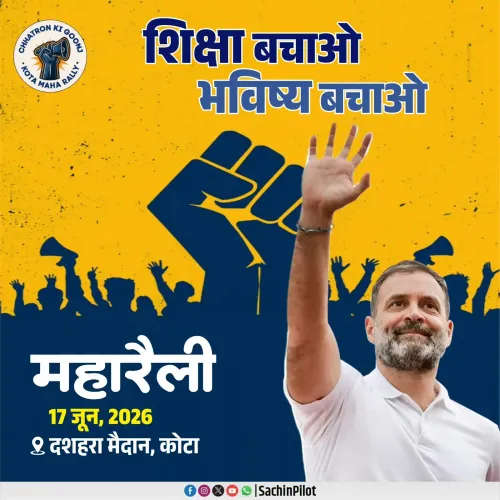
Congress leader Rahul Gandhi on June 18, 2026, praised a mass student event in Kota as a historic moment exposing large-scale fee exploitation in India's coaching sector, and called on supporters nationwide to sign a petition under the banner #ChhatronKiGoonj.
Key Takeaways
Rahul Gandhi pinned a post on June 18, 2026 hailing a student gathering in Kota, Rajasthan as a turning point against coaching-sector fee exploitation.
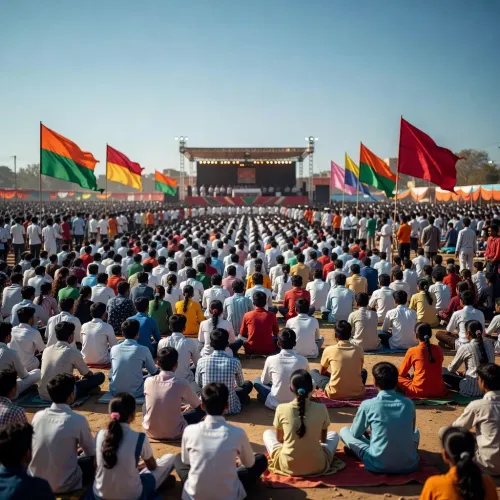
He stated that thousands of students attended in person while lakhs watched online, giving the event national visibility.
Gandhi launched a petition and invited public suggestions, converting the social-media post into an active organising tool under #ChhatronKiGoonj .
Kota is India's largest residential coaching hub for IIT-JEE and NEET aspirants, with a multi-thousand-crore fee ecosystem that has faced periodic state-level regulatory attempts since 2015 .
No central law currently regulates private coaching-centre fees, leaving a policy gap that Congress is seeking to highlight through this campaign.
Gandhi signalled plans to expand the movement beyond Kota to other coaching cities across the country.
Congress leader Rahul Gandhi, Leader of the Opposition in Lok Sabha and MP from Rae Bareli, on Thursday, June 18, 2026, posted a message on X hailing a student gathering in Kota, Rajasthan as a historic first step against what he called large-scale fee exploitation in the name of education, and called on supporters to sign a petition and send suggestions.
Posting under the hashtag #ChhatronKiGoonj, Gandhi wrote in Hindi: 'Kota, aap kamaal the' ('Kota, you were remarkable'), adding that thousands of students were present on the ground while lakhs watched online. He described the event as the moment the country first openly learnt 'how large-scale extraction is happening in the name of education.'
Context
Kota is India's best-known residential coaching hub, drawing hundreds of thousands of aspirants each year who prepare for competitive entrance examinations such as IIT-JEE and NEET. The city's coaching industry has grown into a multi-thousand-crore ecosystem, with families from middle- and lower-income backgrounds spending significant sums on tuition, hostel, and study-material fees. Gandhi's post frames the gathering as a public reckoning with that financial burden.
The post was pinned to Gandhi's profile, signalling that his office intends it as a sustained campaign touchpoint rather than a one-off comment. He directly invited students to submit suggestions and sign an online petition, turning the social-media post into an organising tool.
Policy Backdrop
The Right to Education Act, 2009 mandated free and compulsory schooling up to Class 8 but left the private coaching sector largely unregulated at the central level. Rajasthan has periodically attempted to introduce state-level caps on coaching fees and class hours, particularly after a spate of student suicides reported between 2015 and 2017 drew national attention to the psychological pressure on Kota's residents.
No comprehensive central legislation governing coaching-centre fees or enrolment practices has been enacted to date, leaving regulatory gaps that opposition parties, including Congress, have repeatedly highlighted as evidence of policy neglect toward aspirant youth.
Stakeholders and Impact
The immediate stakeholders are the lakhs of students enrolled in Kota's coaching centres, along with their families who bear the financial cost, and the operators of coaching institutes who dispute characterisations of their fee structures as exploitative. Gandhi's campaign also targets parents of examinees from smaller towns and rural areas who have limited alternatives to expensive residential coaching.
Indian opposition parties have consistently framed the Kota coaching model as a symbol of the commercialisation of education, arguing it deepens inequality by pricing out economically weaker aspirants. Congress's mobilisation of youth around the #ChhatronKiGoonj campaign fits a broader pattern of the party seeking to build a youth-issue coalition ahead of electoral cycles.
What's Next
Gandhi urged supporters to keep the momentum going, saying the 'flame lit in Kota must now be turned into a torch of change across the entire country.' The petition he referenced could form the basis of a parliamentary intervention — either a Private Member's Bill or a set of starred questions in Lok Sabha — pressing the government on coaching-sector regulation.
Observers will watch whether similar student assemblies take shape in other major coaching hubs such as Hyderabad and Delhi, and whether any state government — particularly in Congress-ruled states — moves to introduce fee-regulation legislation in response to the campaign's momentum.
Point of View
Congress is deliberately using the language of economic injustice to appeal to aspirant-class families — a demographic that cuts across caste and region. The absence of central coaching regulation is a genuine policy gap, and tying it to a petition creates a paper trail that can be raised in Parliament. Whether the campaign sustains beyond the social-media cycle will depend on Congress's ability to convert online signatures into on-ground pressure in states where coaching hubs operate.
NationPress
19 Sept 2026
Frequently Asked Questions
What is the #ChhatronKiGoonj campaign by Rahul Gandhi?
#ChhatronKiGoonj is a student-focused campaign launched by Congress leader Rahul Gandhi in June 2026, calling attention to high fees charged by coaching centres, particularly in Kota, Rajasthan, and urging students to sign an online petition demanding regulatory reform.
Why is Kota significant in India's education debate?
Kota, Rajasthan is India's largest hub for residential coaching centres preparing students for IIT-JEE and NEET exams. Its multi-thousand-crore coaching industry has long been criticised for imposing heavy financial and psychological pressure on aspirants, making it a focal point for debates on the commercialisation of education.
What did Rahul Gandhi say about coaching fees in Kota?
Rahul Gandhi said the Kota student gathering was the first time the country openly learnt 'how large-scale extraction is happening in the name of education,' calling the event a historic beginning and urging students to sustain the movement nationwide.
Is there any law regulating coaching centre fees in India?
No comprehensive central law currently regulates private coaching-centre fees. The Right to Education Act, 2009 covers school-level education but leaves the coaching sector largely unregulated. Rajasthan has attempted state-level fee and hour caps in the past, especially after student suicides in 2015-2017.
What action did Rahul Gandhi ask students to take?
Gandhi asked students and supporters to send their suggestions and sign an online petition linked through his post, framing these steps as the next phase of a broader national campaign on coaching-sector reform.