Rahul Gandhi Targets Paper Leaks at Dehradun Student Rally
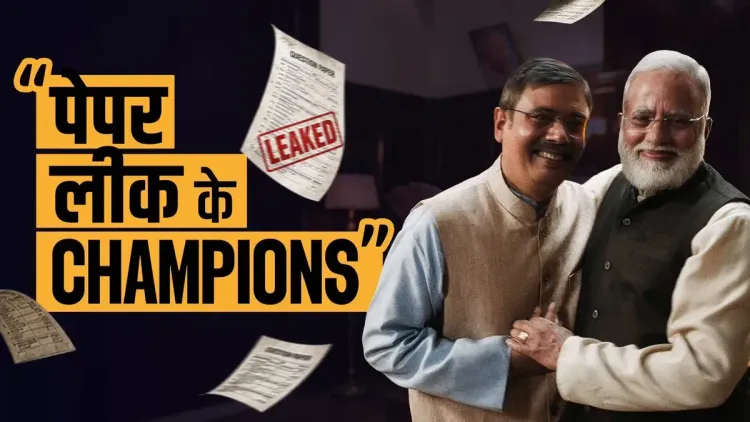
Synopsis
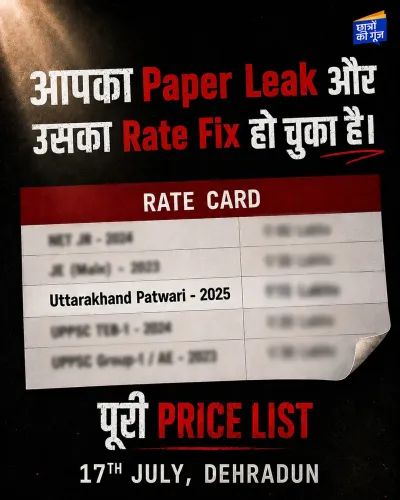
Congress leader Rahul Gandhi rallied students in Dehradun on 17 July 2026, condemning paper leaks in public examinations as a systemic governance failure. Using a sharp Hindi couplet under #ChhatronKiGoonj and #ShikshaRevolution, Gandhi called out the 'intent' of the system and demanded accountability for exam integrity lapses affecting crores of aspirants.
Key Takeaways
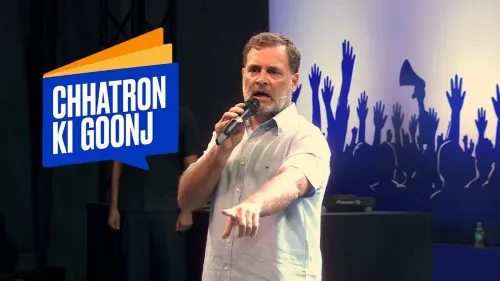
Congress leader Rahul Gandhi addressed a student event in Dehradun on 17 July 2026 under the campaign hashtags #ChhatronKiGoonj and #ShikshaRevolution .
Gandhi posted a Hindi couplet on X blaming systemic intent for paper leaks, warning they leave students' futures 'weak.' Paper-leak controversies in exams including NEET and state recruitment tests have triggered protests across India since 2023 .
Parliament passed the Public Examinations (Prevention of Unfair Means) Act, 2024 to curb leaks, but the Congress argues enforcement remains inadequate.
The Congress has made exam integrity a core campaign theme, with student bodies such as NSUI mobilising around the issue.
Parliamentary scrutiny of the anti-paper-leak law's implementation is expected to intensify following the Dehradun event.
Congress leader Rahul Gandhi addressed students in Dehradun on 17 July 2026, attacking the government over recurring examination paper leaks and framing the crisis as a systemic failure that threatens the futures of millions of young Indians.
Posting on X under the hashtags #ChhatronKiGoonj (Students' Echo) and #ShikshaRevolution (Education Revolution), Gandhi wrote: 'Jab system ki niyat mein hai paper leak, toh chhatron ka future hoga hi weak!' — roughly translated as, 'When the system's intent itself harbours paper leaks, students' futures are bound to remain weak.' The couplet-style phrasing was aimed squarely at what the Congress calls a governance breakdown in public examinations.
Context
Dehradun, the capital of Uttarakhand, served as the backdrop for the event, which the Congress branded under its student-outreach campaign. Gandhi, who represents Rae Bareli in the Lok Sabha and serves as Leader of the Opposition, has made youth employment and education integrity recurring themes in his public engagements. The Dehradun appearance signals the party's continued focus on mobilising competitive-exam aspirants ahead of electoral cycles.
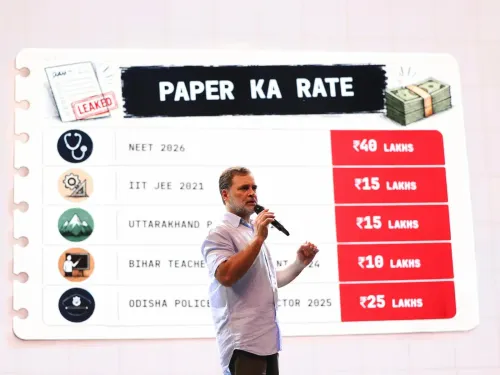
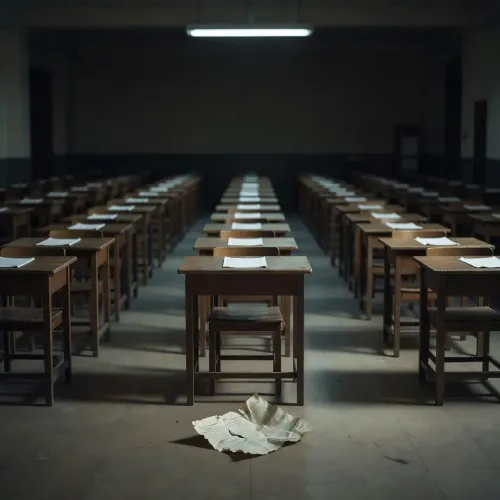
Paper leaks in high-stakes examinations have triggered student protests across multiple states since 2023. Controversies surrounding national-level tests such as NEET and various state recruitment exams have drawn sustained political scrutiny, with opposition parties arguing that leaks reflect deep institutional rot rather than isolated incidents.
Policy Backdrop
Parliament enacted the Public Examinations (Prevention of Unfair Means) Act, 2024 in direct response to the cascade of paper-leak scandals. The law prescribes stringent penalties for those who leak, circulate, or purchase question papers ahead of examinations. Critics, including the Congress, contend that legislative action has not been matched by enforcement on the ground.
The Indian National Congress has positioned exam integrity as a pillar of its broader education agenda, arguing that students from lower-income families — who often cannot afford repeat attempts — bear the heaviest cost when papers are compromised. Gandhi's post reinforces that framing, attributing leaks to the 'intent' of the system rather than to individual bad actors.
Stakeholders and Impact
Millions of students preparing for government jobs, medical admissions, and engineering entrance tests are directly affected each time a paper leak forces an exam cancellation or re-test. The uncertainty disrupts academic calendars and imposes additional financial and psychological burdens on aspirants and their families.
Student organisations affiliated with the Congress, including the National Students' Union of India (NSUI), have been active in organising demonstrations demanding accountability. The Dehradun event under #ChhatronKiGoonj appears to be part of a structured campaign to channel that discontent into political momentum.
What's Next
The Dehradun rally is likely to be followed by parliamentary questions or adjournment motions when the House is in session, pressing the government on the implementation record of the 2024 anti-paper-leak law. State-level inquiries and demands for special investigation teams may also gain traction if the Congress sustains the campaign across Uttarakhand and other states where recruitment exam controversies remain unresolved.
With education integrity now firmly on the opposition's campaign calendar, the pressure on both central and state governments to demonstrate concrete enforcement outcomes is set to intensify in the months ahead.
Point of View
First-time voters — a demographic the Congress has been courting aggressively. By attributing paper leaks to the 'intent' of the system rather than to administrative lapses, the party escalates its critique from policy failure to moral indictment of the ruling establishment. The Dehradun venue is also strategic: Uttarakhand is a state where recruitment exam controversies have previously generated street-level anger. If the Congress sustains this campaign through parliamentary action and ground mobilisation, it could convert exam-integrity anxiety into durable electoral pressure ahead of upcoming state polls.
NationPress
15 Oct 2026
Frequently Asked Questions
What did Rahul Gandhi say about paper leaks in Dehradun?
Rahul Gandhi posted a Hindi couplet on 17 July 2026 stating that when the system's intent itself harbours paper leaks, students' futures are bound to remain weak. He made the remarks during a student event in Dehradun under the hashtags #ChhatronKiGoonj and #ShikshaRevolution.
What is the Public Examinations (Prevention of Unfair Means) Act, 2024?
The Public Examinations (Prevention of Unfair Means) Act, 2024 is a central law enacted to deter paper leaks in government examinations by prescribing strict penalties for leaking, circulating, or purchasing question papers. It was passed in response to a series of high-profile exam paper-leak scandals across India.
Which exams have been affected by paper leaks in India?
National-level tests such as NEET and numerous state government recruitment examinations have faced paper-leak allegations since 2023, leading to cancellations, re-tests, and widespread student protests across multiple states.
What is #ChhatronKiGoonj?
#ChhatronKiGoonj, meaning 'Students' Echo,' is a Congress campaign hashtag used to highlight student grievances around education quality and examination integrity. It was prominently featured in Rahul Gandhi's 17 July 2026 Dehradun event.
How does the Congress plan to pursue the paper-leak issue further?
The Congress is expected to raise parliamentary questions and push for debates on the implementation of the 2024 anti-paper-leak law. The party may also demand state-level inquiries in Uttarakhand and other states where recruitment exam controversies remain unresolved.