CPI(M)-CPI deputy leader row: LDF's biggest rift since Kerala poll loss
Synopsis
A row over a single Assembly post has cracked open the deepest fault line in Kerala's Left in years. The CPI's refusal to back down — backed by General Secretary D. Raja — signals that the junior partner in the LDF is done playing second fiddle, and the ideological war being waged through party publications suggests this is about far more than a designation.
Key Takeaways
The CPI and CPI(M) are locked in a standoff over the post of Deputy Leader of Opposition in the Kerala Legislative Assembly .
CPI General Secretary D.
Raja has publicly ruled out any compromise, rejecting offers including the Public Accounts Committee chairmanship.
The dispute is described as the LDF 's biggest internal confrontation since it lost power in Kerala.
The CPI(M) was formed in 1964 after splitting from the CPI , giving the rivalry a six-decade history.
Past flashpoints include a Cabinet boycott by all four CPI ministers and the PM-SHRI school scheme reversal during former CM Pinarayi Vijayan's tenure.
The row has spilled into ideology, with both parties trading barbs over the legacy of former Chief Minister C.
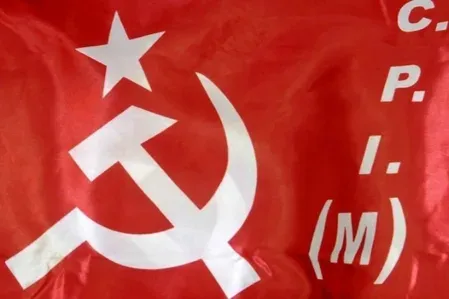
The Left Democratic Front (LDF) in Kerala is facing its most serious internal rupture since losing power, as a dispute between the Communist Party of India (Marxist) [CPI(M)] and the Communist Party of India (CPI) over the post of Deputy Leader of Opposition in the Kerala Legislative Assembly has deepened into a full-blown confrontation over influence, legacy, and coalition arithmetic.
The Core Dispute
The CPI(M), the dominant partner in the LDF, has refused to cede the Deputy Leader of Opposition's post to the CPI, the alliance's second-largest constituent. The CPI, in turn, has categorically rejected alternative offers, including the chairmanship of the Assembly's Public Accounts Committee. CPI General Secretary D. Raja has publicly declared that the party will accept no compromise on the matter.
The standoff, which surfaced in Thiruvananthapuram around 17 July, is being read within political circles not merely as a quarrel over a legislative designation, but as a structural assertion by the CPI that it will no longer accept a subordinate role within the coalition it has co-led for more than four decades.
A History of Friction Within the Left
The two parties share a fractured origin: the CPI(M) was formed in 1964 after a breakaway faction walked out of the CPI. Despite decades of joint governance under the LDF banner, the relationship has never been without tension.
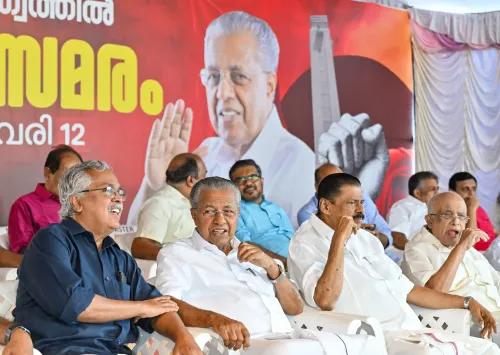
During the decade-long tenure of former Chief Minister Pinarayi Vijayan, the CPI repeatedly signalled its independence. In one unprecedented episode, all four CPI ministers boycotted a Cabinet meeting over differences with the Chief Minister. More recently, the CPI successfully pressured the government to withdraw from the Centre's PM-SHRI school scheme, which Vijayan had agreed to implement without prior Cabinet approval — a significant assertion of the smaller party's veto power within the alliance.
The Ideological Dimension
The confrontation has now spilled beyond institutional politics into ideological territory. Through their respective party publications, the CPI(M) and CPI have revived debates over Left history, with the CPI defending the legacy of former Chief Minister C. Achutha Menon following criticism attributed to CPI(M) quarters.
Achutha Menon is widely credited with laying the foundations of modern Kerala through landmark land reforms, the one lakh housing scheme, and the establishment of several premier institutions. Despite his stature within the Left movement, the CPI(M) has historically been reluctant to celebrate his legacy — a long-standing grievance the CPI has now brought back into public discourse.
What Each Side Stands to Gain or Lose
For the CPI, the Deputy Leader of Opposition post represents an institutional counterweight to the CPI(M)'s dominance — a visible, daily reminder within the Assembly that the alliance is a partnership, not a hierarchy. For the CPI(M), conceding the demand risks setting a precedent that could weaken its authority and invite further challenges from within the coalition.
What This Means for Kerala's Left
What began as a dispute over a single Assembly post has broadened into a contest over the future direction of Kerala's Left movement. The cohesion of an alliance that has governed the state across multiple terms is now under scrutiny, with the outcome of this standoff likely to define the internal power balance of the LDF for years to come.
Point of View
Yet the CPI has chosen this moment to press its claims hardest. That calculation reflects a bet that the CPI(M), weakened by electoral defeat, is more susceptible to pressure now than at any point in the last decade. The revival of the Achutha Menon debate is not nostalgia — it is a deliberate ideological counter-positioning that could reshape how Kerala's Left defines itself heading into the next election cycle.
NationPress
17 Jul 2026
Frequently Asked Questions
What is the CPI(M)-CPI dispute in Kerala about?
The dispute centres on which party holds the post of Deputy Leader of Opposition in the Kerala Legislative Assembly. The CPI has demanded the position, while the dominant CPI(M) has refused to concede it, rejecting the CPI's claim even after offering alternative posts such as the Public Accounts Committee chairmanship.
Why is this considered the LDF's biggest rift since losing power?
The confrontation has escalated beyond a single legislative post into a broader contest over coalition influence, ideological legacy, and internal power balance — with both parties publicly trading barbs through their publications. CPI General Secretary D. Raja's uncompromising public stance has raised the stakes to a level not seen since the LDF lost the Kerala assembly election.
Who is D. Raja and what has he said?
D. Raja is the General Secretary of the Communist Party of India (CPI). He has publicly declared that the CPI will not compromise on its demand for the Deputy Leader of Opposition post in the Kerala Assembly, effectively ruling out a negotiated settlement on the CPI(M)'s terms.
What is the historical background of tensions between CPI(M) and CPI?
The CPI(M) was formed in 1964 after a faction walked out of the CPI, giving the two parties a fractured shared history. Despite decades of joint governance under the LDF, periodic confrontations have marked their relationship, including a Cabinet boycott by all four CPI ministers during former Chief Minister Pinarayi Vijayan's tenure and the forced withdrawal of the PM-SHRI school scheme.
Who was C. Achutha Menon and why is his legacy relevant now?
C. Achutha Menon was a former Chief Minister of Kerala from the CPI, widely credited with landmark land reforms, the one lakh housing scheme, and the establishment of key institutions that shaped the state's development. The CPI has invoked his legacy in its publications as a counter to criticism from CPI(M) quarters, turning a political row into an ideological one.