Kerala CPI-M cracks surface ahead of Central Committee meet on poll rout
Synopsis
The CPI-M — a party that built its Kerala identity on iron discipline — is heading into a crucial Central Committee review with senior leaders openly contradicting each other on record. The IAS transfer row in Kannur has become a proxy for a deeper reckoning: whether the party can hold together while honestly accounting for its worst electoral defeat in Kerala in decades.
Key Takeaways
The CPI-M Central Committee meets on Saturday to review the party's crushing Kerala Assembly election defeat that ended LDF 's decade in power.
Sreemathy , and K.K.
Shailaja publicly contradicted another faction over the transfer of IAS officer Divya S.
Thiruvananthapuram District Secretary and MLA V.
Joy denied divisions in the capital unit on Friday, but the denial drew more scrutiny than it deflected.
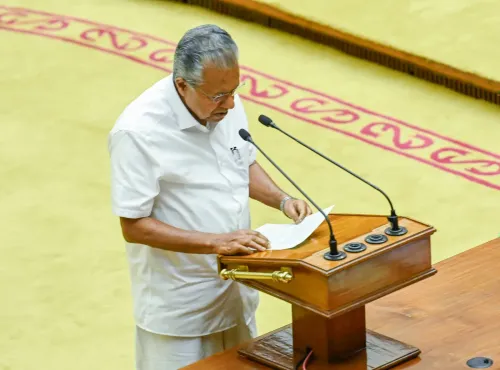
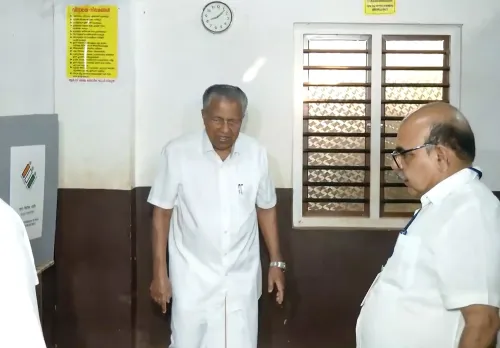
Internal review meetings reportedly produced sharp criticism of former CM Pinarayi Vijayan and state Secretary M.V.
Govindan , yet the central leadership retained full confidence in both.
General Secretary M.A.
Baby had urged members to speak frankly during post-election reviews — a call that appears to have surfaced contradictions the leadership now must manage.
The Communist Party of India (Marxist) in Kerala is confronting an unusually public breakdown of internal discipline as its Central Committee convenes on Saturday, 12 July 2025, to dissect the Assembly election defeat that stripped the Left Democratic Front (LDF) of power after a decade in office. What was meant to be a controlled organisational review has spilled into the open, with senior leaders contradicting one another on record — a striking departure for a party that has long policed its public messaging with near-military precision.
The Kannur Flashpoint
The most visible fissure has emerged from Kannur, the ideological heartland of the CPI-M, over the transfer of IAS officer Divya S. Iyer, who headed a major infrastructure project under the previous LDF government. One section of the party leadership publicly questioned the circumstances surrounding her transfer by the incoming administration. In direct contradiction, senior leaders E.P. Jayarajan, P.K. Sreemathy, and K.K. Shailaja dismissed the controversy outright, arguing that transfers of senior bureaucrats upon a change of government are routine and unremarkable.
The spectacle of named, senior figures taking opposing public positions — on a matter that ordinarily would have been resolved in a closed-door politburo room — has drawn attention precisely because it arrives in the immediate aftermath of the party's worst electoral setback in Kerala in decades.
Capital District Adds to the Unease
Thiruvananthapuram District Secretary and MLA V. Joy on Friday moved to tamp down reports of divisions within the capital district unit, insisting that no fault lines existed among the local leadership. The clarification, however, appears to have had the opposite effect — amplifying rather than quieting speculation that the discontent runs considerably deeper than the leadership is prepared to acknowledge publicly.
What the Review Meetings Revealed
Shortly after the election results, CPI-M General Secretary M.A. Baby urged party members to speak candidly during organisational review sessions and place criticisms before the leadership without fear. According to party insiders, those meetings produced some of the sharpest internal criticism in recent memory. Several leaders reportedly questioned the functioning of former Chief Minister Pinarayi Vijayan and state Secretary M.V. Govindan directly.
Despite the candour of those discussions, the central leadership chose to retain full confidence in both Vijayan and Govindan — a signal of continuity at the top that has not fully satisfied the party's restive base. Critics within the organisation argue that retaining the same leadership without structural accountability risks repeating the conditions that led to the defeat.
What the Central Committee Must Decide
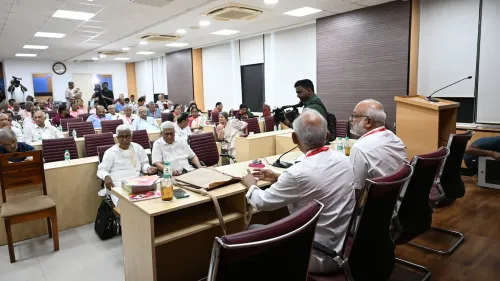
The Central Committee deliberations beginning Saturday are expected to centre almost entirely on two questions: why the LDF lost, and what organisational course corrections are needed. The challenge before the leadership, however, is as much about restoring internal cohesion as it is about crafting a credible political comeback strategy.
For a party that has traditionally resolved differences behind closed doors before speaking in a single, unified voice, the emergence of contradictory public statements among senior leaders represents a meaningful break from convention. Whether the visible cracks are post-defeat tremors that will settle once the review concludes — or the early signals of a deeper realignment within the Kerala unit — is likely to become clearer in the days that follow the Central Committee meet.
Point of View
Not the disease. The real question the Central Committee must answer is whether the party is capable of genuine self-correction or whether retaining Vijayan and Govindan signals that accountability stops at the organisational review document. A party that urges frank criticism from below while signalling continuity at the top risks the worst of both worlds — demoralising reformers without reassuring loyalists. The Kannur fissure is small in itself; its significance lies in what it reveals about a leadership structure that may have lost the internal authority to enforce the discipline it publicly projects.
NationPress
8 Oct 2026
Frequently Asked Questions
Why is the CPI-M Central Committee meeting in July 2025?
The Central Committee is meeting on Saturday to conduct a formal review of the CPI-M's Assembly election defeat in Kerala, which ended the Left Democratic Front's decade-long hold on power. The deliberations are expected to focus on the reasons behind the loss and the party's path forward.
What is the IAS transfer row that has divided CPI-M leaders in Kannur?
The controversy centres on the transfer of IAS officer Divya S. Iyer, who headed a major infrastructure project under the previous LDF government. One section of the party questioned the circumstances of her transfer by the new administration, while senior leaders E.P. Jayarajan, P.K. Sreemathy, and K.K. Shailaja publicly called it routine — an unusually open split for the CPI-M.
Were Pinarayi Vijayan and M.V. Govindan criticised in the post-election review?
According to party insiders, internal review meetings produced some of the sharpest criticism in recent memory, with several leaders reportedly questioning the functioning of former Chief Minister Pinarayi Vijayan and state Secretary M.V. Govindan. Despite this, the central leadership chose to retain full confidence in both.
What did CPI-M General Secretary M.A. Baby say after the election defeat?
M.A. Baby urged party members to speak candidly during organisational review meetings and place their criticisms before the leadership without fear or hesitation. That call appears to have surfaced internal contradictions that are now playing out in public.
What does the public dissent mean for the CPI-M's future in Kerala?
The open contradictions among senior leaders mark a significant departure from the CPI-M's tradition of resolving differences privately before speaking in one voice. Whether the visible cracks are temporary post-defeat tremors or the beginning of a deeper realignment within the Kerala unit is expected to become clearer after the Central Committee concludes its deliberations.