Goyal Says India's Global Opportunities Are Unmatched
Synopsis
Commerce Minister Piyush Goyal on June 7 declared India's global opportunities 'unmatched', reinforcing the government's investment pitch as FTA talks with the EU and UK advance and PLI disbursements approach a critical phase.
Key Takeaways
Piyush Goyal , Union Commerce and Industry Minister, stated on June 7, 2026 that India's opportunities for the world are unmatched.
India's Make in India programme, launched September 2014 , and PLI schemes across 13 sectors from 2020 form the policy foundation for this pitch.
India signed CEPAs with UAE and Australia in 2022 , marking a renewed push for bilateral trade deals.
Ongoing FTA negotiations with the EU, UK, and EAEU are the key near-term tests of India's trade ambition.
Foreign investors, MSME exporters , and domestic manufacturing firms are the primary stakeholders who stand to gain from increased FDI and trade access.
On-ground delivery on logistics, land, and regulatory clearances remains the critical variable for investor confidence.
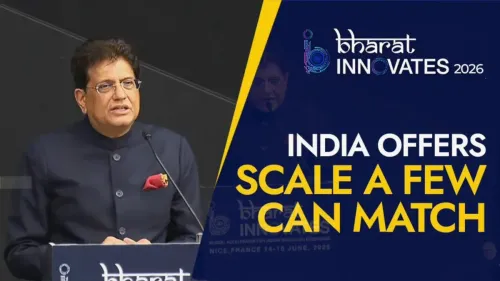
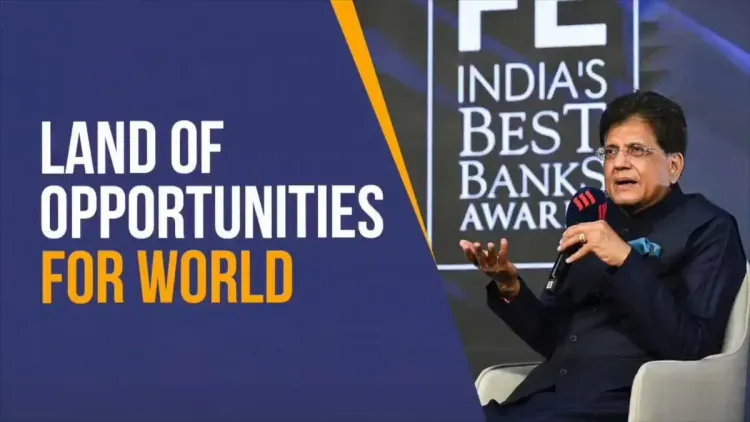
Union Commerce and Industry Minister Piyush Goyal on Sunday, June 7, 2026, declared that the opportunities India offers to the world today are unmatched, signalling continued confidence in the country's investment and trade attractiveness at a time of significant global supply-chain realignment.
Context
Goyal's post — 'The opportunities India offers to the world today are unmatched' — is a pointed assertion of India's competitive positioning as a destination for foreign investment, manufacturing, and trade partnerships. As Leader of the House in the Rajya Sabha and the minister overseeing commerce and industry, Goyal is among the most prominent voices shaping India's economic outreach narrative.
The statement arrives against a backdrop of sustained global interest in diversifying supply chains away from concentrated manufacturing hubs in East Asia, a trend that has placed India in direct competition with Vietnam, Indonesia, Mexico, and other emerging markets for new investment flows.
Policy Backdrop
India's pitch to global investors rests on a layered policy architecture built over more than a decade. The Make in India programme, launched in September 2014, was the first systematic effort to position India as a global manufacturing destination, targeting multinational and domestic firms across sectors ranging from defence to electronics.
This was followed by the Production-Linked Incentive (PLI) schemes, announced from March 2020 onward across 13 sectors, offering direct financial incentives to scale up local value addition in areas such as semiconductors, pharmaceuticals, and mobile manufacturing. Successive Foreign Direct Investment policy liberalisations — notified through press notes between 2014 and 2023 — progressively opened single-brand retail, defence, and insurance sectors to higher foreign equity participation.
On the trade access front, India signed Comprehensive Economic Partnership Agreements with the UAE and Australia in 2022, improving market access for Indian exporters while signalling a renewed appetite for bilateral trade deals after years of caution.
Stakeholders and Impact
Foreign investors evaluating India weigh factors including market size, regulatory predictability, logistics infrastructure, and labour costs. India's large and growing domestic consumer base — alongside government incentives — has made it an increasingly credible alternative for firms seeking to de-risk their supply chains.
MSME exporters and domestic manufacturing firms stand to benefit directly if the minister's confidence translates into accelerated FDI inflows and new trade agreements. Sectors such as electronics, textiles, chemicals, and engineering goods have seen heightened global buyer interest as procurement teams diversify sourcing.
At the same time, observers note that translating India's scale and policy intent into consistent on-ground delivery — particularly around land acquisition, logistics costs, and regulatory clearances — remains a work in progress that will determine whether the 'unmatched opportunities' narrative holds for first-time investors.
What's Next
The most closely watched near-term milestones are the progress of ongoing Free Trade Agreement negotiations with the European Union, the United Kingdom, and the Eurasian Economic Union, each of which could significantly expand India's export footprint if concluded. Disbursement data under expanded PLI 2.0 allocations, expected to feature in the next Union Budget, will also serve as a concrete measure of how effectively India is converting policy ambition into manufacturing output.
Goyal's statement, while brief, reinforces a consistent government message ahead of these negotiations: that India is open, competitive, and confident — a posture designed as much for international boardrooms as for domestic audiences.
Point of View
Timed to reinforce India's positioning as the preferred alternative to China-centric supply chains at a moment when global firms are actively diversifying. The statement fits a broader pattern in which senior BJP ministers use high-visibility platforms to project economic confidence ahead of sensitive trade negotiations — particularly the long-pending EU and UK FTAs. The risk for the government is the gap between the narrative and execution: every time a major investor cites clearance delays or logistics costs, the 'unmatched' claim is tested. Ultimately, the minister's credibility on this front will be measured by FDI inflow data and PLI disbursement figures in the months ahead.
NationPress
23 Oct 2026
Frequently Asked Questions
What did Piyush Goyal say about India's investment opportunities?
Piyush Goyal posted on June 7, 2026, that 'the opportunities India offers to the world today are unmatched', underlining the government's confidence in India's attractiveness as a global investment and trade destination.
What is the Make in India scheme?
Make in India is a flagship government programme launched in September 2014 to position India as a global manufacturing hub and attract foreign direct investment across sectors including defence, electronics, and infrastructure.
What are India's PLI schemes?
Production-Linked Incentive schemes, announced from March 2020 across 13 sectors, offer financial incentives to manufacturers to scale up domestic production and value addition in areas such as semiconductors, pharmaceuticals, and mobile handsets.
Which free trade agreements is India currently negotiating?
India is currently in active negotiations for Free Trade Agreements with the European Union, the United Kingdom, and the Eurasian Economic Union, any of which could significantly expand India's export market access.
Why is India seen as an attractive destination for global supply chains?
India offers a combination of a large domestic market, competitive labour costs, government incentive schemes like PLI, and progressive FDI policy liberalisation, making it a credible alternative for firms seeking to diversify manufacturing away from East Asia.