Goyal's 'Chip to Ship' Vision: India's Youth at the Forefront
Synopsis
Union Commerce Minister Piyush Goyal on 8 August 2026 invoked India's 'chip to ship' manufacturing ambition, quoting a young engineer's declaration of being the first in his family to design a chip in India — anchoring the ₹76,000 crore India Semiconductor Mission in a story of generational change.
Key Takeaways
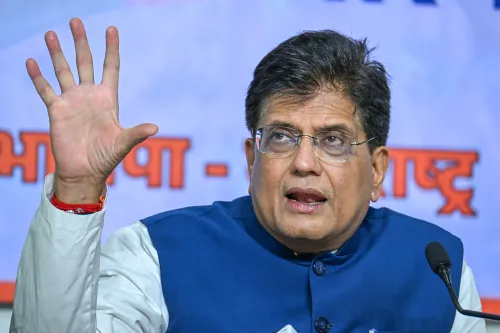
Union Commerce Minister Piyush Goyal posted on 8 August 2026 quoting a young engineer: 'First in my bloodline to make a chip in India.' The post frames India's manufacturing ambition as 'chip to ship' — covering both semiconductor fabrication and shipbuilding.
The India Semiconductor Mission , approved in 2021 , carries an outlay of ₹76,000 crore to build domestic chip design and fabrication capacity.
The PLI scheme for electronics and semiconductors was expanded between 2020 and 2022 to incentivise local manufacturing.
Workforce development and commissioning timelines of approved semiconductor units remain the key variables to watch.
A young Indian engineer, the first in his family's history to design a semiconductor, looks up and says — 'First in my bloodline to make a chip in India.' That single line, quoted by Union Commerce and Industry Minister Piyush Goyal on Saturday, 8 August 2026, captures something larger than a policy milestone: it captures a generational shift.
Posting on X, Minister Goyal quoted the phrase as a rallying cry for India's manufacturing ambition: 'Chip se lekar ke ship tak sab kuch yaheen par, aap hi ke haathon se banega' — 'From chip to ship, everything will be made right here, by your own hands.' The statement was accompanied by a video, and the sentiment was unmistakable: India is not just aspiring to build semiconductors; it intends to build the engineers who build them.
From ₹76,000 Crore Pledge to First-Generation Chip Designers
The ambition Goyal invoked has deep policy roots. The India Semiconductor Mission, approved in 2021 with an outlay of ₹76,000 crore, was designed precisely to transform India from an importer of chips into a maker of them. Paired with the Production Linked Incentive (PLI) scheme for electronics and semiconductors — expanded between 2020 and 2022 — the government has staked serious capital on the bet that domestic fabrication capacity is achievable within this decade. The 'chip to ship' framing is deliberate. Semiconductors and shipbuilding sit at opposite ends of the manufacturing complexity spectrum — one measured in nanometres, the other in tonnes of steel — but both represent strategic chokepoints where India has historically depended on imports. Closing that gap is central to the Atmanirbhar Bharat vision of self-reliant supply chains.Why the 'First in My Bloodline' Line Lands So Hard
Goyal's choice to anchor his post around a young engineer's personal declaration is not incidental. It reframes semiconductor policy from a fiscal incentive exercise into a social mobility story. For a country where engineering talent has long flowed outward — to Silicon Valley fabs, to Taiwanese design houses, to Dutch lithography firms — the idea of a first-generation chip designer staying home and building in India carries real emotional weight. The workforce pipeline is now the critical variable. Approved semiconductor units have commissioning timelines that will test the government's ability to deliver skilled engineers alongside the physical infrastructure. Skill programmes targeted at first-generation chip designers will determine whether the ₹76,000 crore outlay produces a genuine domestic industry or merely a handful of foreign-owned plants staffed by imported expertise. The chip is being designed. The question is whether India's education and skilling ecosystem can keep pace with the fab floor.Point of View
The BJP government is attempting to make the India Semiconductor Mission feel personal and aspirational, not just industrial. This mirrors a broader pattern of anchoring large-ticket schemes in individual success stories to sustain public and investor confidence. The real test of this framing will come when commissioning timelines, skilling pipelines, and actual domestic production numbers are scrutinised against the ₹76,000 crore promise.
NationPress
22 Sept 2026
Frequently Asked Questions
What is India's chip to ship manufacturing vision?
India's 'chip to ship' vision refers to the government's ambition to manufacture both semiconductors (chips) and vessels (ships) domestically, reducing import dependence across strategic industries. Minister Piyush Goyal used the phrase on 8 August 2026 to frame India's self-reliance drive.
What is the India Semiconductor Mission?
The India Semiconductor Mission is a central government programme approved in 2021 with a ₹76,000 crore outlay to attract semiconductor investment and build domestic chip design and fabrication capacity.
What did Piyush Goyal say about chip manufacturing in India?
Goyal quoted a young engineer saying 'First in my bloodline to make a chip in India,' and stated that from chip to ship, everything will be made in India by Indian hands — invoking the Atmanirbhar Bharat self-reliance framework.
What is the PLI scheme for semiconductors in India?
The Production Linked Incentive scheme for electronics and semiconductors was expanded between 2020 and 2022 to provide financial incentives to companies manufacturing chips and electronic components in India.
Why is semiconductor manufacturing important for India?
India currently imports a significant share of its semiconductors, making it vulnerable to global supply-chain disruptions. Domestic chip fabrication would reduce this dependence, create high-skill jobs, and strengthen India's position in global technology supply chains.