Goyal: India adapts technology faster, more efficiently
Synopsis
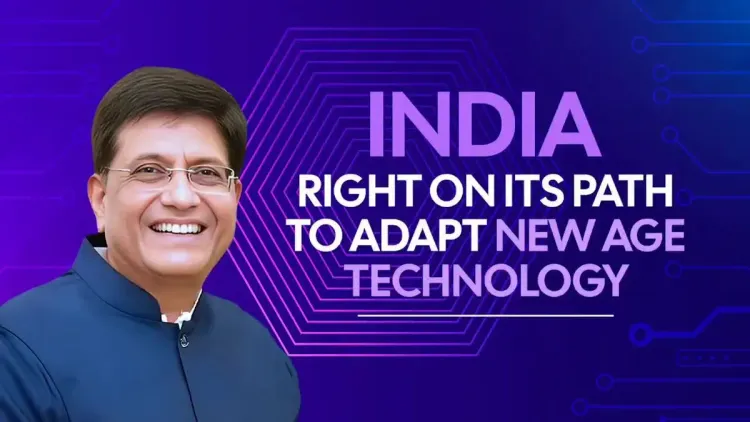
Union Commerce Minister Piyush Goyal on June 18, 2026 declared that India adapts technology faster and more efficiently than others, reinforcing the government's long-running push to position India as a globally competitive, digitally agile economy across trade, manufacturing, and governance.
Key Takeaways
Union Commerce and Industry Minister Piyush Goyal posted on June 18, 2026 that 'India adapts technology faster and more efficiently.' The statement aligns with the Digital India programme launched in 2015 , which built the foundation for large-scale technology adoption across governance and commerce.
Key beneficiaries of this policy posture include Indian technology firms and MSME exporters who rely on digital tools for trade facilitation.
India's digital public infrastructure — including payments and e-governance platforms — is increasingly cited as a global model for efficient, scalable technology deployment.
Further policy details on semiconductors and artificial intelligence are expected in upcoming budgets and ministry-level announcements.
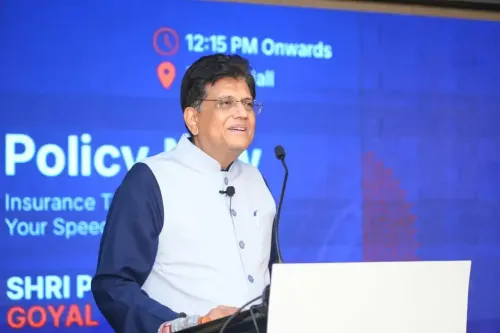
Union Commerce and Industry Minister Piyush Goyal on Thursday, June 18, 2026, asserted that India adapts technology faster and more efficiently than other nations, signalling confidence in the country's growing digital and industrial capabilities. The statement, posted on X, comes as India's technology adoption narrative gains momentum across governance, commerce, and manufacturing sectors.
Context
Minister Goyal's post — 'India adapts technology faster and more efficiently' — is brief but pointed. It reflects a broader official posture that positions India not merely as a consumer of global technology, but as an agile and efficient adopter that can scale solutions rapidly across its vast economy. The statement aligns with the government's consistent messaging around digital transformation as a national competitive advantage.
India's technology absorption story has been shaped over the past decade by a series of public infrastructure programmes and private-sector investments. From payments infrastructure to e-governance platforms, the country has repeatedly demonstrated the ability to deploy digital solutions at scale within compressed timelines.
Policy Backdrop
The Digital India programme, launched in 2015, laid the foundational architecture for accelerated technology adoption — expanding broadband connectivity, digitising government services, and building interoperable public platforms. Since then, successive policy interventions have deepened this framework, linking technology absorption directly to trade facilitation and manufacturing competitiveness.
As Leader of the House in the Rajya Sabha and a senior BJP leader, Goyal has been a consistent advocate for positioning India's commerce and industry ecosystem as digitally forward. His ministry has overseen initiatives that integrate technology into export promotion, logistics, and MSME development — sectors where faster adaptation translates into tangible economic gains.
The government has also signalled upcoming policy attention to emerging areas such as semiconductors and artificial intelligence, with further details expected in upcoming budget cycles and ministry-level statements.
Stakeholders and Impact
The statement carries direct relevance for Indian technology firms and MSME exporters, who stand to benefit from a policy environment that prizes rapid technology uptake. For MSMEs in particular, faster adoption of digital tools — from e-invoicing to automated logistics — reduces friction in domestic and cross-border trade.
India's digital public infrastructure, including the Unified Payments Interface and the account aggregator framework, is frequently cited globally as a model of efficient, large-scale technology deployment. Goyal's assertion reinforces this narrative at a time when India is actively courting foreign investment in manufacturing and services.
What's Next
The minister's statement is likely a precursor to broader policy communication around India's technology competitiveness. With semiconductor policy, AI governance frameworks, and trade digitalisation all on the government's agenda, this kind of positioning sets the rhetorical stage for substantive announcements.
As global supply chains reconfigure and technology-intensive manufacturing shifts toward India, the ability to adapt quickly will remain a central argument in the country's pitch to investors and trading partners alike. Whether the government backs this assertion with new policy measures will be closely watched by industry and diplomatic stakeholders.
Point of View
Trading partners, and domestic industry. It fits a well-established pattern of senior BJP ministers using social media to reinforce India's competitive positioning ahead of substantive policy announcements. The timing, with semiconductor and AI policy frameworks in the pipeline, suggests this is scene-setting rather than a standalone remark. The real test will be whether the government's upcoming budget and ministry statements deliver the structural depth that such confident framing promises.
NationPress
17 Sept 2026
Frequently Asked Questions
What did Piyush Goyal say about India and technology?
On June 18, 2026, Union Commerce and Industry Minister Piyush Goyal posted on X that 'India adapts technology faster and more efficiently,' highlighting the country's capacity for rapid and efficient technology adoption.
What is the Digital India programme?
Digital India is a national programme launched in 2015 to expand digital infrastructure, e-governance, and technology access across India, forming the backbone of the country's accelerated technology adoption story.
How does India's technology adoption compare globally?
India's digital public infrastructure — including large-scale payments systems and interoperable e-governance platforms — is widely regarded as a model of efficient, rapid technology deployment, a point Minister Goyal's statement reinforces.
Which sectors benefit from India's faster technology adoption?
Indian technology firms and MSME exporters are among the primary beneficiaries, as faster adoption of digital tools reduces trade friction and strengthens competitiveness in both domestic and export markets.
What technology policies is India expected to announce next?
Further details on India's semiconductor and artificial intelligence policy frameworks are expected in upcoming Union Budgets and Commerce Ministry statements, building on the government's broader technology competitiveness agenda.