Piyush Goyal at VivaTech 2026: India a compelling AI case for the world

Synopsis
At VivaTech 2026 in Paris, Commerce Minister Piyush Goyal made India’s most direct pitch yet as the world’s AI bellwether — 1.4 billion people, sub-30 average age, the cheapest data on earth, and the largest STEM graduate pipeline. The argument: India doesn’t just consume the AI revolution, it is uniquely built to lead it.
Key Takeaways
Piyush Goyal addressed VivaTech 2026 in Paris on 18 June 2026 , calling India ‘a compelling case for the world’ on AI.
India’s average age is under 30 years , with a population of 1.4 billion generating demand and economies of scale.
India produces the world’s largest number of STEM graduates in science, engineering, and technology.
Goyal said India has affordable data and sufficient power infrastructure to support data centres and computing capacity.
The minister argued AI would create new career paths rather than eliminate jobs, and can never replace human values or culture.
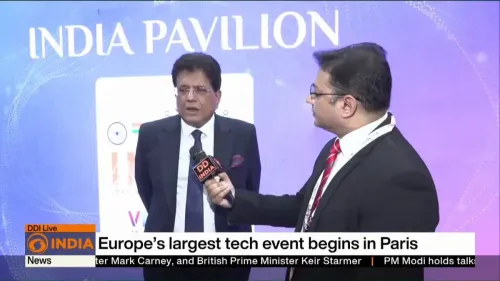
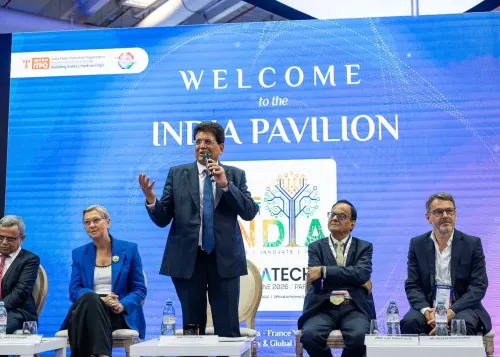
Union Commerce and Industry Minister Piyush Goyal on Thursday, 18 June 2026, described India as “a compelling case for the world” in the age of artificial intelligence, speaking at VivaTech 2026 in Paris. Goyal highlighted the country’s young population, affordable data, expanding technological capabilities, and a vision for inclusive growth as the pillars positioning India at the forefront of the global technology revolution.
India’s Structural Strengths in the AI Era
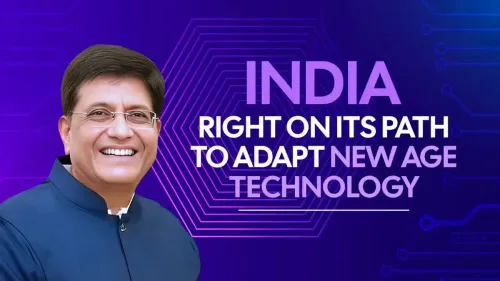
Goyal argued that India adapts technology faster and more efficiently than many peer nations, and that the country views AI as an enabler of growth rather than a threat to its workforce. He pointed to a cluster of demographic and infrastructural advantages that, taken together, make India’s position in the global AI race structurally distinct.
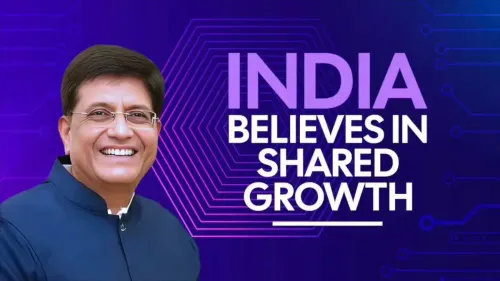
“India is a compelling case for the world. Our young and talented population, affordable data, growing capabilities and a vision for shared growth position India at the forefront of technological development,” Goyal said at the conference.
The Demographic and Economic Edge
The minister underscored India’s demographic dividend as a core competitive advantage. With an average national age of under 30 years, a population of 1.4 billion generating sustained consumer demand, and the status of the world’s fastest-growing large economy, India offers both the scale and the dynamism that drive innovation cycles.
“We have a youthful population. That’s important. Our average age is under 30 years. We are the world’s fastest growing large economy. So a lot of economic activity spurs innovation. We have 1.4 billion people generating demand and that gives us economies of scale,” Goyal stated.
Data, Power, and STEM Talent
Goyal also drew attention to India’s cost advantage in data access, noting that data is available “at a fraction of the cost it costs in other countries.” He added that India has sufficient power infrastructure to meet the growing requirements of data centres and computing capacity — a critical bottleneck for AI deployment globally. Notably, India produces the world’s largest number of STEM graduates, giving it a deep pipeline of engineering and technology talent to sustain AI-led growth.
AI and Jobs: A Growth Narrative, Not a Threat
Addressing widespread concerns about AI-driven job displacement, Goyal offered a reassuring framing: technological advancement would create new opportunities and career paths rather than eliminate human relevance. He emphasised that AI can never replace human intelligence, values, culture, or traditions — a position that aligns with the Centre’s broader push to position AI adoption as socially inclusive rather than disruptive.
This comes amid a global debate at forums like VivaTech over AI’s net impact on employment, with the International Labour Organization and several European governments flagging risks to mid-skill jobs. India’s counter-narrative — rooted in scale, youth, and affordability — is increasingly becoming a diplomatic and economic talking point on the world stage.
India’s Global AI Positioning
Goyal’s remarks at VivaTech reinforce a pattern of India asserting itself as a technology-sovereign nation capable of bridging the global digital divide. The government has been actively courting AI investment, pushing domestic compute capacity, and expanding digital public infrastructure. With the global AI governance conversation intensifying, India’s pitch — scale, affordability, and democratic values — is likely to grow louder in multilateral settings in the months ahead.
Point of View
While politically necessary, sidesteps the structural disruption already visible in IT services, India’s largest export sector. The more urgent question is not whether India can lead AI adoption, but whether its regulatory and skilling frameworks can keep pace with the speed of deployment — something no minister at VivaTech addressed.
NationPress
19 Sept 2026
Frequently Asked Questions
What did Piyush Goyal say about India and AI at VivaTech 2026?
Commerce and Industry Minister Piyush Goyal said India is ‘a compelling case for the world’ in the age of AI, citing its young population, affordable data, STEM talent, and vision for inclusive growth. He spoke at VivaTech 2026 in Paris on 18 June 2026.
Why does India have an advantage in artificial intelligence?
According to Goyal, India’s advantages include an average national age under 30 years, a 1.4 billion-strong population driving demand, the world’s largest STEM graduate output, data at a fraction of global costs, and sufficient power infrastructure for data centres.
Will AI cause job losses in India, according to the government?
Goyal argued that AI will create new opportunities and career paths rather than eliminate human relevance. He stated that AI can never replace human intelligence, values, culture, or traditions.
What is VivaTech 2026?
VivaTech is a major annual technology and innovation conference held in Paris, where global leaders, startups, and policymakers discuss emerging technologies including artificial intelligence. Goyal represented India at the 2026 edition on 18 June.
How does India plan to bridge the global technological divide through AI?
Goyal said India’s inherent strengths — demographic scale, affordable digital infrastructure, and STEM talent — uniquely position it to bridge the global technology gap. The Centre frames AI adoption as an enabler of inclusive, shared growth rather than a disruptive force.