Piyush Goyal: India to stay world's fastest-growing large economy for 20-25 years
Synopsis
Commerce Minister Piyush Goyal's claim that India will stay the world's fastest-growing large economy for the next two decades isn't just optimism — it's a policy framing that ties demographic dividend to Viksit Bharat 2047. With global supply chains shifting and China slowing, the window is real. The question is whether India's domestic execution can keep pace with its global pitch.
Key Takeaways
Commerce Minister Piyush Goyal said on 15 October 2026 that India will remain the world's fastest-growing large economy for the next 20-25 years .
He cited India's demographic dividend , large consumer market, and entrepreneurial energy as key growth drivers.
Goyal positioned India as the future engine of global advancement in technology and trade .
The minister stressed collective citizen effort as essential to achieving the Viksit Bharat 2047 developed-nation goal.
The remarks were delivered at the SRCC Centenary Conclave in New Delhi .
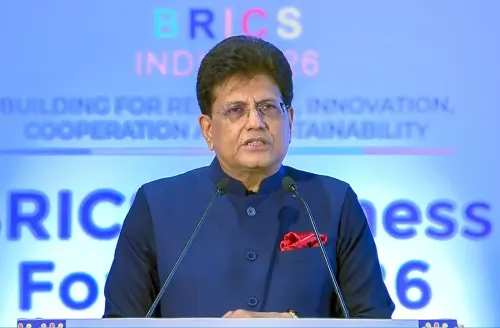
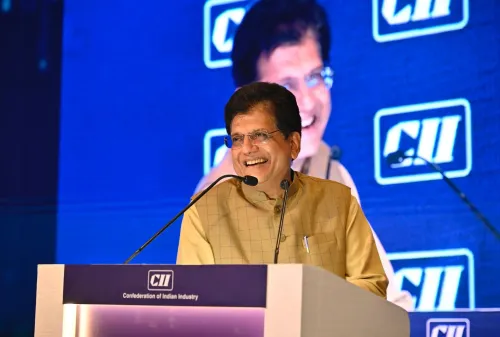
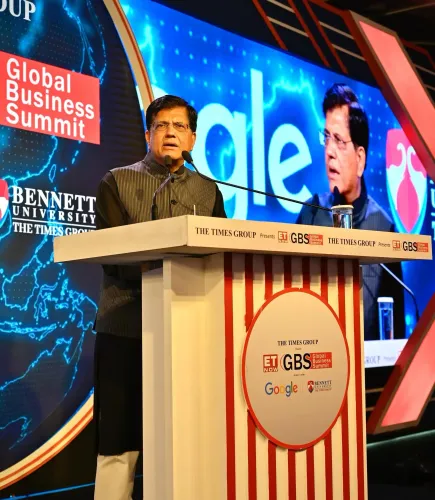
Union Commerce and Industry Minister Piyush Goyal on Thursday, 15 October 2026, declared that India will remain the fastest-growing large economy in the world for the next 20-25 years, citing the country's demographic dividend, expansive consumer market, and entrepreneurial energy as the pillars of its sustained momentum. The remarks came during his address at the SRCC Centenary Conclave in New Delhi.
India as the Engine of Global Growth
Goyal argued that nations worldwide are increasingly seeking deeper engagement with India, driven by recognition of what he called a 'young aspirational India.' He stated that this demographic dynamism positions the country to lead not just economic growth but also global advancement in technology and trade.
'The world wants to engage with India today because they recognise the young aspirational India is going to lead global growth. It is going to be the engine of global advancement in technology and global trade,' Goyal said.
The Demographic Dividend Argument
The minister elaborated on the structural factors underpinning his optimism, pointing to India's youthful population, its large and fast-expanding consumer base, and the country's growing culture of ambition and enterprise. He argued these elements would collectively sustain India's growth trajectory well into the mid-21st century.
'We will continue to be the fastest-growing large economy in the world for the next 20-25 years. Given our demographic dividend, young population and the large market that we have, we will actually be shaping how the future of the world pans out,' he said.
The Viksit Bharat 2047 Push
Goyal also stressed that realising the government's Viksit Bharat goal — transforming India into a developed nation by 2047 — would require a collective national effort. He called for a shift in public mindset, urging citizens to embrace responsibility for nation-building rather than shying away from challenges.
'There's a very large segment of people that is running away from the problems. They are not willing to accept that our destiny is in our own hands. We will have to contribute to make India a developed nation by 2047,' he said.
Context and Broader Significance
The remarks align with projections from several multilateral institutions — including the International Monetary Fund (IMF) — that have consistently ranked India as the world's fastest-growing major economy in recent years. This comes amid a global backdrop of slowing growth in China and subdued recoveries across advanced economies, which has sharpened focus on India's structural story. Notably, India's rise as a preferred destination for supply chain diversification and foreign direct investment has added credibility to the long-term optimism articulated by the minister. Whether domestic policy execution — from infrastructure to skilling — can match the ambition, however, remains an open question that analysts and industry leaders continue to raise.
Point of View
But it draws on a structural argument that mainstream commentary often underweights: India's consumer base is still far from peak, and its working-age population will keep expanding well past 2040. The real stress test is not the forecast itself — IMF and World Bank data broadly support it — but whether India can convert demographic volume into productive employment at scale. Past growth spurts have been skill-shallow and job-light. If Viksit Bharat 2047 is to mean anything beyond a slogan, the policy apparatus needs to close the gap between headline GDP growth and broad-based income gains — something no minister's conclave speech has yet credibly mapped out.
NationPress
15 Oct 2026
Frequently Asked Questions
What did Piyush Goyal say about India's economic growth prospects?
Commerce and Industry Minister Piyush Goyal said on 15 October 2026 that India will remain the fastest-growing large economy in the world for the next 20-25 years. He credited the country's demographic dividend, large consumer market, and entrepreneurial energy as the core drivers of this sustained trajectory.
Where did Piyush Goyal make these remarks?
Goyal made the remarks while addressing the SRCC Centenary Conclave in New Delhi on Thursday, 15 October 2026.
What is the Viksit Bharat 2047 goal?
Viksit Bharat 2047 is the Indian government's stated ambition to transform India into a fully developed nation by the centenary of its independence in 2047. Goyal stressed that achieving this goal would require collective effort from citizens, urging people to embrace nation-building rather than avoid challenges.
Why does India's demographic dividend matter for global growth?
India's demographic dividend — a large and growing working-age population — means domestic consumption and labour supply will continue expanding for decades. Goyal argued this makes India uniquely positioned to drive global trade and technological advancement as other major economies age or slow.
How do global institutions view India's growth outlook?
Multilateral bodies including the IMF have consistently ranked India as the world's fastest-growing major economy in recent years, lending institutional backing to the long-term optimism Goyal expressed. However, analysts note that translating aggregate growth into broad-based employment and income gains remains a critical policy challenge.