Piyush Goyal urges youth to master AI, cybersecurity for Viksit Bharat 2047
Synopsis
At SRCC's centenary, Commerce Minister Piyush Goyal drew a pointed parallel between India's 1990s IT boom and today's AI revolution — urging students not just to adopt new technologies but to build them. The call to master AI and cybersecurity, framed within the Viksit Bharat 2047 vision, positions India's youth as the architects of the country's next global leap.
Key Takeaways
Commerce Minister Piyush Goyal addressed the SRCC Centenary Conclave in New Delhi on 15 October 2026 .
He urged students to develop skills in AI , cybersecurity , and practical application of emerging technologies.
Goyal drew a parallel with India's IT sector growth in the 1990s and 2000s , calling on youth to lead — not just adopt — new technology.
The minister linked youth ambition and skill development to the Viksit Bharat 2047 vision.
He highlighted the role of startup founders and continuous learning in driving India's global economic competitiveness.
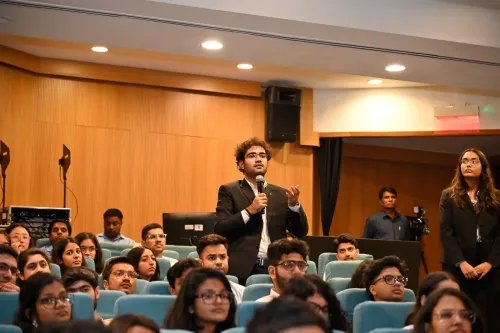
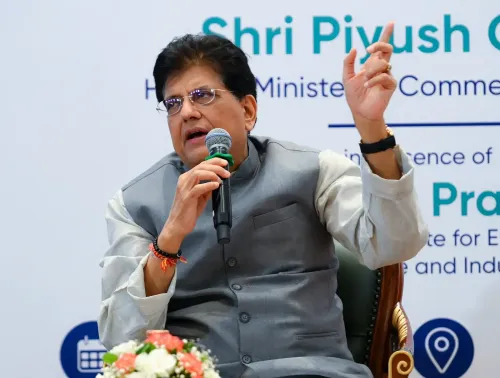
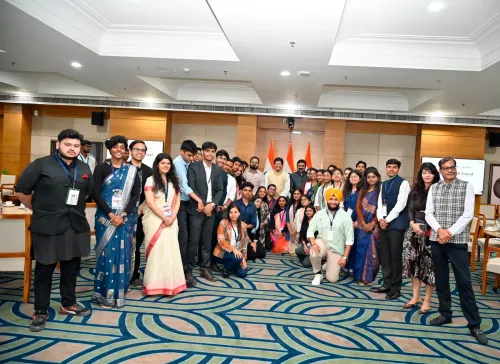
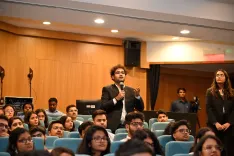
Commerce and Industry Minister Piyush Goyal on Thursday, 15 October 2026, called on India's youth to take ownership of their learning, embrace emerging technologies, and actively contribute to the country's development. Addressing the inaugural session of the SRCC Centenary Conclave in New Delhi, Goyal linked youth ambition and technological readiness directly to the vision of Viksit Bharat 2047.
Key Developments at the SRCC Conclave
Goyal urged students to prepare for a rapidly shifting employment landscape by building proficiency in artificial intelligence (AI), cybersecurity, and the practical deployment of emerging technologies. He stressed that large language models and other AI systems must be developed into usable tools accessible to businesses and ordinary citizens alike — not merely adopted from abroad.
The minister also highlighted that sustained effort, ambitious personal goals, and a willingness to take on new challenges would enable young Indians to create better opportunities for future generations and strengthen India's standing in the global economy.
Lessons from India's IT Boom
Drawing a direct parallel with India's meteoric rise in the information technology sector during the 1990s and 2000s, Goyal challenged today's students to go beyond being consumers of new technology. He urged them to take a leading role in developing and applying innovations — mirroring the generation that built India's software services industry into a global force. The message was clear: the next wave must be driven by Indian creators, not just Indian adopters.
Skills, Startups, and Lifelong Learning
Goyal underscored continuous learning as a lifelong responsibility, encouraging students to identify emerging opportunities that could help advance business growth, ease of doing business, and ease of living. He specifically acknowledged the entrepreneurial spirit of young startup founders who are taking risks and pursuing innovative solutions to real-world challenges.
Investments in manufacturing, technology adoption, and skill development, he said, would collectively create a pipeline of opportunities for India's youth while bolstering the country's economic competitiveness.
Culture, Duty, and Collective Effort
The minister also invoked India's culture, traditions, and heritage as foundational pillars shaping the country's future. He called for a stronger sense of collective duty among citizens, arguing that the combined efforts of individuals — each defining their own ambitions — would propel India toward becoming a leading global power by 2047.
With SRCC marking its centenary, Goyal's address framed the occasion as a moment for reflection and forward momentum, urging the next generation to define India's technological and economic trajectory rather than merely inherit it.
Point of View
But that wave was largely driven by services exports, not deep technology creation. The harder question — whether India's education system and startup ecosystem can shift from code-as-a-service to genuine AI-product leadership — goes unanswered. Without structural reform in higher education and R&D funding, ministerial speeches at elite college conclaves risk preaching to the already-privileged rather than unlocking the broader youth cohort.
NationPress
15 Oct 2026
Frequently Asked Questions
What did Piyush Goyal say at the SRCC Centenary Conclave?
Commerce and Industry Minister Piyush Goyal urged students to develop skills in AI, cybersecurity, and emerging technologies, and to contribute actively to India's Viksit Bharat 2047 goal. He called on youth to lead technological development rather than simply adopt foreign innovations.
What is the Viksit Bharat 2047 vision Goyal referred to?
Viksit Bharat 2047 is the Indian government's long-term vision to transform India into a fully developed nation by the centenary of its independence in 2047. Goyal framed youth skill development and technology leadership as central to achieving that goal.
Why did Goyal reference India's IT boom of the 1990s?
Goyal used India's rise as a global IT services hub in the 1990s and 2000s as a model for the current generation, urging students to replicate that success in AI and emerging tech — but this time as creators and developers, not just service providers.
Which sectors did Goyal highlight for youth opportunities?
The minister highlighted AI, cybersecurity, manufacturing, and skill development as key sectors where youth investment and involvement could create jobs and strengthen India's position in the global economy.
Who was the audience at the SRCC Centenary Conclave?
The conclave was held at Shri Ram College of Commerce (SRCC) in New Delhi, with students as the primary audience. The event marked SRCC's centenary, making Goyal's address a landmark occasion for the institution.