Goyal at SRCC Centenary: Youth Will Build Viksit Bharat 2047
Synopsis
Union Commerce Minister Piyush Goyal inaugurated SRCC's Centenary Conclave on 15 October 2026 — Dr. Kalam's birth anniversary — calling on students to power Viksit Bharat 2047 through talent, AI-era adaptability and a redefined sense of ambition.
Key Takeaways
Piyush Goyal inaugurated the Centenary Conclave on Pathways to Viksit Bharat at SRCC on 15 October 2026 .
The event was held on Dr.
APJ Abdul Kalam's birth anniversary , and Goyal explicitly invoked Kalam's faith in youth potential.
The minister said Viksit Bharat 2047 will be built on the 'confidence, capabilities and enterprise' of India's youth.
Goyal urged students to embrace lifelong learning in an AI-driven world and look beyond conventional success metrics.
SRCC , Delhi University's premier commerce institution, is marking its centenary year with this conclave series.
The address reinforces the Modi government's consistent linkage of India's demographic dividend with technology, skills, and global economic positioning.
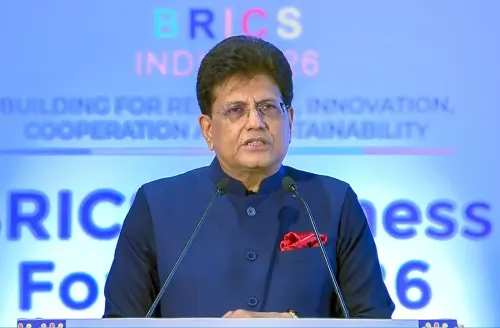
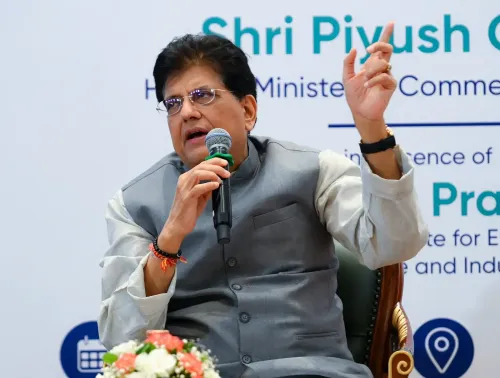
On the birth anniversary of Dr. APJ Abdul Kalam — the 'Missile Man of India' who spent a lifetime urging young people to dream big — Union Commerce and Industry Minister Piyush Goyal walked into one of Delhi University's most storied lecture halls and delivered a message that felt tailored to the moment: India's next chapter belongs to its students.
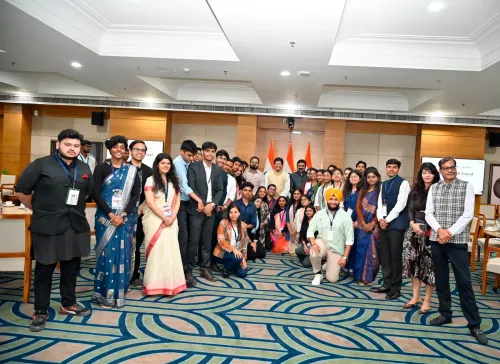
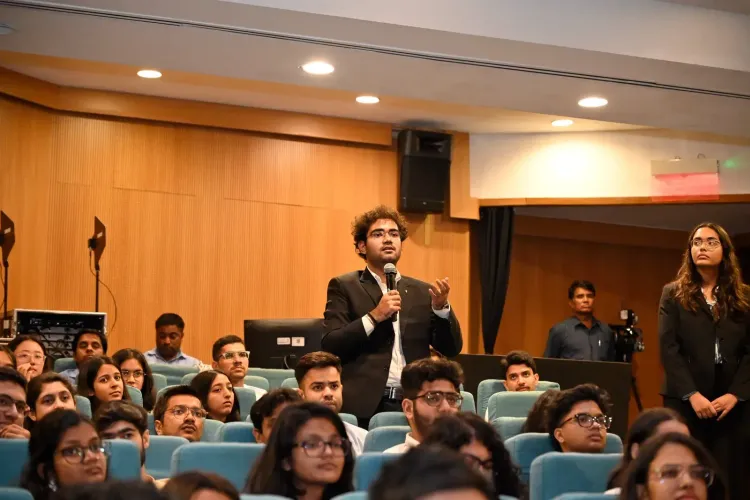
Speaking at the inauguration of the Centenary Conclave on Pathways to Viksit Bharat at Shri Ram College of Commerce (SRCC) on Thursday, 15 October 2026, Goyal told students that the government's flagship vision — Viksit Bharat 2047 — would be built on 'the confidence, capabilities and enterprise of our youth.' The choice of date was anything but accidental: Kalam's birth anniversary has long served as a national prompt to reflect on youth potential, and Goyal leaned into that symbolism directly.
SRCC at 100 — and Why This Room Mattered
SRCC is not just any college. For a century it has been the proving ground for some of India's sharpest economic thinkers, commerce professionals and policymakers. Launching a conclave on national development here — in its centenary year — was a deliberate signal that the ambition of Viksit Bharat 2047 runs through institutions like this one, not just through government corridors.
The minister reminded students they were entering the workforce at a hinge moment: 'As India enters a new era of economic realignment under the leadership of PM Narendra Modi,' he said, the country's competitive edge lies in 'talent, trusted partnerships and the ability to turn challenges into opportunities.'
The Kalam Thread — Faith in Young Minds
Dr. Kalam, who served as India's 11th President from 2002 to 2007, is remembered less for his nuclear science credentials than for his almost evangelical faith in what young Indians could achieve if given the right nudge. Goyal explicitly invoked that legacy, saying Kalam's belief in 'the transformative power of young minds continues to inspire us.' It framed the minister's own address not as a policy briefing but as a generational call to action.
AI, Lifelong Learning, and Redefining Success
The minister's message to students had three practical edges: look beyond conventional definitions of success, embrace lifelong learning in an AI-driven world, and apply knowledge to shape India's growth story. The AI reference was pointed — the National Education Policy 2020 had already embedded digital capability and lifelong learning as core principles, and Goyal's framing at SRCC extended that logic to the next generation of commerce graduates now staring down a world of automation and global economic flux.
The broader pattern here is consistent: since 2014, successive budgets and G20-linked statements under the Modi administration have tied India's demographic dividend directly to technology adoption and skills development. Goyal's SRCC address is the latest articulation of that throughline — spoken, this time, directly to the people it is meant to carry forward.
A century ago SRCC opened its doors to build India's commercial backbone. Today, the minister standing at its podium is asking its students to help build something bigger — a developed India by 2047, the centenary of independence. The clock, he implied, is already running.
Point of View
The minister taps a cross-partisan emotional touchstone that broadens the message beyond party lines. The AI and lifelong-learning framing signals that the government is alive to anxieties about automation among the very graduates it needs to execute its economic ambitions. Taken together, the address reads less as a one-off speech and more as a recruitment pitch for a generation the BJP is counting on to validate its 2047 promise at the ballot box and in the marketplace.
NationPress
15 Oct 2026
Frequently Asked Questions
What is the SRCC Centenary Conclave on Pathways to Viksit Bharat?
It is a flagship event organised by Shri Ram College of Commerce as part of its centenary celebrations, focused on how India's youth and institutions can contribute to the government's Viksit Bharat 2047 goal of becoming a developed economy by the hundredth year of independence.
What is Viksit Bharat 2047?
Viksit Bharat 2047 is the Indian government's official vision to transform India into a fully developed economy by 2047, the centenary of its independence. The goal was articulated by Prime Minister Narendra Modi from 2021 onward and has since featured in Union Budgets and major policy addresses.
Why was the event held on APJ Abdul Kalam's birth anniversary?
Dr. APJ Abdul Kalam, India's former President and celebrated scientist, is widely remembered for inspiring generations of young Indians to dream big and contribute to national development. Holding the conclave on his birth anniversary — 15 October — underscored the event's theme of youth-driven nation-building.
What did Piyush Goyal say about AI and education at SRCC?
Goyal encouraged students to embrace lifelong learning in an AI-driven world and to apply their knowledge to shape India's growth story, signalling that adaptability to new technologies is central to the Viksit Bharat vision.
How old is SRCC and why is its centenary significant?
Shri Ram College of Commerce, affiliated with Delhi University, is marking 100 years as one of India's premier commerce and economics institutions. Its centenary coinciding with the Viksit Bharat conclave series makes it a symbolic venue for conversations about India's long-term economic future.