Owaisi's lawyer urges SC to fix date on Waqf Act case
Synopsis
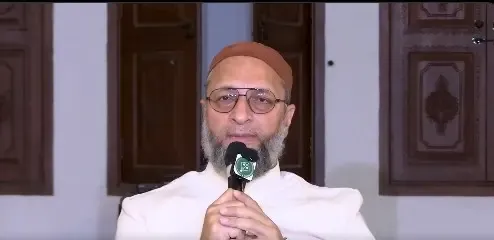
AIMIM president Asaduddin Owaisi's counsel M. Nizam Pasha urged the Supreme Court to urgently fix a hearing date for the Waqf Amendment Act challenge, warning that Limitation Act deadlines and Waqf-by-user property status are being actively harmed. The court has listed the matter for 4 November 2026.
Key Takeaways
Nizam Pasha urged the Supreme Court on 15 October 2026 to schedule a hearing date for the Waqf Amendment Act challenge.
He warned that the Limitation Act could permanently affect Waqf properties not formally defined within a statutory period.
Waqf-by-user properties — those recognised through long religious use, not formal deeds — are also at risk during the legal delay.
An interim order preserving the status quo was passed roughly one-and-a-half years ago , but no substantive hearing has followed.
The Supreme Court has now scheduled the matter for 4 November 2026 for further directions.
The case centres on the Waqf (Amendment) Act , which modified the landmark Waqf Act, 1995 governing Islamic endowment protections across India.
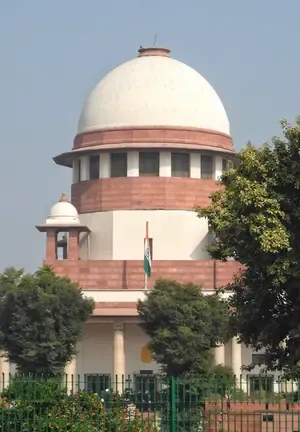
A ticking clock now hangs over thousands of Waqf properties across India. Senior Advocate M. Nizam Pasha, representing petitioner AIMIM president Asaduddin Owaisi, told the Supreme Court of India on Thursday, 15 October 2026 that continued inaction on the Waqf Amendment Act challenge is no longer a procedural inconvenience — it is causing real, irreversible damage on the ground.
The Limitation Act threat to Waqf lands
At the heart of Pasha's urgent plea is a cascading legal risk: if the Waqf (Amendment) Act keeps operating without a final hearing, the Limitation Act could kick in and permanently extinguish claims over properties that have not been formally defined within the prescribed period. 'Waqf properties, if they are not defined within that period, would be affected immediately,' Pasha told the bench, in words that cut to the chase.
The concern is not hypothetical. Waqf endowments in India hold some of the largest non-government landholdings in the country, accumulated over centuries of Islamic charitable grants. A Limitation Act deadline does not pause for pending litigation — it runs regardless.
Waqf-by-user: the quieter casualty
Pasha flagged a second, less-discussed category under pressure: Waqf-by-user properties — mosques, graveyards, and shrines that derive their protected status from long, uninterrupted religious use rather than a formal deed. These properties are especially vulnerable because their very identity rests on custom and continuity, not paperwork. Any disruption to their recognised status during a prolonged legal limbo could invite encroachment challenges that would be difficult to reverse.
An interim order, and a year-and-a-half of waiting
The Supreme Court had passed an interim order roughly one-and-a-half years ago to preserve the status quo while the petitions were being heard. But no substantive hearing has followed. Pasha's message to the bench was pointed in its restraint: 'I only request a date.' The court responded by scheduling the matter for 4 November 2026 — a date petitioners will now watch closely for directions on both the Limitation Act applicability and the fate of Waqf-by-user designations.
The Waqf Act, 1995 created the statutory framework — Waqf boards, property protections, a central registry — that subsequent amendments have sought to reshape. Critics of the amendment, including Owaisi, have argued it undermines those protections; the government has maintained it brings accountability and modernisation. That fundamental disagreement now waits for its day in court.
November 4 is not just another listing date. It may determine whether properties that have been held in religious trust for generations remain protected — or fall through a procedural gap that litigation left open too long.
Point of View
Owaisi's counsel shifts the court's attention from the abstract constitutional challenge to concrete, time-sensitive harm — a framing that is harder to defer. The November 4 listing will test whether the apex court treats this as a true emergency or another step in a long queue. For Waqf institutions, the gap between those two readings is not procedural — it is existential.
NationPress
15 Oct 2026
Frequently Asked Questions
What is the Waqf Amendment Act case in the Supreme Court?
Multiple petitions, including one by AIMIM president Asaduddin Owaisi, challenge the Waqf (Amendment) Act in the Supreme Court, arguing it undermines the property protections established by the original Waqf Act of 1995. The court has yet to hear the matter substantively despite passing an interim order about one-and-a-half years ago.
How does the Limitation Act affect Waqf properties?
The Limitation Act sets legal deadlines for asserting property rights. Petitioners argue that if Waqf properties are not formally defined or registered within those deadlines while the Amendment Act remains in operation, their protected status could lapse permanently — regardless of any pending court case.
What is Waqf-by-user?
Waqf-by-user refers to Islamic endowment properties — such as mosques, graveyards, and dargahs — that are recognised as Waqf not because of a formal written deed, but because of long, uninterrupted use for religious purposes. Their status is based on customary use, making them vulnerable if that recognition is legally disrupted.
When will the Supreme Court next hear the Waqf Amendment Act case?
The Supreme Court has listed the Waqf Amendment Act challenge for hearing on 4 November 2026 , following Senior Advocate M. Nizam Pasha's urgent request for a date on 15 October 2026.
What role does Asaduddin Owaisi play in the Waqf case?
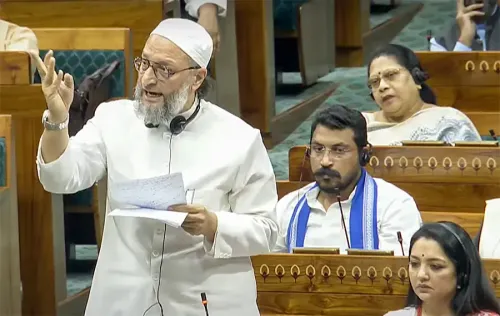
Asaduddin Owaisi, AIMIM president and Lok Sabha MP from Hyderabad, is among the petitioners challenging the Waqf (Amendment) Act in the Supreme Court. Senior Advocate M. Nizam Pasha represents his side in the proceedings.