Tejashwi Yadav Slams Bihar Govt Over Raghopur Tragedy
Synopsis
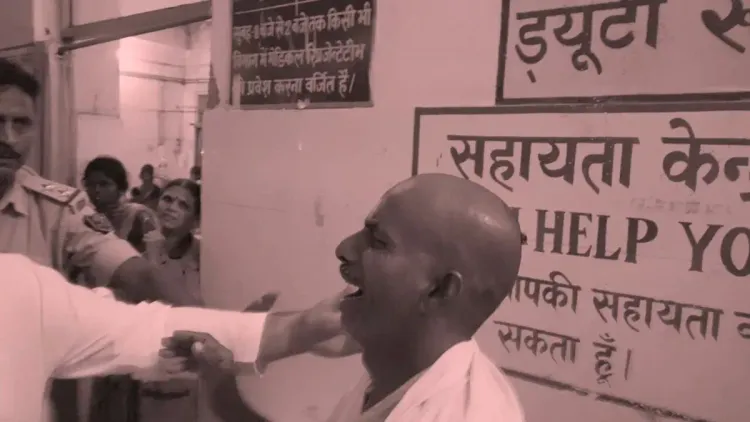
RJD leader Tejashwi Yadav visited Raghopur families and alleged SDRF arrived hours late, ambulances and hospitals had no oxygen, and at least 5-6 children died preventably. He demanded the Chief Minister visit families, increase compensation beyond Rs 4 lakh, and fix Bihar's collapsed rural health chain.
Key Takeaways
Tejashwi Yadav visited Raghopur on 15 October 2026 after a water-related tragedy and met bereaved families.
He alleges SDRF arrived 3 hours late ; local swimmers had already rescued victims before the team arrived.
Ambulances reportedly reached the scene late and carried no oxygen ; the receiving hospital also lacked oxygen and medicines.
Yadav claims at least 5–6 children died due to oxygen shortage that was preventable.
Current government compensation stands at Rs 4 lakh per family ; Yadav is demanding at least 3 decimals of land per affected family in addition.
He has called on Chief Minister Nitish Kumar and the Health Minister to personally visit the families and answer accountability questions.
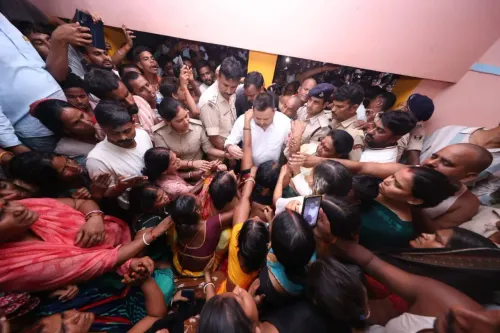
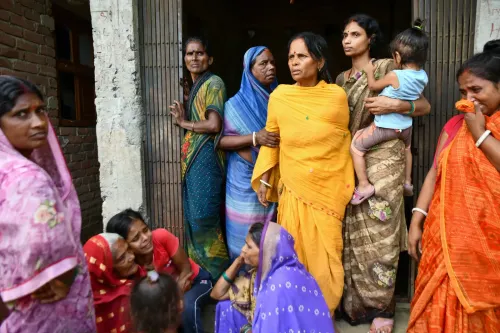
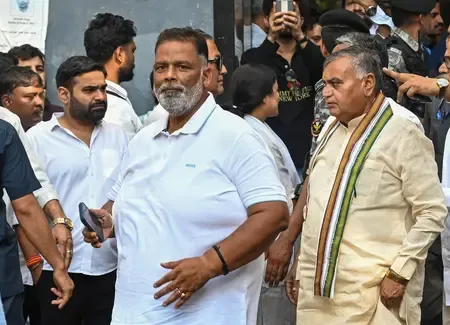
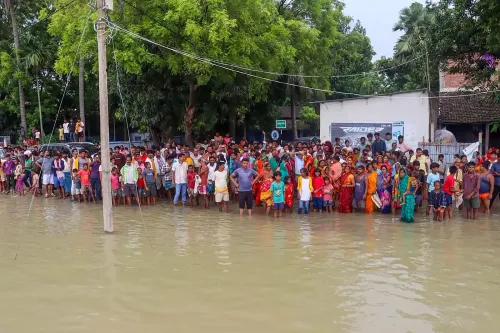
The smallest shroud carries the heaviest burden — and that weight, RJD leader Tejashwi Yadav says, is now being borne by families in Raghopur who watched their children die not from the water that swallowed them, but from the oxygen that never arrived. Visiting bereaved families in the flood-prone constituency on Thursday, 15 October 2026, the Leader of the Opposition in the Bihar Legislative Assembly posted a detailed, point-by-point account of alleged administrative failure that he says cost at least half a dozen children their lives.
A three-hour wait, then a photo-shoot on a boat
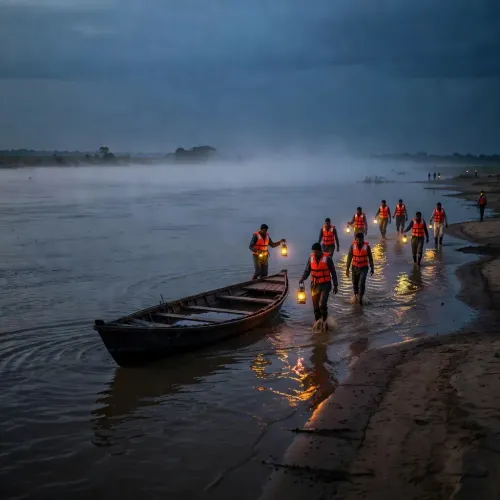
Yadav's account, drawn from conversations with survivors and grieving families, is methodical in its charge-sheet. The State Disaster Response Force (SDRF) team, he alleges, reached the incident site with a three-hour delay — by which time local residents and village swimmers had already pulled the victims from the water themselves. A second team arrived two hours late and, according to Yadav, then spent hours circling the area in a boat — not for rescue operations, but, as he put it bluntly, for a 'photo-shoot.'
The sequence matters because, he insists, several children were still alive when pulled out. Survival, in other words, was within reach. What followed, he alleges, turned a rescue into a tragedy.
No ambulance oxygen, no hospital oxygen, no medicines
Yadav's most damning allegations centre on the health infrastructure chain. Ambulances arrived late. When they did, they carried no oxygen. Children were eventually transported to hospital hours later — only to find no oxygen there either, and no adequate medicines or treatment facilities. His charge: 'at least 5 to 6 children died due to lack of oxygen.'
The post invokes a searing Urdu couplet to open: 'kafan ka maap jitna chhota ho, shav ka bojh utna hi zyada hota hai' — the smaller the shroud, the heavier the corpse's burden. It is not a metaphor he lingers on; the facts, as he presents them, are intended to carry their own weight.
Twenty-one years in power — and a Rs 4 lakh settlement
Yadav directed sharp language at NDA leader Samrat Choudhary and other senior ruling-coalition figures, demanding they 'drown in shame.' He reserved a specific demand for Chief Minister Nitish Kumar — who has led Bihar's government for most of the past 21 years — to personally visit the affected families. Bihar's Chief Minister has governed the state across multiple terms since 2005, and recurrent opposition criticism has focused on the state's flood response mechanisms and rural health infrastructure.
The compensation offered so far, Yadav said, amounts to Rs 4 lakh per family — a figure he called an attempt to 'put a price on children's lives.' He also called on the Health Minister to step away from what he described as 'paid PR' and answer directly why more than half a dozen 'flames were extinguished' due to shortages of treatment, medicine, and oxygen.
Tejashwi's demands: land, oxygen, accountability
Beyond the political indictment, Yadav laid out concrete demands: each affected family should receive at least 3 decimals of land; the administration must be 'tightened so that such accidents never happen again, even by mistake'; ambulances must arrive on time with oxygen; and hospitals must be stocked with medicines and proper treatment facilities.
Bihar has historically ranked among India's most flood-vulnerable states, with the Ganga-Kosi river system regularly inundating low-lying constituencies — Raghopur among them. The RJD and its allies have consistently framed administrative delays in these areas as proof of a governance gap that two decades of NDA rule have failed to close.
Whether the Chief Minister visits, whether an inquiry is ordered, whether compensation is revised — those are the pressure points Yadav has now set in public. The families of Raghopur are watching. So is Bihar.
Point of View
Verifiable failure points — response delay, oxygen absence, compensation inadequacy — that are hard for the ruling coalition to deflect with generalities. For a leader who helms the Opposition in a state where floods recur with grim regularity, anchoring accountability in oxygen cylinders and ambulance arrival times is more potent than broad governance rhetoric. The demand that Chief Minister Nitish Kumar personally visit the families is a pressure tactic with a long shelf life: if he does not go, the silence becomes the story; if he does, Yadav has already framed the narrative. With Bihar elections on the political horizon, this incident is likely to become a recurring exhibit in the RJD's case that two decades of NDA rule have left rural health infrastructure unreformed.
NationPress
15 Oct 2026
Frequently Asked Questions
What happened in Raghopur that Tejashwi Yadav is talking about?
A water-related tragedy in Raghopur, a flood-prone area of Bihar, resulted in the deaths of multiple children. Tejashwi Yadav alleges the deaths were compounded by delayed SDRF rescue, late ambulances, and a complete absence of oxygen in both ambulances and the receiving hospital.
How many children died in the Raghopur incident?
Tejashwi Yadav has alleged that at least 5 to 6 children died specifically due to lack of oxygen, though these figures are drawn from his post based on family accounts and have not been independently verified.
What is Tejashwi Yadav demanding from the Bihar government?
He is demanding that Chief Minister Nitish Kumar personally visit the affected families, that the Health Minister answer for the oxygen and medicine shortage, that compensation be raised beyond Rs 4 lakh, that each family receive at least 3 decimals of land, and that ambulance and hospital infrastructure be urgently upgraded.
Why did Tejashwi Yadav criticise Samrat Choudhary?
Samrat Choudhary is a prominent NDA leader in Bihar, and Tejashwi Yadav addressed him and other NDA figures as part of a broader attack on the ruling coalition's responsibility for the alleged administrative failures that led to preventable deaths.
How long has the NDA government been in power in Bihar?
Chief Minister Nitish Kumar has led Bihar's government across multiple terms since 2005 — approximately 21 years — a tenure Tejashwi Yadav invoked when criticising the state of disaster response and health infrastructure.