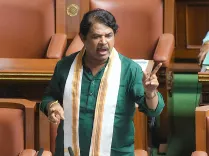
Akhilesh Yadav rallies INDIA bloc with unity verse
Synopsis
Samajwadi Party president Akhilesh Yadav posted a 16-stanza Hindi poem on October 14, 2026, using the refrain 'Ek India ki ek aawaz' to frame the INDIA alliance's demands on electoral integrity, reservations, livelihood, and social justice as a unified opposition call.
Key Takeaways
Akhilesh Yadav posted a Hindi verse on October 14, 2026 built around the refrain 'Ek India ki ek aawaz' ('One voice of one India').
The poem covers sixteen distinct political demands spanning electoral integrity, constitutional protections, reservations, livelihood, women's dignity, and rights of marginalised communities.
The format — verse with video — is designed for ground-level circulation and chanting at grassroots political gatherings.
The messaging aligns with the INDIA opposition alliance , formed in 2023 to consolidate non-BJP parties ahead of national elections.
The Samajwadi Party's advocacy for reservations and OBC-minority rights dates to its founding by Mulayam Singh Yadav in 1992 .
The post comes ahead of upcoming state assembly elections and amid continuing national debate over electoral law and reservation policy.
A poem. A political manifesto. The same thing, in sixteen stanzas. Samajwadi Party president Akhilesh Yadav posted a verse on Wednesday, October 14, 2026, built on a single hammering refrain — 'Ek India ki ek aawaz' ('One voice of one India') — laying out the opposition's core demands in the cadence of a public rally chant.
Sixteen demands, one drumbeat
The poem opens on nationhood and moves with deliberate momentum through the full arc of opposition grievance politics. 'Chunaavi dhaandhi ke khilaaf' — against electoral fraud. 'Samvidhan-aarakshan ke rakshaartham' — in defence of the Constitution and reservations. 'Naari ke maan par na ho prahaar' — no assault on women's dignity. Each couplet lands a specific demand; each is sealed by the same refrain. The structure is not accidental — it is designed to be memorised, chanted, and carried into a crowd.
Yadav's text covers ground across at least six distinct policy battlegrounds: electoral integrity, constitutional protections, caste-based reservations, livelihood and employment, women's safety, and the rights of shoshit-vanchit — the exploited and the marginalised. 'Ho rozi-roti sabke hi paas' ('Let every person have bread and livelihood') and 'Khilein khet, dukaan, karobaar' ('Let farms, shops and businesses flourish') are the economic planks. 'Ho apni chhat aur bunyaad' ('Let every person have their own roof and foundation') reaches for the homeownership promise that has dominated welfare politics for a decade.
The INDIA alliance thread and what the verse signals
The INDIA opposition alliance, formed in 2023 to consolidate non-BJP parties ahead of national elections, gave the Samajwadi Party a wider platform for exactly this kind of coalition-building rhetoric. The refrain 'Ek India' is a pointed counter-narrative — reclaiming the 'India' brand for the opposition coalition while pushing back against what parties in the bloc have called the ruling dispensation's majoritarian framing.
The Samajwadi Party's advocacy for reservations and OBC-minority rights stretches back to its founding by Mulayam Singh Yadav in 1992 — and Akhilesh has consistently kept that plank central even as he has expanded the party's messaging toward youth, infrastructure, and economic aspiration. The line 'Hon yuvaon ke sapne saakaar' ('Let the dreams of the youth be realised') is the signature addition of his political generation.
Why the verse format matters
Political poetry in Hindi-belt politics is not decoration — it is mobilisation technology. Verses travel faster than press releases on WhatsApp, get read aloud at booth-level meetings, and embed slogans in memory. Yadav has used the format before; deploying it here — with a video attached — signals this is content engineered for ground-level circulation, not just a social-media post for followers already inside the tent.
With state assembly elections on the horizon and recurring national debates over electoral law and reservation policy, the SP chief's sixteen-stanza manifesto is less a poem than a pre-campaign opening salvo — one designed to be heard far beyond a single timeline.
Point of View
Not just a regional player. With Uttar Pradesh perpetually the kingmaker state in national arithmetic, this kind of mass-circulation messaging does double duty: energising the SP's OBC-minority base while signalling coalition-wide credibility. The poetry format is the tell — it is built for WhatsApp forwards and booth-level recitation, not editorial columns.
NationPress
14 Oct 2026
Frequently Asked Questions
What did Akhilesh Yadav post on October 14 2026?
Akhilesh Yadav posted a 16-stanza Hindi poem using the refrain 'Ek India ki ek aawaz' ('One voice of one India'), laying out opposition demands on electoral integrity, reservations, livelihood, women's safety, and the rights of marginalised communities.
What does 'Ek India ki ek aawaz' mean?
'Ek India ki ek aawaz' translates to 'One voice of one India' — a refrain Akhilesh Yadav used as the unifying thread of his poem to signal a united opposition front under the INDIA alliance.
What is the INDIA alliance and how is SP connected?
The INDIA alliance is an opposition coalition formed in 2023 to challenge the BJP-led NDA in national elections. The Samajwadi Party is a member, and Akhilesh Yadav has been one of its prominent voices, particularly on social justice and reservation issues.
Why does Akhilesh Yadav use poetry for political messaging?
Political verse in Hindi-belt politics functions as mobilisation technology — verses are easily memorised, chanted at rallies, and shared rapidly on messaging platforms, making them more effective at the grassroots level than conventional press statements.
What specific issues did Akhilesh Yadav raise in the poem?
The poem raised electoral fraud, defence of the Constitution and reservations, livelihood and employment, housing, farmers and small businesses, youth aspirations, women's dignity, rights of the exploited and marginalised, and equality without caste or class discrimination.