CM Office Uttarakhand Monitors Kedarnath Dham Reconstruction
Synopsis
The Uttarakhand Chief Minister's Office confirmed active monitoring of ongoing reconstruction work at Kedarnath Dham in Rudraprayag, more than a decade after the catastrophic 2013 floods devastated the shrine's surroundings and killed thousands.
Key Takeaways
The Uttarakhand CMO posted on 22 October 2026 confirming continuous monitoring of Kedarnath Dham reconstruction .
The rebuilding project follows the June 2013 floods , one of India's deadliest natural disasters, which destroyed pilgrim infrastructure in Rudraprayag district .
The reconstruction incorporates disaster-resilient design standards suited to the volatile Himalayan terrain.
Kedarnath is one of the four Char Dham sites that anchor Uttarakhand's pilgrimage economy and draw millions of devotees annually.
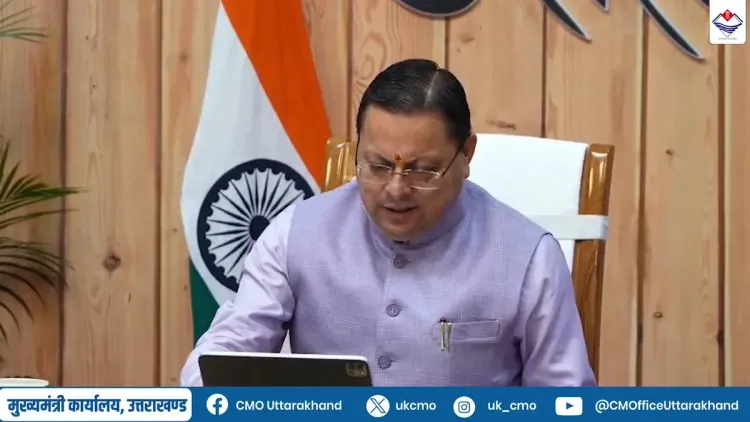
A video was shared alongside the post, indicating ground-level oversight of the project is ongoing.
More than a decade after the catastrophic 2013 floods reduced the sacred precincts of Kedarnath Dham to rubble, the Chief Minister's Office of Uttarakhand confirmed on Thursday, 22 October 2026 that reconstruction work at the shrine is under continuous, active monitoring.
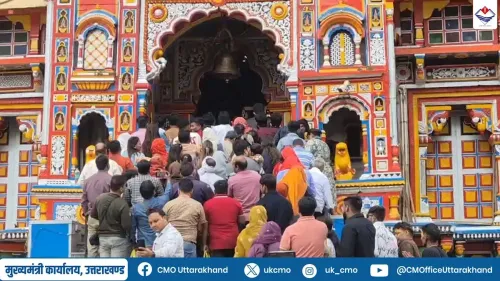
The post, shared by the official CMO account, states: 'Shri Kedarnath Dham ke punarnirmaan karya ki lagaatar ho rahi hai monitoring' — 'Continuous monitoring of the reconstruction work at Shri Kedarnath Dham is ongoing.' The message was accompanied by a video, signalling that ground-level oversight, not just bureaucratic oversight from Dehradun, is in play.
Why Kedarnath's Rebuilding Still Commands State-Level Attention
The June 2013 Uttarakhand floods were among the deadliest natural disasters in independent India's history. The cloudburst and glacial lake outburst obliterated pilgrim facilities, access routes, and ancillary structures around the Kedarnath temple in Rudraprayag district, killing thousands. The ancient Shiva shrine itself survived — shielded partly by a boulder that lodged against its rear wall — but the surrounding infrastructure was wiped out entirely.
The reconstruction project that followed is not a routine public-works contract. It involves rebuilding ghats, meditation centres, pilgrim accommodation, and approach roads in one of the most geologically volatile Himalayan corridors in the country, to disaster-resilient design standards capable of withstanding future extreme-weather events. That complexity is precisely why periodic monitoring signals from the state government still carry weight.
Rudraprayag at the Centre of Uttarakhand's Pilgrimage Economy
Kedarnath is one of the Char Dham pilgrimage sites — the four Hindu shrines that collectively draw millions of devotees to Uttarakhand each year. For Rudraprayag district, the shrine is not merely a religious landmark; it is the backbone of the local economy, and delays or gaps in reconstruction directly affect pilgrims, shopkeepers, hoteliers, and the broader mountain communities that depend on the annual yatra season for their livelihoods.
Sustained state attention to the project, even years into the rebuild, reflects how politically and economically central the Kedarnath corridor is to Uttarakhand's identity and its government's credibility.
Point of View
While framing the administration as a proactive steward of religious infrastructure. In a state where pilgrimage tourism is an economic lifeline, visible oversight of Kedarnath is also a soft assertion of political legitimacy. The unanswered question — how far along the rebuild actually is, and what milestones remain — is precisely what makes these monitoring posts politically useful while keeping specifics deliberately vague.
NationPress
22 Oct 2026
Frequently Asked Questions
What is the current status of Kedarnath Dham reconstruction?
As of October 2026, the Uttarakhand Chief Minister's Office confirmed that reconstruction work at Kedarnath Dham is under continuous monitoring, though specific phase-wise completion details have not been publicly disclosed in this update.
Why was Kedarnath reconstruction needed?
The June 2013 Uttarakhand floods, triggered by a cloudburst and glacial lake outburst, devastated pilgrim infrastructure around the Kedarnath temple in Rudraprayag district, killing thousands and wiping out access routes, ghats, and accommodation facilities.
Which district is Kedarnath Dham located in?
Kedarnath Dham is located in Rudraprayag district of Uttarakhand, in the Himalayan region.
Is Kedarnath one of the Char Dham sites?
Yes, Kedarnath is one of the four Char Dham pilgrimage sites in Uttarakhand, which together attract millions of Hindu devotees every year and form a major pillar of the state's tourism economy.
What are the key features of the Kedarnath reconstruction project?
The reconstruction project focuses on rebuilding pilgrim facilities, ghats, meditation centres, and approach roads using disaster-resilient design standards specifically suited to Uttarakhand's geologically volatile Himalayan terrain.