CM Dhami: Rail Connectivity to Boost Uttarakhand Economy
Synopsis
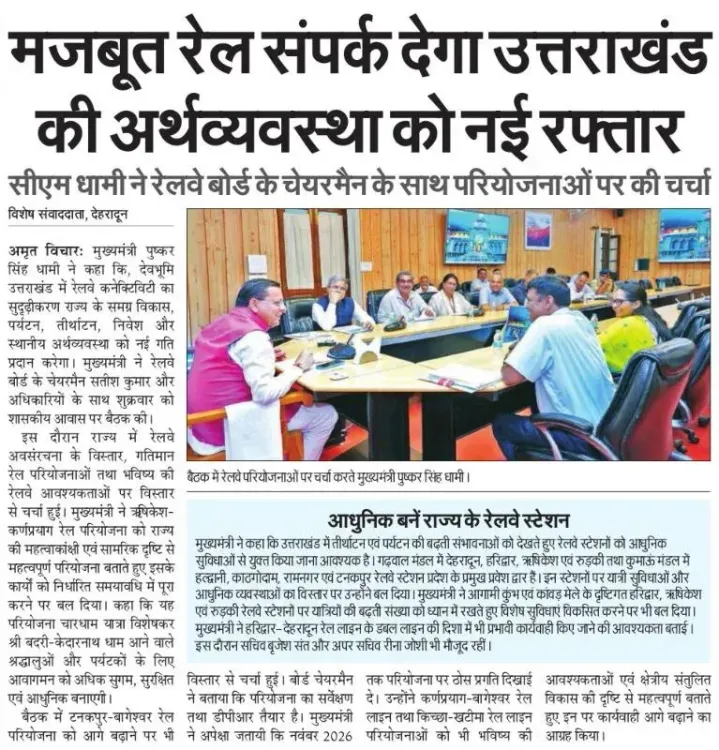
Chief Minister Pushkar Singh Dhami has said that strong rail connectivity will give Uttarakhand's economy new momentum. The statement reaffirms the state government's push for Himalayan rail infrastructure, including the under-construction Rishikesh-Karnaprayag line targeting completion by 2027-28.
Key Takeaways
CM Pushkar Singh Dhami stated on 20 June 2026 that stronger rail connectivity will accelerate Uttarakhand 's economy.
The Rishikesh-Karnaprayag rail line , spanning 120 km , was sanctioned in 2010 and targets an operational window of 2027-28 .
The Char Dham Railway vision, announced in the 2014 Union Budget , aims to connect Badrinath, Kedarnath, Gangotri , and Yamunotri by rail.
Key beneficiaries include the pilgrimage tourism industry , hill traders, and pilgrims undertaking the Char Dham Yatra .
Uttarakhand's limited broad-gauge network has historically constrained year-round tourism and logistics in the hill districts.
Progress on the Rishikesh-Karnaprayag corridor and potential new hill rail links in the next Railway Budget remain key developments to watch.
The Chief Minister's Office of Uttarakhand, on behalf of Chief Minister Pushkar Singh Dhami, stated on Saturday, 20 June 2026 that stronger rail connectivity will give the state's economy fresh momentum. The post, shared from the official CMO account, underscores the Dhami government's continued emphasis on infrastructure-led growth for the Himalayan state.
Context
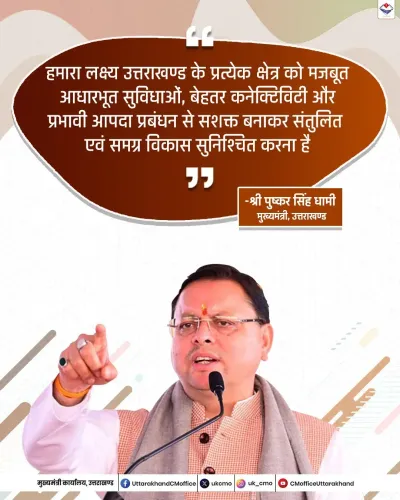
The CMO's post, originally in Hindi, reads: 'Majboot rail sampark dega Uttarakhand ki arthvyavastha ko nayi raftaar' — ('Strong rail connectivity will give Uttarakhand's economy new speed: Chief Minister Pushkar Singh Dhami'). The statement reflects an ongoing policy priority of the Dhami administration to position rail infrastructure as a driver of economic diversification in a state whose revenues are heavily tied to pilgrimage and domestic tourism.
Uttarakhand's existing broad-gauge rail network is limited, with the hill districts largely inaccessible by train. This has long constrained year-round logistics, trade, and the movement of pilgrims to the state's revered shrines.
Policy Backdrop
The centrepiece of rail expansion in the region is the Rishikesh-Karnaprayag new rail line, a 120-kilometre project sanctioned in 2010 to link the plains with the Garhwal Himalayas. The project, which involves extensive tunnelling through difficult mountain terrain, has been cited as a transformative connectivity initiative for the state's interior districts.
Complementing this is the broader Char Dham Railway vision, first announced in the 2014 Union Budget, which envisions rail access to all four major pilgrimage sites — Badrinath, Kedarnath, Gangotri, and Yamunotri. Successive central and state governments have framed Himalayan rail penetration as both an economic imperative and a matter of strategic connectivity.
The Rishikesh-Karnaprayag corridor is being closely watched, with an operational target window of 2027-28 cited in project planning discussions. Revised cost estimates and physical progress on this line remain key indicators of the broader rail push.
Stakeholders and Impact
The constituencies most directly affected by improved rail access include the pilgrimage tourism industry, hill-based traders, and the millions of devotees who undertake the Char Dham Yatra each year. Better connectivity is expected to reduce travel times, lower logistics costs, and extend the effective tourism season beyond the current weather-dependent window.
For Uttarakhand's hill traders and small businesses, reliable rail links could open new supply chains and reduce dependence on road transport, which remains vulnerable to landslides and seasonal closures. Local communities along proposed rail corridors stand to benefit from improved access to markets, healthcare, and education facilities in the plains.
What's Next
Physical progress on the Rishikesh-Karnaprayag line and any revised cost disclosures will be closely tracked as the project approaches its target completion window. The possibility of additional hill rail links being included in the next Railway Budget is also being watched by infrastructure observers.
Chief Minister Dhami's continued public emphasis on rail connectivity signals that this infrastructure narrative will remain central to the state government's economic messaging in the period ahead. Whether the statement corresponds to a specific fresh announcement or project milestone will become clearer as official details emerge.
Point of View
Centrally funded project like the Rishikesh-Karnaprayag line, the Dhami government signals both developmental intent and alignment with New Delhi's connectivity agenda. The Char Dham Railway vision, spanning over a decade of political promises, gives this messaging historical weight even as execution timelines remain fluid. The statement is likely to sharpen public scrutiny of actual physical progress on the corridor as the 2027-28 target window draws closer.
NationPress
19 Sept 2026
Frequently Asked Questions
What is the Rishikesh-Karnaprayag rail line?
The Rishikesh-Karnaprayag rail line is a 120-kilometre new broad-gauge rail project connecting the Uttarakhand plains to the Garhwal Himalayas. Sanctioned in 2010, it involves extensive tunnelling and is targeted for completion around 2027-28.
What is the Char Dham Railway project?
The Char Dham Railway is a proposed rail network announced in the 2014 Union Budget to connect Uttarakhand's four major pilgrimage sites — Badrinath, Kedarnath, Gangotri, and Yamunotri — by train.
Why is rail connectivity important for Uttarakhand's economy?
Uttarakhand's economy depends heavily on pilgrimage tourism and domestic travel. Better rail access can reduce logistics costs, extend the tourism season, open new supply chains for hill traders, and provide communities with improved access to plains-based services.
What did CM Dhami say about rail connectivity?
CM Pushkar Singh Dhami said that strong rail connectivity will give Uttarakhand's economy new speed and momentum, reaffirming his government's focus on infrastructure-led growth for the Himalayan state.
When is the Rishikesh-Karnaprayag rail line expected to be completed?
The Rishikesh-Karnaprayag rail line is targeting an operational window of 2027-28, though revised cost estimates and physical progress updates are expected as the project advances.