Amit Shah Salutes Kakori Train Action Heroes on Centenary
Synopsis
Union Home Minister Amit Shah marked the centenary of the Kakori Train Action on 9 August 2026, honouring revolutionaries Chandra Shekhar Azad and Ram Prasad Bismil for their armed defiance of British colonial rule and declaring the nation forever indebted to the martyrs.
Key Takeaways
Amit Shah paid tribute to the Kakori Train Action on 9 August 2026 , the event's anniversary.
The Kakori Train Action took place on 9 August 1925 , when HRA revolutionaries intercepted a British treasury train near Kakori, Uttar Pradesh .
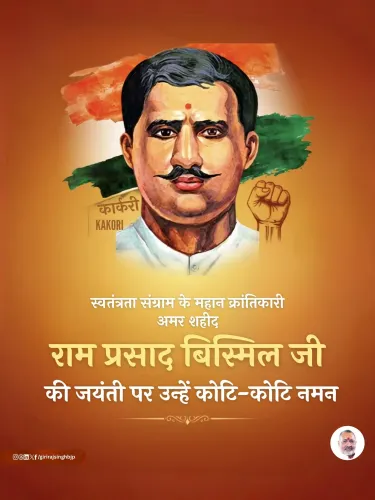
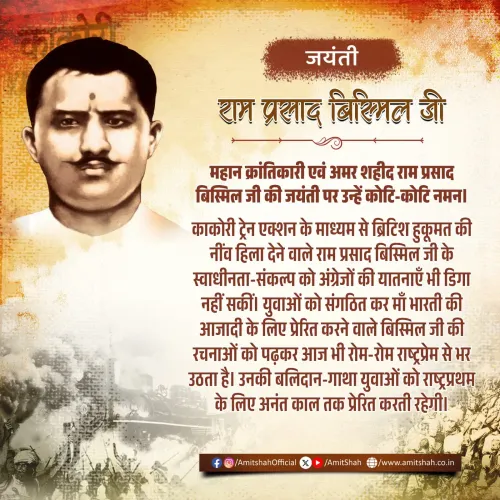
Ram Prasad Bismil led and planned the action and was executed by the British in 1927 .
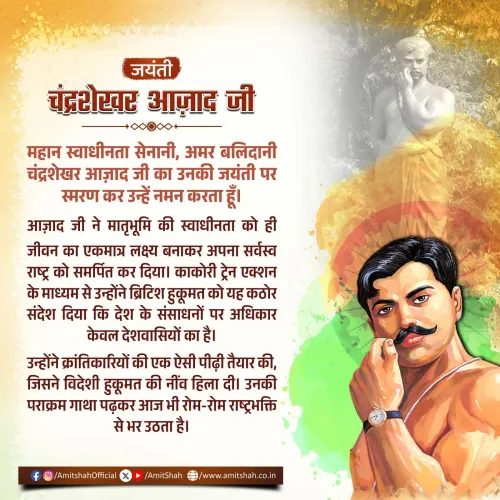
Chandra Shekhar Azad co-led the action and died in a 1931 encounter rather than surrender.
The Hindustan Republican Association was formed in Kanpur in 1924 to organise armed resistance against colonial rule.
Shah stated that the nation will 'forever remain indebted' to all the immortal revolutionaries of the Kakori Train Action.
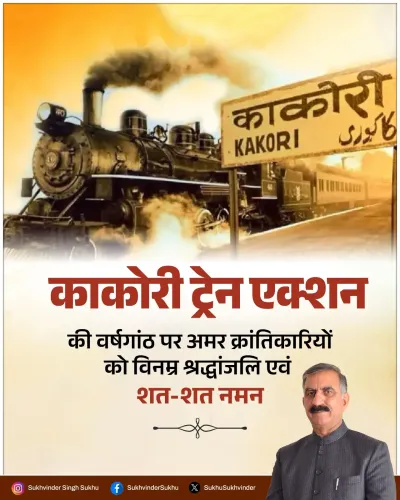
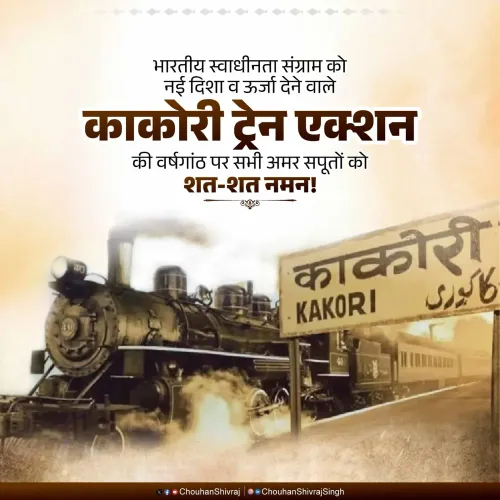
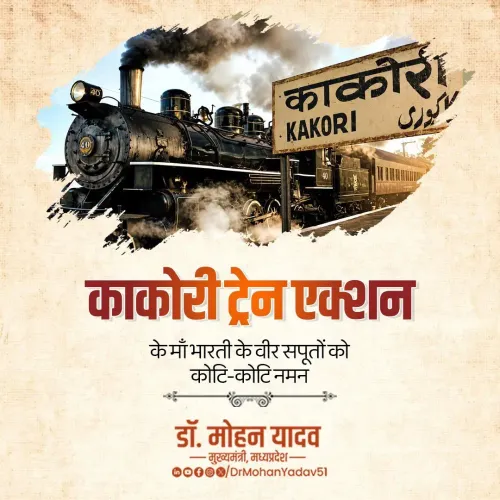
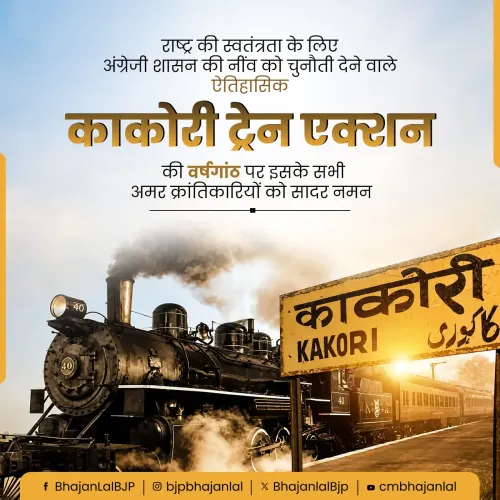
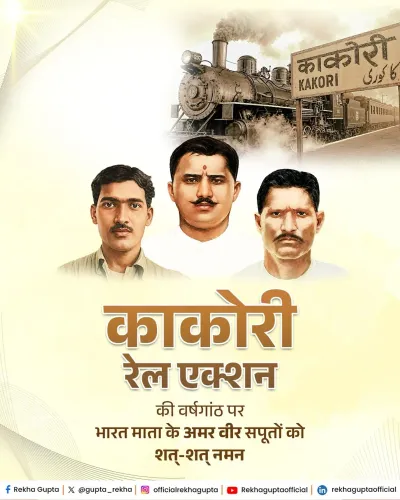
A century on, the memory of eight revolutionaries who stopped a British treasury train in the dusty heartland of Uttar Pradesh still burns bright. Union Home Minister Amit Shah paid tribute on Sunday, 9 August 2026 to the heroes of the Kakori Train Action, calling it an unforgettable chapter of India's freedom struggle that gave fresh energy to armed resistance against colonial injustice.
In his post, Shah wrote that under the leadership of Chandra Shekhar Azad and Ram Prasad Bismil, the brave freedom fighters sent a clear message to British rule through their indomitable courage and dedication — that the resources of this land belong to its people. 'देश काकोरी ट्रेन एक्शन के सभी अमर क्रांतिकारियों का सदैव ऋणी रहेगा' ('The nation will forever remain indebted to all the immortal revolutionaries of the Kakori Train Action'), he wrote.
What happened at Kakori on 9 August 1925
On 9 August 1925, a group of revolutionaries affiliated with the Hindustan Republican Association (HRA) — formed in Kanpur in 1924 to organise armed resistance against colonial rule — stopped a train near Kakori, Uttar Pradesh and seized British government treasury funds. The act was deliberate and symbolic: colonial wealth, drawn from Indian soil, would be reclaimed for the revolution.
Ram Prasad Bismil, the poet-revolutionary who planned and led the action, was executed by the British in 1927. Chandra Shekhar Azad, who escaped arrest that day, continued the armed struggle until his death in a 1931 encounter in Allahabad — famously refusing to be taken alive. Their names became synonymous with a generation that chose the gun alongside the spinning wheel.
Why armed revolutionaries are remembered alongside Gandhi's movement
Indian governments across administrations have consistently marked the Kakori anniversary and similar episodes to acknowledge that the independence movement had multiple streams — the mass non-violence of Gandhi and the armed defiance of the HRA were both part of the same national awakening. The 9 August date itself carries layered significance: it is also the anniversary of the Quit India Movement of 1942, making it one of the most charged dates on India's freedom calendar.
Annual commemorations at Kakori and state-level programmes in Uttar Pradesh mark the occasion each year, ensuring that the names of Bismil, Azad, and their comrades are passed to younger generations not as footnotes but as founders.
A train robbery that lasted minutes. A reckoning that lasted a century — and counting.
Point of View
Which also carries the weight of the 1942 Quit India Movement, amplifies the political resonance of the gesture. The framing that 'the resources of this land belong to its people' draws a deliberate line from colonial-era dispossession to contemporary nationalist rhetoric. Commemorating such anniversaries also reinforces the BJP's broader cultural project of reclaiming revolutionary icons who do not fit neatly into any single ideological lineage.
NationPress
9 Aug 2026
Frequently Asked Questions
What was the Kakori Train Action?
The Kakori Train Action was an armed operation on 9 August 1925 in which revolutionaries of the Hindustan Republican Association stopped a British government treasury train near Kakori, Uttar Pradesh and seized its funds to finance the independence movement.
Who led the Kakori Train Action?
Ram Prasad Bismil planned and led the action, with Chandra Shekhar Azad among the key participants. Bismil was executed by the British in 1927 ; Azad died in a 1931 encounter.
Why is 9 August significant in Indian history?
9 August marks two major events: the Kakori Train Action of 1925 and the launch of the Quit India Movement in 1942 , making it one of the most important dates in India's freedom struggle calendar.
What was the Hindustan Republican Association?
The Hindustan Republican Association (HRA) was formed in Kanpur in 1924 to organise armed resistance against British colonial rule. It was the organisation behind the Kakori Train Action.
What did Amit Shah say about the Kakori Train Action?
Union Home Minister Amit Shah called it an unforgettable chapter of the freedom struggle and said the revolutionaries made clear that India's resources belong to its own people. He stated the nation will 'forever remain indebted' to the martyrs.