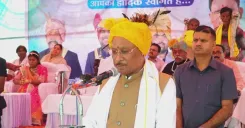
Amit Shah Pays Tribute to Chandrashekhar Azad on Birth Anniversary
Synopsis
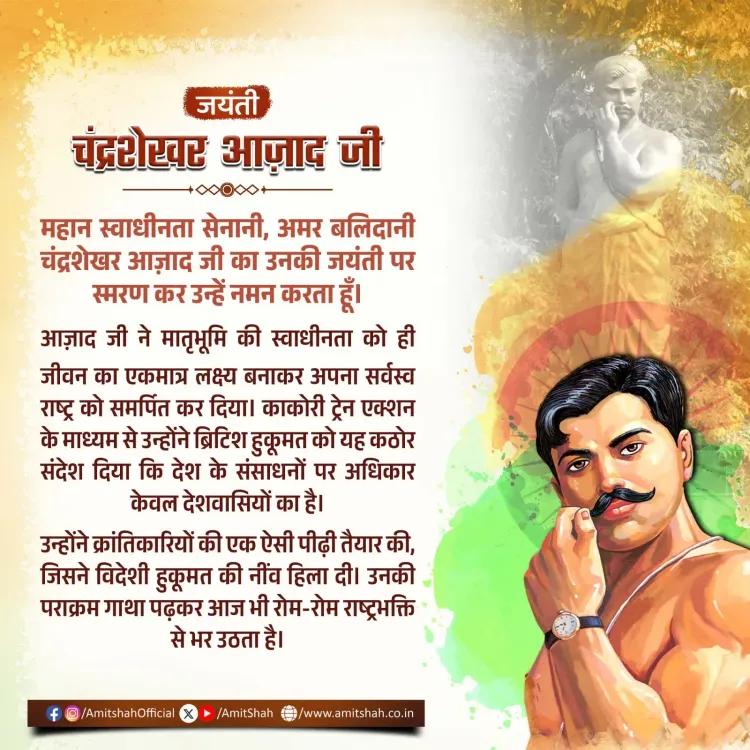
Union Home Minister Amit Shah on 23 July 2026 honoured revolutionary Chandrashekhar Azad on his birth anniversary, saluting his role in the 1925 Kakori Train Action and his legacy of forging a generation of anti-colonial revolutionaries dedicated to Indian resource sovereignty.
Key Takeaways
Union Home Minister Amit Shah paid tribute to Chandrashekhar Azad on his birth anniversary, 23 July 2026 .
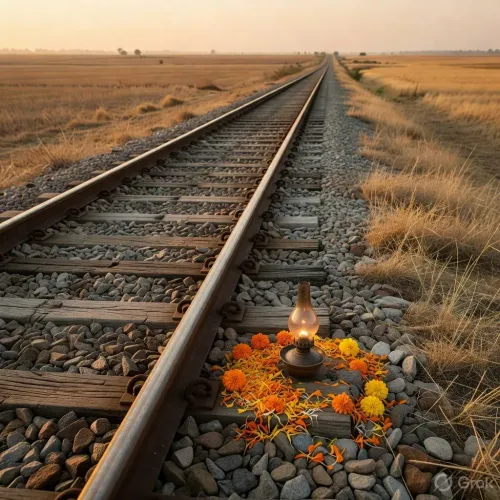
Shah highlighted the Kakori Train Action of 9 August 1925 , calling it a declaration that India's resources belong to its own people.
Azad, born 23 July 1906 , was a leading member of the Hindustan Republican Association and a pioneer of armed resistance against British rule.
He died on 27 February 1931 in a police encounter at Alfred Park, Allahabad , having refused to surrender.
Shah credited Azad with preparing an entire generation of revolutionaries who 'shook the foundations of foreign rule.' The tribute is part of a consistent BJP pattern of publicly honouring armed-resistance figures alongside the non-violent independence tradition.
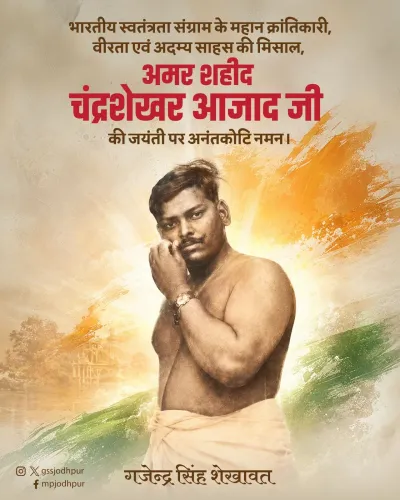
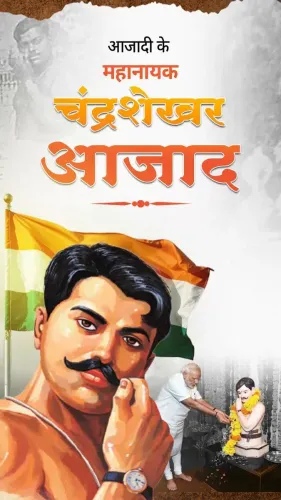
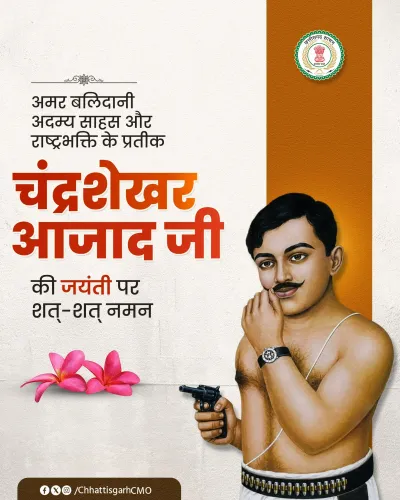
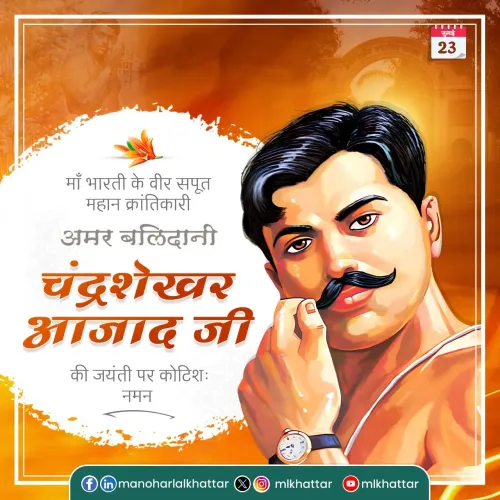
Union Home Minister Amit Shah on Thursday, 23 July 2026, paid tribute to revolutionary freedom fighter Chandrashekhar Azad on his birth anniversary, honouring him as an immortal martyr who dedicated his entire life to the liberation of the motherland.
Context
In his post, Shah wrote: 'महान स्वाधीनता सेनानी, अमर बलिदानी चंद्रशेखर आज़ाद जी की जयंती पर उनका स्मरण कर उन्हें नमन करता हूँ' ('On the birth anniversary of the great freedom fighter and immortal martyr Chandrashekhar Azad, I bow to him in remembrance'). He noted that Azad made the independence of the motherland the sole purpose of his life and surrendered everything to the nation. Shah added that reading Azad's saga of valour 'fills every fibre of one's being with patriotism even today.'
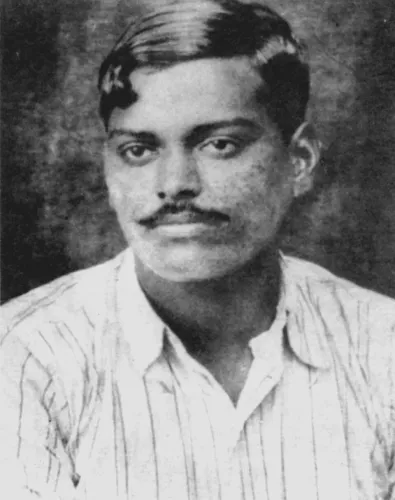
Chandrashekhar Azad was born on 23 July 1906 in Bhavra, Central Provinces (present-day Madhya Pradesh). He became one of the foremost armed revolutionaries of the independence movement, leading cadres who believed that direct action against colonial structures was necessary to end British rule.
The Kakori Train Action
Shah specifically highlighted the Kakori Train Action of 9 August 1925, describing it as a message to British authorities that 'the right over the country's resources belongs only to its people.' In that operation, members of the Hindustan Republican Association — including Azad — intercepted and looted a British government treasury train near Kakori, Uttar Pradesh, to fund revolutionary activities.
The action led to a sweeping British crackdown, resulting in the arrest and execution of several revolutionaries. Azad evaded capture and continued to organise resistance. He died on 27 February 1931 in a police encounter at Alfred Park, Allahabad (now Azad Park, Prayagraj), having vowed never to be taken alive by the British.
Policy Backdrop and Broader Pattern
Shah's tribute is part of a consistent practice among senior BJP leaders of publicly commemorating revolutionary figures such as Azad, Bhagat Singh, and Ram Prasad Bismil on their birth and martyrdom anniversaries. These messages deliberately foreground the armed-resistance strand of the independence movement alongside the better-known non-violent tradition.
Shah underlined Azad's role in forging a generation of revolutionaries: 'He prepared a generation of revolutionaries that shook the very foundations of foreign rule.' This framing positions Azad not merely as an individual hero but as an institution-builder within the revolutionary movement.
Stakeholders and Impact
Commemorations of Azad carry resonance across India, particularly in Madhya Pradesh and Uttar Pradesh, the two states most closely associated with his life and sacrifice. Civil society groups, student organisations, and political parties across the spectrum mark the anniversary with events at memorials, schools, and public squares.
The emphasis on resource sovereignty — Azad's assertion that Indian wealth belongs to Indians — continues to hold symbolic weight in contemporary political discourse around economic nationalism and self-reliance.
What's Next
Parallel commemorations are expected on 27 February, the martyrdom anniversary of Azad, as well as on 23 March (Bhagat Singh's martyrdom day) and 19 December (Ram Prasad Bismil's martyrdom day). Observers will watch for any Union government announcements regarding new memorials, museum upgrades, or curriculum initiatives that highlight the contributions of revolutionary figures to India's independence struggle.
Point of View
The message draws an implicit line connecting colonial-era economic resistance to contemporary narratives of economic nationalism. The framing of Azad as an institution-builder — someone who 'prepared a generation' — also serves a political purpose: it positions revolutionary fervour as a transmissible legacy rather than a historical episode. Commemorations like these, repeated across multiple anniversaries each year, function cumulatively as a soft ideological architecture.
NationPress
21 Oct 2026
Frequently Asked Questions
When is Chandrashekhar Azad's birth anniversary?
Chandrashekhar Azad was born on 23 July 1906, and his birth anniversary is observed every year on 23 July.
What was the Kakori Train Action?
The Kakori Train Action was an armed operation on 9 August 1925 in which members of the Hindustan Republican Association, including Chandrashekhar Azad, looted a British government treasury train near Kakori, Uttar Pradesh, to fund revolutionary activities against colonial rule.
How did Chandrashekhar Azad die?
Chandrashekhar Azad died on 27 February 1931 during a police encounter at Alfred Park in Allahabad (now Azad Park, Prayagraj). True to his vow never to be captured alive by the British, he fired his last bullet at himself.
Why did Amit Shah pay tribute to Chandrashekhar Azad?
Amit Shah posted a tribute on 23 July 2026, Azad's birth anniversary, honouring him as an immortal martyr who dedicated his life to India's freedom and inspired a generation of revolutionaries.
What is the significance of the Kakori Train Action in Indian history?
The Kakori Train Action of 1925 is significant as one of the boldest acts of armed resistance against British rule, symbolising the revolutionaries' assertion that India's wealth and resources belonged to its own people, not the colonial administration.