Shekhawat pays tribute to Chandrashekhar Azad on birth anniversary
Synopsis
Union Minister Gajendra Singh Shekhawat paid homage to revolutionary martyr Chandrashekhar Azad on his birth anniversary on 23 July 2026, calling him an enduring example of bravery and indomitable courage in India's freedom struggle.
Key Takeaways
Gajendra Singh Shekhawat , Union Culture and Tourism Minister, posted a tribute to Chandrashekhar Azad on 23 July 2026 .
Azad was born on 23 July 1906 and is celebrated for his role in the Kakori train robbery (1925) and his armed resistance to British rule.
He died on 27 February 1931 in a police encounter at Alfred Park, Allahabad , having vowed never to be captured alive.
The Ministry of Culture has a standing mandate to commemorate freedom-struggle figures, amplified under the Azadi Ka Amrit Mahotsav framework.
Such tributes are part of a broader government effort to ensure revolutionary nationalists receive institutional recognition alongside leaders of the non-violent independence movement.
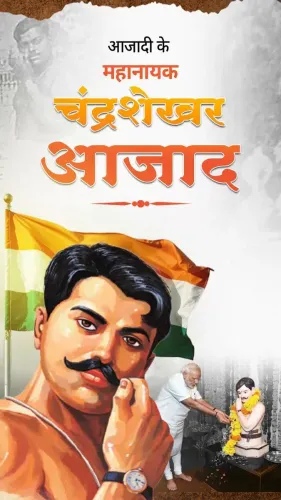
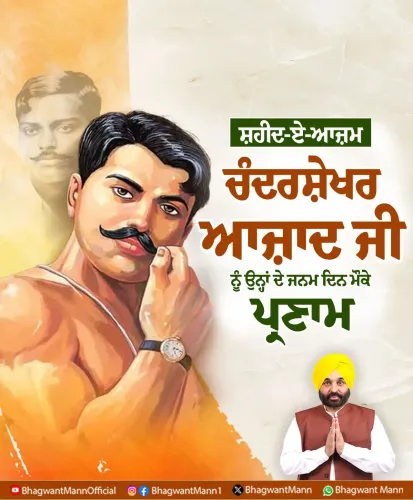
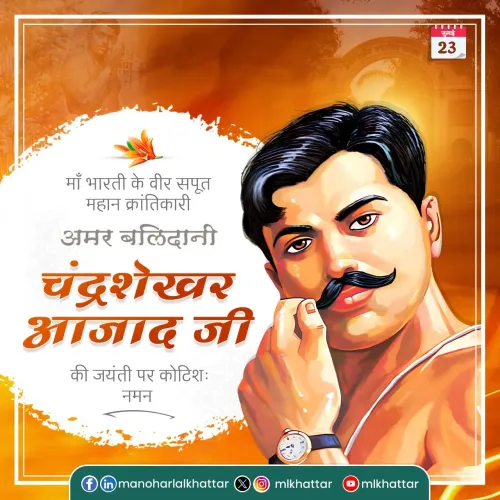
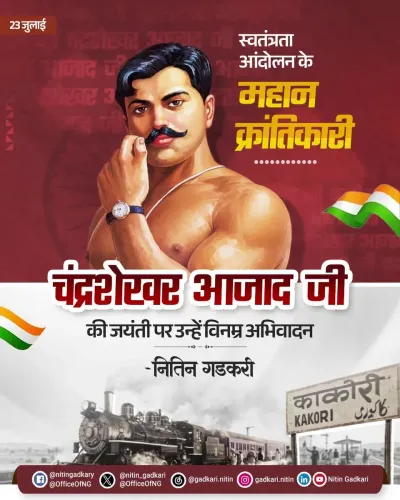
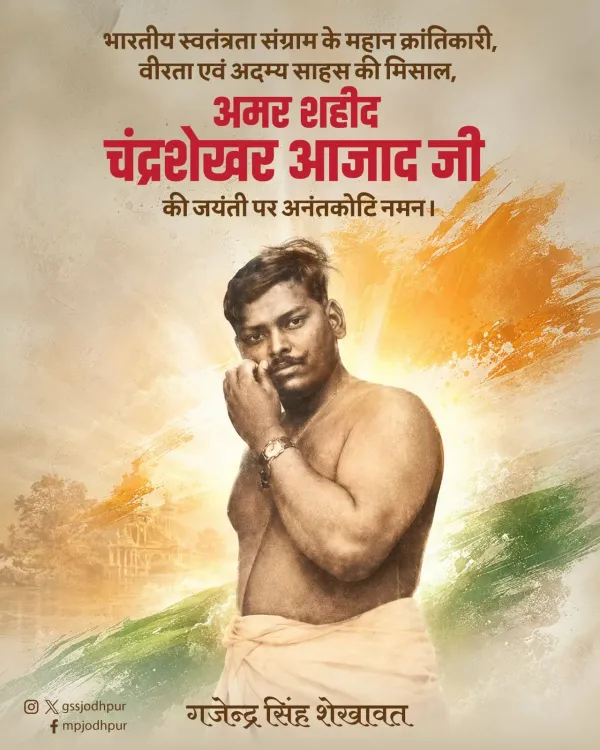
Union Culture and Tourism Minister Gajendra Singh Shekhawat on Thursday, 23 July 2026, paid homage to revolutionary freedom fighter Chandrashekhar Azad on his birth anniversary, hailing him as an enduring symbol of valour and indomitable courage in India's independence struggle.
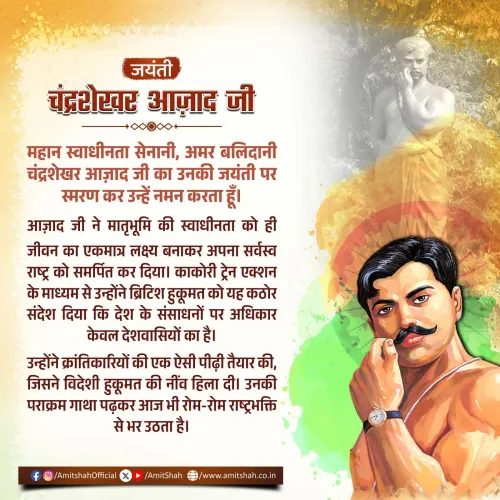
Posting on X, Shekhawat wrote in Hindi: 'भारतीय स्वतंत्रता संग्राम के महान क्रांतिकारी, वीरता एवं अदम्य साहस की मिसाल, अमर शहीद चंद्रशेखर आजाद जी की जयंती पर अनंतकोटि नमन' — translated: 'Infinite salutations on the birth anniversary of the great revolutionary of India's freedom struggle, the immortal martyr Chandrashekhar Azad, an example of bravery and indomitable courage.'
Context
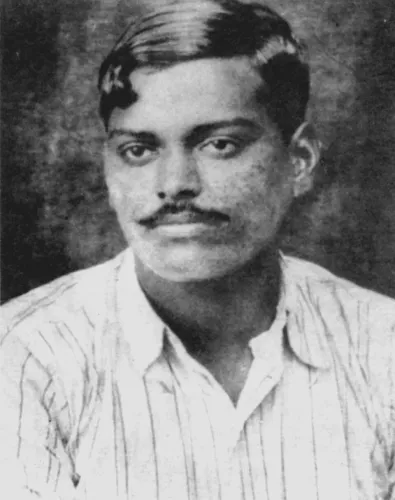
Chandrashekhar Azad remains one of the most celebrated armed revolutionaries of India's independence movement. Born on 23 July 1906, he became a central figure in the militant nationalist underground, participating in landmark acts of resistance including the Kakori train robbery of 1925. He died in a police encounter at Alfred Park, Allahabad, on 27 February 1931, having vowed never to be captured alive — a pledge he kept.
His birth anniversary, observed annually, draws official tributes from across the political spectrum, reflecting his singular stature in the national memory as a figure who chose armed resistance over constitutional methods.
Policy Backdrop
The Ministry of Culture under Shekhawat has maintained a consistent mandate to commemorate freedom-struggle heritage, organising educational programmes and events on the jayantis of revolutionary figures. This practice was amplified under the Azadi Ka Amrit Mahotsav framework — the government's nationwide initiative marking 75 years of Indian independence — which foregrounded armed revolutionaries alongside leaders of the mainstream independence movement.
Successive central governments have used such official observances to broaden the public narrative of the freedom struggle, ensuring that figures associated with militant nationalism receive institutional recognition alongside those from the non-violent tradition.
Stakeholders and Impact
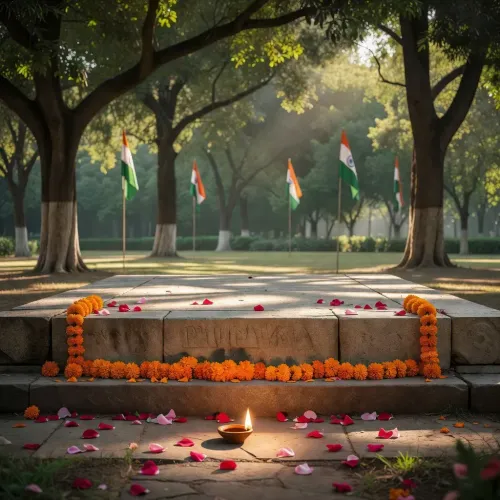
The tribute carries resonance for Indian youth, heritage institutions, and educational bodies that draw on revolutionary figures as civic role models. Azad's legacy is particularly prominent in Uttar Pradesh, where sites associated with him — including Chandrashekhar Azad Park (formerly Alfred Park) in Prayagraj — serve as active memorials and pilgrimage points for nationalist sentiment.
For the BJP and the present administration, commemorating such figures also reinforces a political narrative that positions the party as a custodian of the full spectrum of India's freedom struggle, including its revolutionary strand.
What's Next
The Culture Ministry typically scales up freedom-struggle commemorations around 15 August (Independence Day) and other national occasions. State-level events, heritage walks, or announcements related to new memorials for revolutionary figures could follow in the weeks ahead. Parliamentary discussions during the winter session have also historically referenced such icons when debating cultural policy and national education curricula.
As India's institutional memory of its independence movement continues to be actively shaped by the Culture Ministry, tributes like this one signal the government's intent to keep revolutionary figures central to the national consciousness.
Point of View
Distinguishing its commemorative posture from earlier administrations that centred the Gandhian tradition. By deploying the Culture Ministry as the institutional vehicle for such observances, the government embeds these figures into heritage policy rather than leaving them to partisan commemoration alone. Azad, who belongs to no single party's legacy, commands cross-ideological reverence — making his jayanti a low-risk, high-visibility occasion for any ruling dispensation. The consistency of these tributes across years and ministers suggests a settled strategic communication choice, not merely a ceremonial reflex.
NationPress
22 Oct 2026
Frequently Asked Questions
When is Chandrashekhar Azad's birth anniversary?
Chandrashekhar Azad was born on 23 July 1906 , and his birth anniversary is observed every year on 23 July with tributes from political leaders and cultural institutions across India.
Who is Gajendra Singh Shekhawat?
Gajendra Singh Shekhawat is India's Union Minister of Culture and Tourism, a senior BJP leader, and the Lok Sabha Member of Parliament from Jodhpur, Rajasthan .
What is Chandrashekhar Azad known for?
Chandrashekhar Azad is celebrated as one of India's foremost armed revolutionaries, best known for his role in the Kakori train robbery of 1925 and for dying in a police encounter at Alfred Park, Allahabad in 1931 rather than surrendering.
What is the Azadi Ka Amrit Mahotsav?
Azadi Ka Amrit Mahotsav was the Indian government's nationwide initiative to mark 75 years of independence , under which the Ministry of Culture organised commemorations for a wide range of freedom fighters, including revolutionary figures like Azad.
How does the Culture Ministry commemorate freedom fighters?
The Ministry of Culture organises birth and death anniversary events, educational programmes, heritage walks, and institutional commemorations for freedom fighters as part of its mandate to preserve India's independence-struggle heritage.