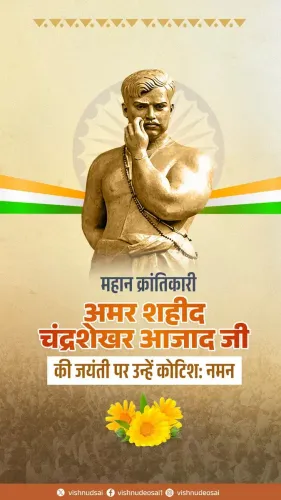
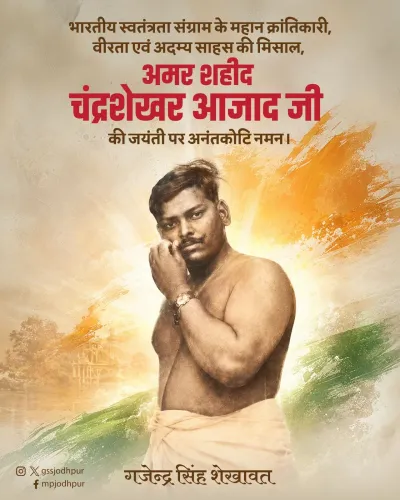
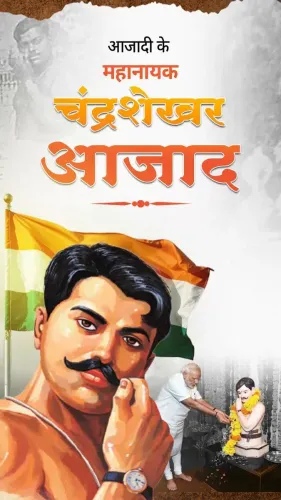
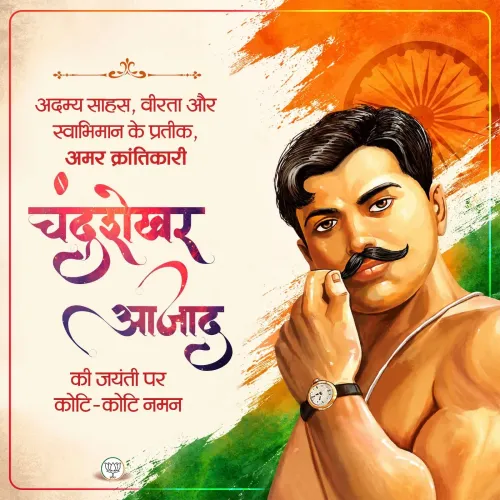
Rajnath Singh pays tribute to Chandrashekhar Azad on birth anniversary
Synopsis
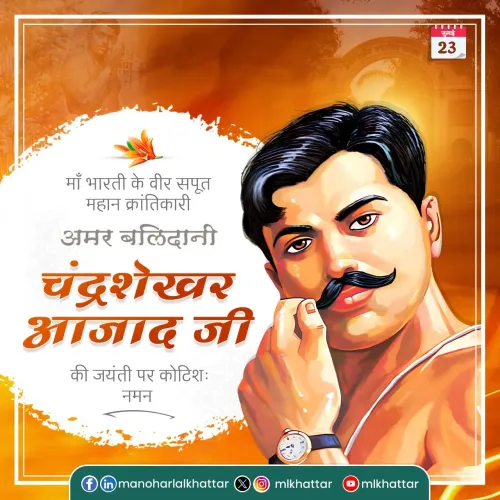
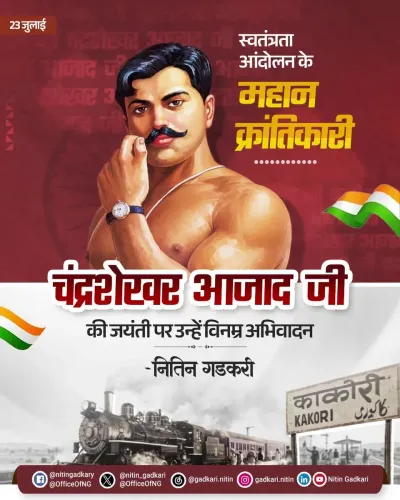
Union Defence Minister Rajnath Singh on 23 July 2026 paid tribute to revolutionary freedom fighter Chandrashekhar Azad on his birth anniversary, saluting his courage, supreme sacrifice, and enduring role in inspiring national self-respect among Indians.
Key Takeaways
Rajnath Singh posted a Hindi tribute to Chandrashekhar Azad on his birth anniversary, 23 July 2026 .
Singh credited Azad with awakening 'self-respect, self-confidence, and national consciousness' in every Indian.
Chandrashekhar Azad was born on 23 July 1906 and died on 27 February 1931 in a police encounter in Allahabad .
Annual ministerial tributes to Azad have been a consistent feature of Indian public life since 1947 .
The tribute is part of a broader pattern of senior BJP leaders highlighting revolutionary nationalists alongside the non-violent freedom movement tradition.
With Independence Day on 15 August 2026 approaching, further commemorations of revolutionary figures are expected.
Union Defence Minister Rajnath Singh on Thursday, 23 July 2026, paid tribute to revolutionary freedom fighter Chandrashekhar Azad on his birth anniversary, honouring his lifelong struggle against British colonial rule and his enduring legacy of national self-respect.
Context
Posting in Hindi on X, Singh offered a heartfelt salute — 'शत-शत नमन' (a hundredfold salute) — to Azad, stating that he 'not only fought lifelong against British rule but also worked to awaken self-respect, self-confidence, and national consciousness in the heart of every Indian.' The tribute underscored Azad's role in inspiring countless young people to dedicate themselves to the motherland.
Singh further noted that Azad 'provided new energy to the Indian freedom struggle through his indomitable courage, unbreakable resolve, and supreme sacrifice,' and that his example of 'renunciation, courage, and national devotion will forever remain a source of inspiration for the people of this country.'
Policy Backdrop
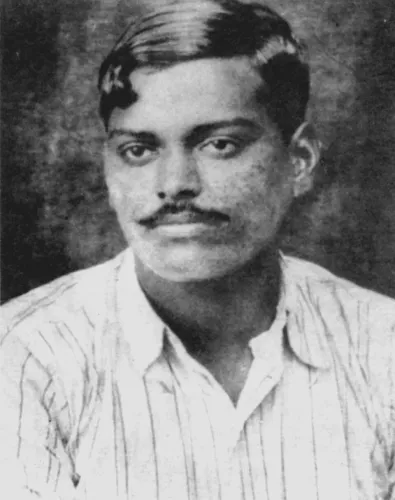
Chandrashekhar Azad was born on 23 July 1906 and became one of independent India's most celebrated revolutionary figures. He led armed resistance against British colonial authority and died on 27 February 1931 in a police encounter at Alfred Park, Allahabad — now renamed Chandrashekhar Azad Park in his honour — choosing death over capture, consistent with his vow never to be arrested alive.
Annual tributes to Azad on his birth anniversary have been a consistent feature of Indian public life since 1947, with successive governments issuing ministerial statements and organising memorial events. His legacy spans the revolutionary nationalist tradition that ran parallel to the non-violent mainstream of the freedom movement.
Stakeholders and Impact
Singh's tribute is addressed implicitly to Indian citizens, and particularly to the country's youth — a demographic Azad himself sought to galvanise during the freedom struggle. The post's emphasis on 'राष्ट्रचेतना' (national consciousness) and 'स्वाभिमान' (self-respect) reflects themes that resonate with the ruling Bharatiya Janata Party's broader cultural and nationalist messaging.
Statements of this kind form part of a recurring pattern among senior ministers of highlighting armed resistance alongside the non-violent stream of the independence movement, reinforcing the idea that India's freedom was won through diverse forms of sacrifice.
What's Next
With Independence Day on 15 August 2026 approaching, commemorations of revolutionary figures such as Azad are expected to intensify in official messaging. Proposals linked to memorials or public infrastructure named after revolutionary nationalists have historically gained momentum in the weeks surrounding major national occasions, and further statements from senior leaders are anticipated in the coming weeks.
Point of View
The post connects a historical figure to contemporary political values championed by the BJP. The timing — weeks before Independence Day — amplifies the resonance of such messaging among a younger, digitally connected audience. Cumulatively, these annual tributes serve as soft-power tools that reinforce a particular reading of nationalist history.
NationPress
21 Oct 2026
Frequently Asked Questions
Why is 23 July significant for Chandrashekhar Azad?
23 July is the birth anniversary of revolutionary freedom fighter Chandrashekhar Azad , who was born on this date in 1906 . It is observed annually with tributes from political leaders and public figures across India.
What did Rajnath Singh say about Chandrashekhar Azad?
Rajnath Singh said Azad not only fought lifelong against British rule but also awakened 'self-respect, self-confidence, and national consciousness' in every Indian, and that his courage and supreme sacrifice provided new energy to the freedom struggle.
How did Chandrashekhar Azad die?
Chandrashekhar Azad died on 27 February 1931 in a police encounter at Alfred Park in Allahabad , now renamed Chandrashekhar Azad Park in his honour. True to his vow, he chose death over capture.
Who was Chandrashekhar Azad?
Chandrashekhar Azad was a revolutionary Indian independence activist born on 23 July 1906 . He led armed resistance against British colonial rule and became one of the most iconic figures of the Indian freedom struggle.
Why do Indian ministers pay tribute to revolutionary freedom fighters?
Senior Indian ministers routinely issue tributes on birth anniversaries of revolutionary nationalists to highlight the armed resistance tradition alongside the non-violent stream of the freedom movement, reinforcing themes of national self-respect and sacrifice.