Tharoor on Thiruvananthapuram: Temples, Rockets and One City
Synopsis
Congress MP Dr. Shashi Tharoor celebrated Thiruvananthapuram's unique identity — the city with India's highest temple density, home to ISRO's Vikram Sarabhai Space Centre, biotechnology parks, and medical research institutions — calling it an extraordinary amalgam of tradition and modernity.
Key Takeaways
Shashi Tharoor , Congress MP from Thiruvananthapuram, described his constituency as having more temples per square kilometre than any other Indian city.
He also highlighted Thiruvananthapuram's standing as a national centre of rocket science, space research, biotechnology, and medical innovation.
ISRO's Vikram Sarabhai Space Centre (VSSC) , established in the 1960s in the city, is India's primary facility for launch-vehicle development.
Tharoor framed the city's religious density and scientific infrastructure as complementary, not contradictory.
The observation reflects Kerala's broader development model — high social indicators combined with targeted technological investment.
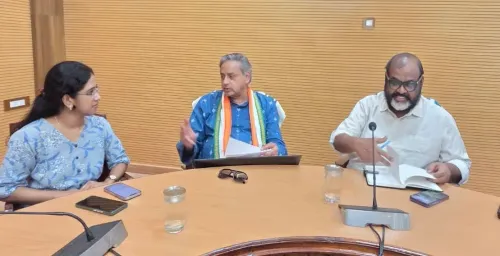
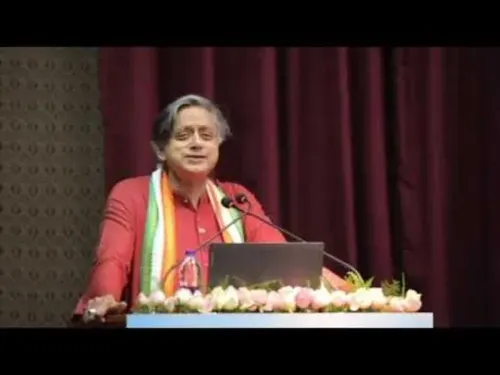
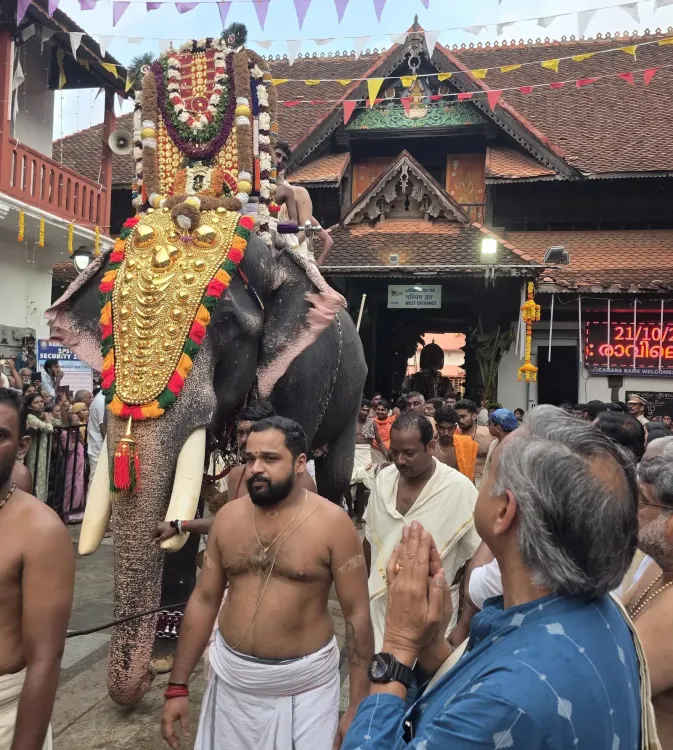
In a city where ancient lamp-lit sanctuaries stand within sight of satellite-assembly halls, Congress MP Dr. Shashi Tharoor has captured what makes Thiruvananthapuram unlike anywhere else in India — a place, he wrote on Wednesday, 21 October 2026, that holds more temples per square kilometre than any other Indian city, and yet drives the nation's frontier in rocket science and space research.
Responding to a follower's post, Tharoor described the city as 'an extraordinary amalgam of tradition and modernity,' noting the public's deep immersion in devotion to the Lord. The observation is not mere civic pride — it is an accurate portrait of a capital that has spent centuries being both things at once.
Padmanabhaswamy to the Polar Satellite: the city's dual identity
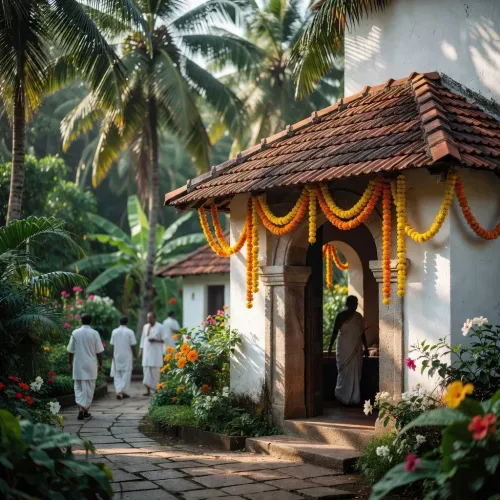
Thiruvananthapuram's religious density is staggering. Neighbourhood streets fold temple after temple into their geography — a physical landscape shaped by millennia of devotion to deities across the Kerala Shaiva, Vaishnava, and tantric traditions, with the famed Padmanabhaswamy Temple at its spiritual heart. That heritage did not retreat when modernity arrived. It compounded.
Since the 1960s, the city has also been home to ISRO's Vikram Sarabhai Space Centre (VSSC) — the primary facility for the development of India's launch vehicles, named after the father of the Indian space programme. The Polar Satellite Launch Vehicle and the heavier GSLV family were engineered here. Beyond VSSC, the city clusters biotechnology parks and medical-research institutions that have made it a destination for Kerala's knowledge economy.
Why this juxtaposition matters beyond optics
Tharoor's framing is more than a neat talking point. Thiruvananthapuram represents a specific model of development — one in which high social indicators, strong religious and cultural participation, and cutting-edge scientific investment are not in tension but in conversation. Kerala's broader arc of investment in human development alongside technological infrastructure finds one of its sharpest expressions in this capital.
The city's residents — devotees filing into temple courtyards at dawn and scientists computing orbital trajectories a few kilometres away — are not an anomaly. They are, as Tharoor puts it, the city's definition.
In an era when India's urban identity is constantly being debated, Thiruvananthapuram offers a quietly confident answer: tradition and innovation are not a trade-off. They are a skyline.
Point of View
And his framing implicitly rejects the binary. For a politician who has long positioned himself as a bridge between India's civilisational heritage and its aspirational modernity, the post is entirely on-brand — but it also points to a genuine policy conversation about how India's smaller capitals can sustain both cultural identity and knowledge-economy investment without sacrificing one for the other.
NationPress
21 Oct 2026
Frequently Asked Questions
Why does Thiruvananthapuram have so many temples?
Thiruvananthapuram has been a major centre of Hindu religious and royal patronage for centuries, shaped by the Travancore royal family's deep Vaishnavite tradition. The density of temples reflects millennia of devotional construction across multiple traditions, with the Padmanabhaswamy Temple as its most prominent landmark.
What is the Vikram Sarabhai Space Centre in Thiruvananthapuram?
The Vikram Sarabhai Space Centre (VSSC) is ISRO's primary facility for the design and development of launch vehicles, including the PSLV and GSLV rocket families. It has been located in Thiruvananthapuram since the 1960s and is named after Dr. Vikram Sarabhai, the founder of India's space programme.
What did Shashi Tharoor say about Thiruvananthapuram?
Tharoor described Thiruvananthapuram as 'an extraordinary amalgam of tradition and modernity,' noting it has more temples per square kilometre than any other Indian city while also being a national hub for rocket science, space research, biotechnology, and medical innovation.
Is Thiruvananthapuram a scientific hub in India?
Yes. Beyond ISRO's Vikram Sarabhai Space Centre, the city hosts biotechnology parks and medical-research institutions, making it one of Kerala's leading knowledge-economy centres and a significant node in India's science and technology landscape.
What is Shashi Tharoor's constituency?
Dr. Shashi Tharoor is the Congress MP representing Thiruvananthapuram, the capital city of Kerala. He is a former Union Minister of State and former UN Under-Secretary-General.