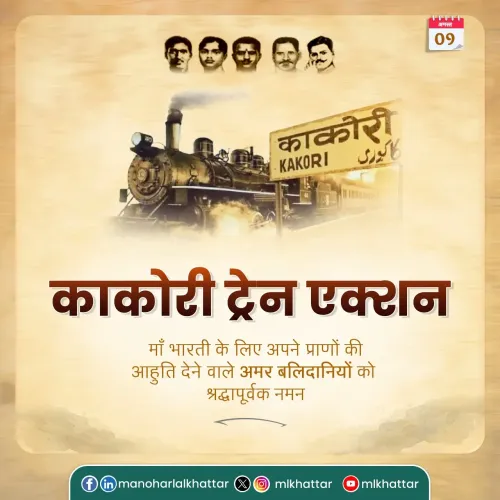
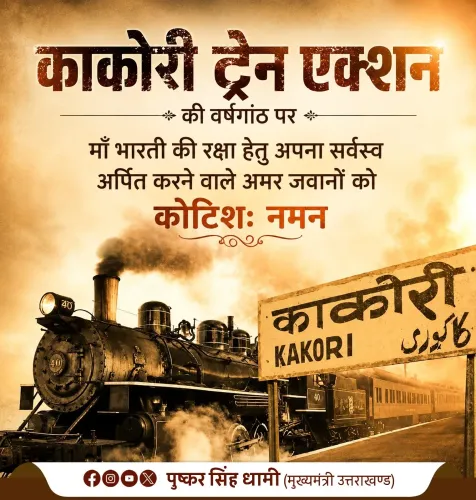
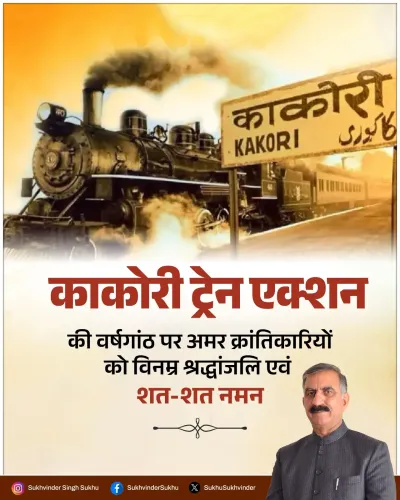
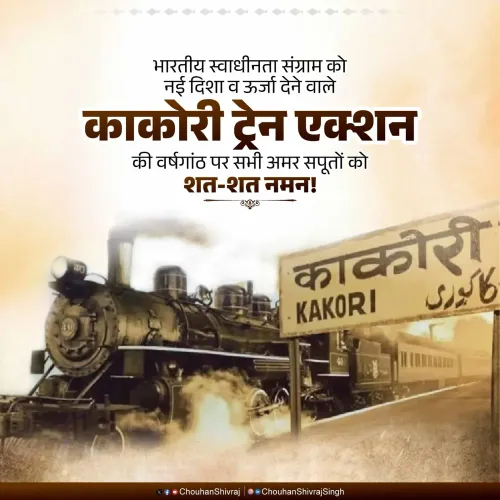
CM Bhajan Lal Sharma Pays Tribute on Kakori Train Action Anniversary
Synopsis
Rajasthan Chief Minister Bhajan Lal Sharma paid homage to the revolutionaries of the 1925 Kakori Train Action on its 101st anniversary, saluting their valour and sacrifice against British colonial rule in a post on X.
Key Takeaways
Rajasthan CM Bhajan Lal Sharma posted a tribute on 9 August 2026 , the 101st anniversary of the Kakori Train Action.
The Kakori Train Action took place on 9 August 1925 , when members of the Hindustan Republican Association seized British treasury funds from a train near Kakori, Uttar Pradesh .
Key organisers Ram Prasad Bismil and Ashfaqulla Khan were tried and hanged by British authorities in 1927 following the Kakori Conspiracy Case.
CM Sharma called the revolutionaries' valour and national devotion a continuing inspiration to place the nation's interest above all else.
9 August also marks the anniversary of the Quit India Movement of 1942 , making it one of the most significant dates in India's independence calendar.
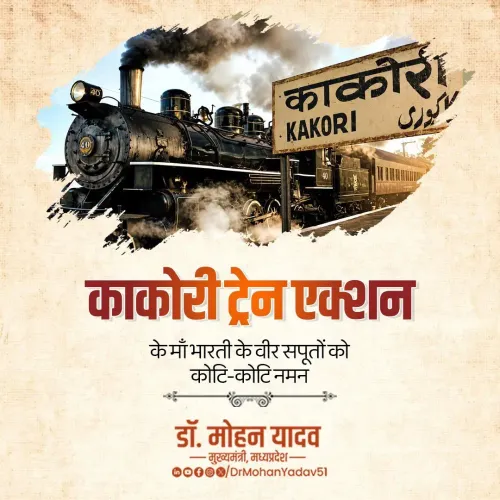
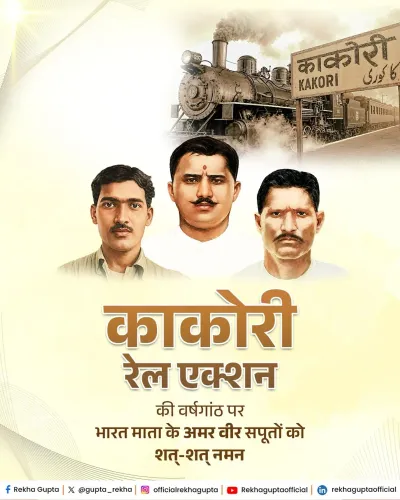
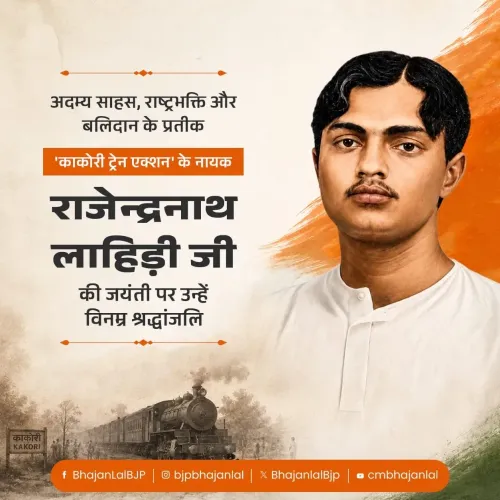
On the 101st anniversary of the Kakori Train Action, Rajasthan Chief Minister Bhajan Lal Sharma paid solemn homage to the revolutionaries who dared to strike at the heart of British colonial power on 9 August 1925 — a date that echoes across India's freedom struggle.
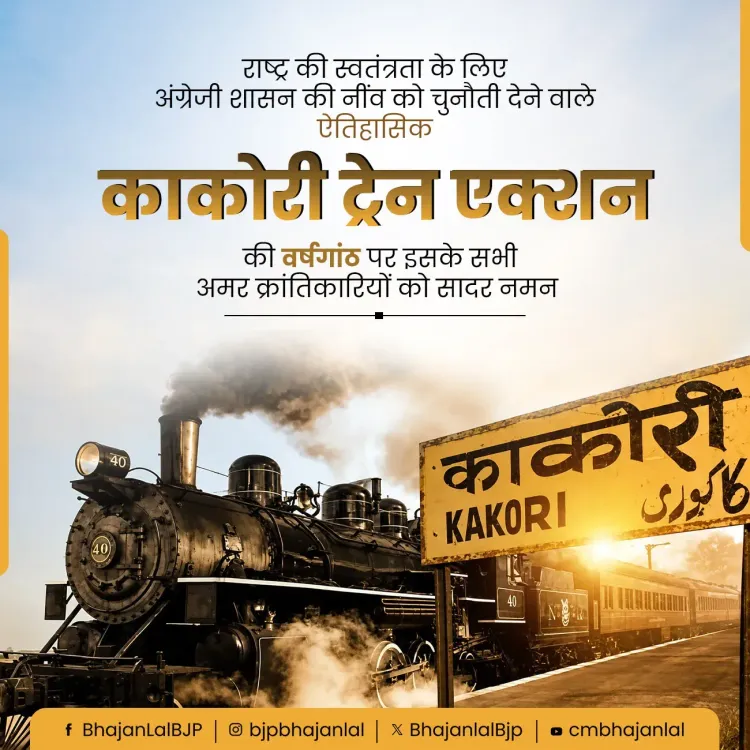
Posting on X, CM Sharma wrote: 'राष्ट्र की स्वतंत्रता के लिए अंग्रेजी शासन की नींव को चुनौती देने वाले ऐतिहासिक काकोरी ट्रेन एक्शन की वर्षगांठ पर इसके सभी अमर क्रांतिकारियों को सादर नमन!' ['Respectful salutations to all the immortal revolutionaries of the historic Kakori Train Action, which challenged the foundations of British rule for the nation's freedom!']. He added that their 'indomitable valour, unwavering national devotion, and the dream of a free India' continue to inspire every citizen to place the nation's interest above all else.
What Happened at Kakori — and Why It Still Resonates
On 9 August 1925, a group of armed revolutionaries belonging to the Hindustan Republican Association (HRA) — founded just a year earlier in 1924 — stopped a train near Kakori, Uttar Pradesh, and seized British government treasury funds. The action was not mere banditry; it was a calculated strike designed to fund an organised armed resistance against colonial rule and to announce, loudly, that the empire was not invincible. The British response was swift and severe. The subsequent Kakori Conspiracy Case led to the trial and execution of key organisers. Ram Prasad Bismil, the principal architect of the operation, was hanged by colonial authorities in 1927. Ashfaqulla Khan, his close comrade and fellow participant, met the same fate — two names that have since become synonymous with sacrifice and fraternity across religious lines in the nationalist imagination.A Date Shared With the Quit India Movement
9 August carries layered significance in India's independence calendar — it is also the anniversary of the Quit India Movement of 1942. The convergence of dates means tributes on this day carry double weight, and Indian political leaders across the spectrum have long used it to reaffirm the ideological inheritance of the freedom struggle. CM Sharma's post fits squarely within that tradition, placing armed revolutionary resistance at the centre of the national memory. The Hindustan Republican Association's legacy — courage distilled into a single audacious act on a moving train — endures not just in textbooks but in the annual rhythm of public remembrance that India's leaders keep alive.Point of View
Complementing the Gandhian mainstream. Honouring Kakori on 9 August, a date shared with the Quit India Movement, amplifies the symbolism without requiring a policy stance. For the BJP, such tributes serve a dual purpose: they reinforce the party's claim to the full breadth of India's nationalist heritage and signal ideological continuity with anti-colonial resistance. The cross-religious friendship of Bismil and Ashfaqulla Khan also provides a ready symbol of Hindu-Muslim unity within a nationalist, rather than secular-pluralist, frame.
NationPress
23 Sept 2026
Frequently Asked Questions
What was the Kakori Train Action?
The Kakori Train Action was a 9 August 1925 raid in which members of the Hindustan Republican Association stopped a train near Kakori, Uttar Pradesh and seized British government treasury funds as part of their armed campaign against colonial rule.
Who were the main revolutionaries involved in the Kakori action?
The principal organisers included Ram Prasad Bismil and Ashfaqulla Khan , both of whom were subsequently tried in the Kakori Conspiracy Case and hanged by British authorities in 1927 .
Why is 9 August significant in Indian history?
9 August marks two major events: the Kakori Train Action of 1925 and the launch of the Quit India Movement in 1942 , making it one of the most symbolically loaded dates in India's independence calendar.
What was the Hindustan Republican Association?
The Hindustan Republican Association (HRA) was a revolutionary organisation founded in 1924 that advocated armed resistance against British colonial rule. It planned and executed the Kakori Train Action the following year.
Why did Rajasthan CM Bhajan Lal Sharma post about Kakori?
CM Bhajan Lal Sharma posted a tribute on the 101st anniversary of the Kakori Train Action to honour the revolutionaries' sacrifice and invoke their spirit of placing national interest above all else — in keeping with the annual tradition of political leaders commemorating the event.