Revanth Reddy Reviews Tungabhadra, RDS Water Disputes
Synopsis
Telangana CM Revanth Reddy reviewed inter-state water disputes over the Tungabhadra Project and RDS at Jalasoudha on 24 June 2026, with senior officials presenting the state's rights and current position. The government plans to formally approach the Union Jal Shakti Minister for central intervention.
Key Takeaways
Revanth Reddy chaired a review at Jalasoudha on 24 June 2026 on Tungabhadra Project and RDS inter-state water disputes.
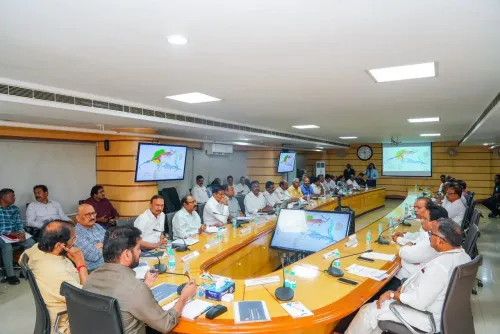
Irrigation department officials briefed the meeting on Telangana's rights and the current situation via a PowerPoint presentation.
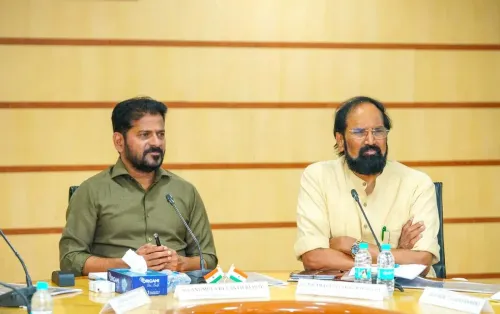
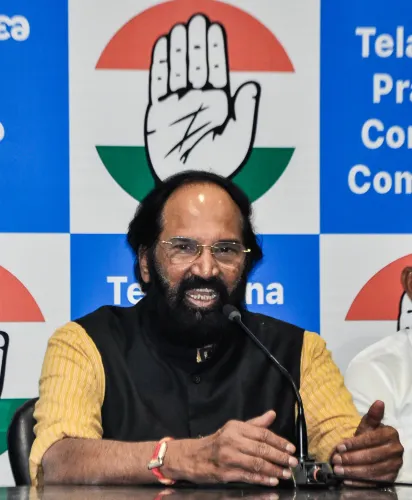
The meeting was attended by Irrigation Minister Uttam Kumar Reddy , MP Mallu Ravi , and advisors Jitender Reddy and Aditya Nath Das .
The Telangana government has decided to approach the Union Jal Shakti Minister to seek central facilitation for a permanent resolution.
Disputes trace back to the 1962 Bachawat Tribunal award and were compounded by Andhra Pradesh's bifurcation in 2014 .
Resolution requires coordination among riparian states Telangana , Karnataka , and Andhra Pradesh under Central oversight.
Telangana Chief Minister A. Revanth Reddy chaired a high-level review meeting at Jalasoudha on Wednesday, 24 June 2026, examining the state's position on the Tungabhadra Project, the Rajolibanda Diversion Scheme (RDS), and broader inter-state river water disputes, with officials outlining Telangana's rights and current ground situation through a PowerPoint presentation.
Context
Posting on X, CM Revanth Reddy said irrigation department senior officials briefed the meeting on 'the current situation, Telangana's interests, and rights' via a presentation. He stated that the Central government must take initiative to coordinate with partner states and resolve these issues permanently, and that the matter would be taken up with the Union Jal Shakti Minister.
The review was attended by Irrigation Minister Uttam Kumar Reddy, MP Mallu Ravi, Government Advisor Jitender Reddy, and Irrigation Department Advisor Aditya Nath Das, among others.
Policy Backdrop
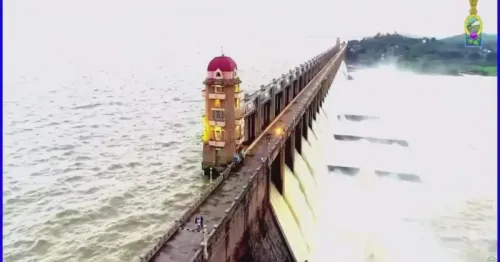
The Tungabhadra Project is a major irrigation and hydro-electric scheme on the Tungabhadra river shared by Karnataka, Andhra Pradesh, and Telangana. Water allocations for the river were originally fixed by the Bachawat Tribunal award of 1962, which distributed shares among the then states of Mysore, Andhra Pradesh, and Maharashtra.
The bifurcation of Andhra Pradesh in 2014 created a new set of allocation disputes, as Telangana has since pressed for revision of its Krishna basin shares, including those covering Tungabhadra and RDS waters. Successive Telangana governments have sought central facilitation to implement or renegotiate these shares with Karnataka and Andhra Pradesh.
Stakeholders and Impact
The disputes directly affect millions of farmers across the three riparian states who depend on Tungabhadra and Krishna basin waters for irrigation. The RDS, which draws from Tungabhadra waters, has been a particular flashpoint between Telangana and Andhra Pradesh over allocation shares since bifurcation.
The Ministry of Jal Shakti in New Delhi holds the central mandate for national water policy and inter-state river dispute resolution. Telangana's stated intent to approach the Union Jal Shakti Minister signals an escalation from state-level deliberation to formal Union-level engagement.
What's Next
The Telangana government has indicated it will formally raise these concerns with the Union Jal Shakti Minister, seeking Central intervention to coordinate with partner states Karnataka and Andhra Pradesh. Such a meeting or formal communication would mark the next concrete step in what has been a decades-long dispute over Krishna basin water shares.
Whether the Centre responds with a fresh facilitation process or tribunal referral will determine the pace at which Telangana's water rights claims move toward resolution.
Point of View
Water rights remain an existentially sensitive issue, given that the state's agricultural economy and its political identity were partly forged in the crucible of resource-sharing grievances against undivided Andhra Pradesh. By publicly signalling the planned outreach to the Centre, the CM is simultaneously pressuring the Union government and setting a political benchmark for his administration's assertiveness on water. The outcome will test whether the current Central dispensation is willing to actively broker a new arrangement or defer once again to slow-moving tribunal processes.
NationPress
23 Sept 2026
Frequently Asked Questions
What is the Tungabhadra Project dispute between Telangana and other states?
The Tungabhadra Project is a shared irrigation and hydro-electric scheme on the Tungabhadra river involving Telangana, Karnataka, and Andhra Pradesh. Water allocations were fixed by the 1962 Bachawat Tribunal but have been contested since Telangana's formation in 2014, with the new state seeking revised Krishna basin shares.
What is the Rajolibanda Diversion Scheme (RDS)?
The Rajolibanda Diversion Scheme (RDS) is an irrigation project that draws water from the Tungabhadra river. Its allocation between Telangana and Andhra Pradesh has remained disputed since the bifurcation of the combined state in 2014.
Why did CM Revanth Reddy hold a review meeting at Jalasoudha on 24 June 2026?
CM Revanth Reddy convened the meeting to assess Telangana's current rights and position on the Tungabhadra Project and RDS disputes, and to plan a formal approach to the Union Jal Shakti Minister for central intervention to resolve these issues permanently.
Who attended the Jalasoudha water dispute review meeting?
The meeting was attended by Irrigation Minister Uttam Kumar Reddy, MP Mallu Ravi, Government Advisor Jitender Reddy, Irrigation Department Advisor Aditya Nath Das, and senior irrigation department officials.
What is the role of the Union Jal Shakti Minister in inter-state water disputes?
The Ministry of Jal Shakti is the Central government body responsible for national water policy and facilitating resolution of inter-state river disputes. Telangana plans to approach the minister to seek coordination among Karnataka, Andhra Pradesh, and Telangana for a permanent settlement.