CM Revanth Reddy joins Tungabhadra Dam spillway inauguration
Synopsis
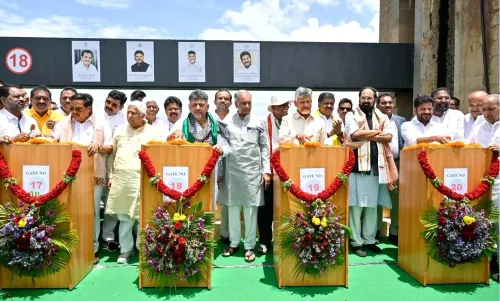
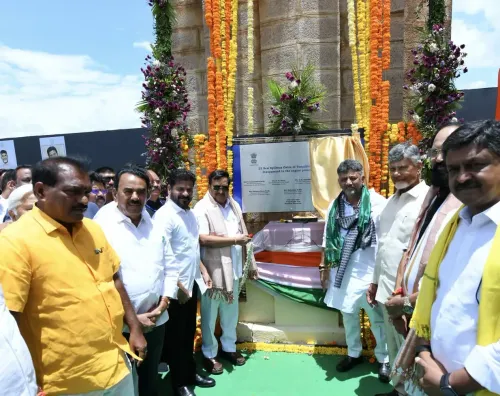
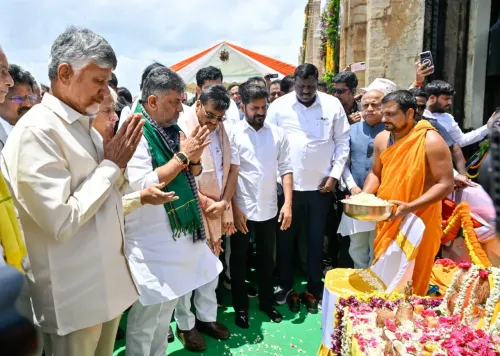
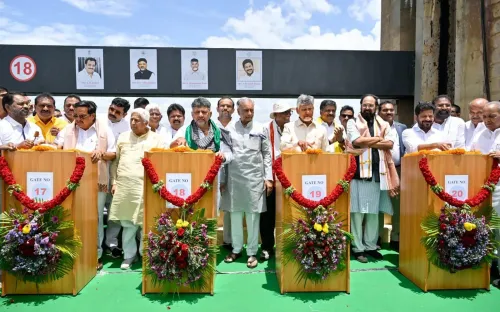
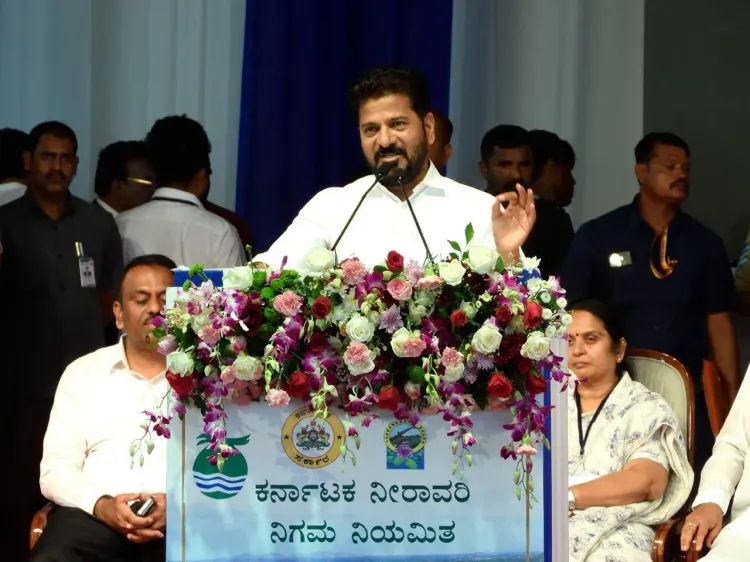
Telangana CM Revanth Reddy joined Union Minister C R Patil, AP CM Chandrababu Naidu, and Karnataka CM D K Shivakumar on 25 June 2026 to inaugurate 33 new spillway gates at the Tungabhadra Dam near Hospet, marking a rare show of inter-state cooperation on shared Krishna basin infrastructure.
Key Takeaways
Revanth Reddy attended the inauguration of 33 new spillway gates at Tungabhadra Dam near Hospet, Karnataka on 25 June 2026 .
The event was also attended by Union Minister C R Patil , AP CM N.
Chandrababu Naidu , and Karnataka CM D K Shivakumar , reflecting high-level multi-state participation.
The Tungabhadra Dam , completed in 1953 , is a shared irrigation and hydropower asset for Karnataka , Telangana , and Andhra Pradesh .
Water allocation from the dam is governed by the Krishna Water Disputes Tribunal award of 1976 .
The upgraded spillway gates are aimed at improving flood management and dam safety during heavy monsoon seasons.
The event signals continued political commitment to inter-state river water cooperation in the Krishna basin.
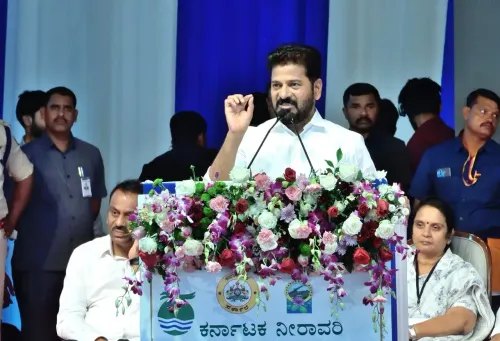
Telangana Chief Minister A. Revanth Reddy participated in the inauguration of 33 newly installed spillway gates at the Tungabhadra Dam near Hospet, Karnataka, on 25 June 2026, alongside senior leaders from the Centre and neighbouring states.
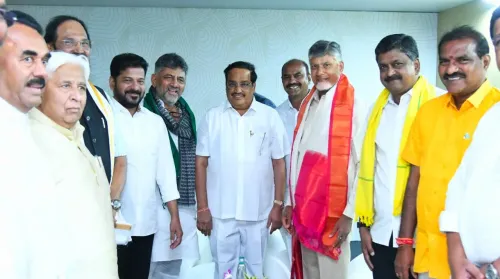
Revanth Reddy confirmed his participation on X, writing that he joined Union Minister C R Patil, Andhra Pradesh Chief Minister N. Chandrababu Naidu, and Karnataka Chief Minister D K Shivakumar at the event. The Telugu-language post carried the hashtags #TungabhadraDam, #RiverWaterManagement, and #InterStateCooperation, signalling the multi-state significance of the occasion.
Context
The Tungabhadra Dam, completed in 1953 across the Tungabhadra river near Hospet, was built as a joint venture of the then Madras and Hyderabad states for irrigation and hydropower. It remains a shared asset for Karnataka, Telangana, and Andhra Pradesh, supplying water to millions of farmers across the Krishna basin. The dam's ageing infrastructure has long been a subject of concern for dam-safety authorities across the three states.
Policy Backdrop
Water allocation from the Tungabhadra is governed by the Krishna Water Disputes Tribunal award of 1976, which divided flows among Maharashtra, Karnataka, and the erstwhile Andhra Pradesh. The modernisation of spillway gates is part of a broader push to upgrade decades-old dam infrastructure to meet contemporary flood-management and safety standards. Southern states have periodically held joint events to upgrade shared Krishna basin infrastructure, reflecting the need for coordinated reservoir operation built across state borders.
Stakeholders and Impact
The upgraded spillway gates are expected to improve seasonal flood management and enhance the dam's operational reliability during heavy monsoon inflows. Farmers in Karnataka, Telangana, and Andhra Pradesh who depend on Tungabhadra waters for kharif irrigation stand to benefit from more predictable and safer water releases. Dam-safety regulators and irrigation departments across all three states are key institutional stakeholders in the project's long-term operation.
What's Next
The high-level participation of the Union Minister for Water Resources and two Chief Ministers signals political momentum for further inter-state coordination on the Tungabhadra Board's reservoir operation protocols. Observers will watch for any new memoranda or joint agreements on water-release schedules for the 2026 kharif season. The event also sets a precedent for collaborative infrastructure upgrades on other shared river systems in peninsular India.
Point of View
The optics of standing beside Chandrababu Naidu signal pragmatic inter-state diplomacy over partisan posturing. The event fits a recurring southern-states pattern of using infrastructure milestones to reaffirm cooperative frameworks on Krishna basin water, even as tribunal-era disputes linger. Whether this goodwill translates into concrete agreements on kharif water releases will be the real test of the day's symbolism.
NationPress
24 Sept 2026
Frequently Asked Questions
What is the Tungabhadra Dam and which states does it serve?
The Tungabhadra Dam is a multipurpose dam completed in 1953 near Hospet in Karnataka. It provides irrigation water and hydropower to Karnataka, Telangana, and Andhra Pradesh, and its water allocation is governed by the Krishna Water Disputes Tribunal award of 1976.
Why were new spillway gates installed at Tungabhadra Dam?
Thirty-three new spillway gates were installed to modernise the dam's ageing infrastructure, improve flood management during heavy monsoon inflows, and enhance dam safety for the three states that depend on it.
Who attended the Tungabhadra Dam inauguration on 25 June 2026?
Telangana CM A. Revanth Reddy, Union Minister C R Patil, Andhra Pradesh CM N. Chandrababu Naidu, and Karnataka CM D K Shivakumar attended the inauguration of the 33 new spillway gates.
What is the significance of Revanth Reddy attending the Tungabhadra Dam event?
As Chief Minister of Telangana, a downstream beneficiary of Tungabhadra waters, Revanth Reddy's participation signals Telangana's stake in the dam's safe and efficient operation and its commitment to inter-state river water cooperation.
What is the Tungabhadra Board and what does it do?
The Tungabhadra Board is the inter-state body responsible for overseeing the operation and water releases of the Tungabhadra reservoir. It coordinates among Karnataka, Telangana, and Andhra Pradesh on reservoir levels and irrigation schedules.