Tummidihatti Barrage: Fadnavis open to talks, says Telangana CM Revanth Reddy
Synopsis
Telangana CM Revanth Reddy says Maharashtra's Devendra Fadnavis is willing to discuss the Tummidihatti Barrage — a flashpoint over Godavari River water sharing that could unlock irrigation for 2 lakh acres in tribal Adilabad. The key sticking point: Telangana wants a 152-metre structure; Maharashtra had only agreed to 148 metres, a height Hyderabad argues is too low to divert the water the region needs.
Key Takeaways
Revanth Reddy on 23 October 2026 said Maharashtra CM Devendra Fadnavis has expressed willingness to hold talks on the Tummidihatti Barrage .
The barrage, proposed across the Godavari River , aims to irrigate 2 lakh acres in the undivided Adilabad district .
At 152 metres , the barrage would submerge approximately 2,300 acres ; at 150 metres , under 1,000 acres — with officials confirming no Maharashtra villages at risk.
Maharashtra had previously agreed to a height of only 148 metres , which Telangana says is insufficient for required water diversion.
Officials were directed to prepare technical reports and coordinate with the Central Water Commission (CWC) ahead of inter-state negotiations.
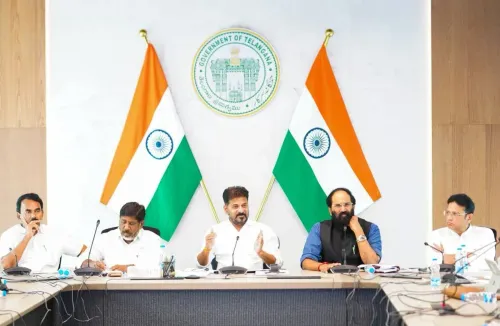
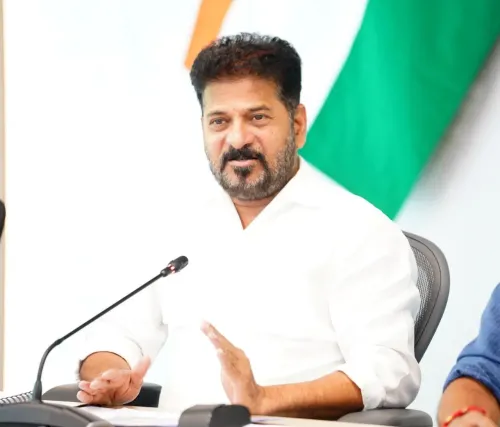
Telangana Chief Minister A. Revanth Reddy announced on Friday, 23 October that Maharashtra Chief Minister Devendra Fadnavis has expressed willingness to hold talks on the proposed Tummidihatti Barrage across the Godavari River. Revanth Reddy directed state officials to prepare for a crucial inter-state dialogue, signalling a potential breakthrough in a long-running water dispute between the two states.
Key Developments at the Review Meeting
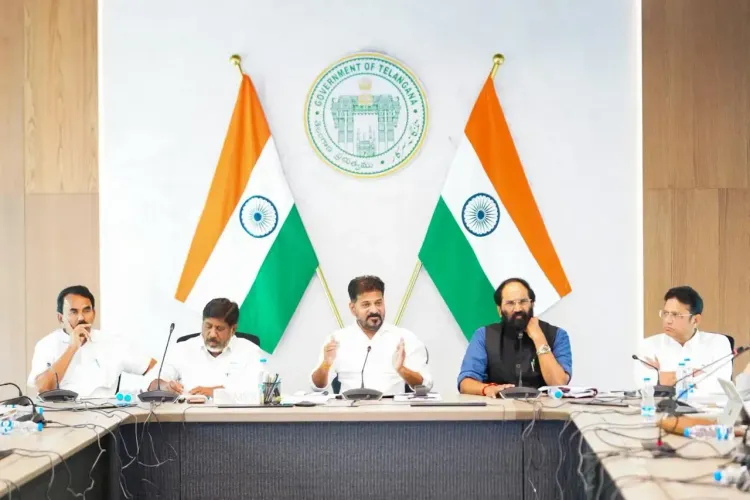
The Telangana CM chaired a high-level internal review meeting in Hyderabad, attended by Deputy Chief Minister Bhatti Vikramarka, Irrigation Minister Uttam Kumar Reddy, Ministers Jupally Krishna Rao and Duddilla Sridhar Babu, Rajya Sabha member Vem Narender Reddy, and senior officials from the Irrigation wing.
Irrigation engineers briefed the Chief Minister on the volume of water that could be diverted up to the Yellampalli project by constructing the barrage at heights of 152 metres and 150 metres, respectively. The meeting also reviewed contentious issues surrounding the Dindi and Achampet lift irrigation projects.
Submergence Impact: The Height Question
Officials clarified that the barrage's construction would not pose any submergence risk to villages within Maharashtra. However, the height of the structure carries significant consequences for land impact: a barrage at 152 metres would submerge approximately 2,300 acres of land, while a height of 150 metres would limit submergence to under 1,000 acres.
Revanth Reddy noted that Maharashtra had previously agreed to a barrage height of 148 metres, but argued that such a height would not allow diversion of the required water volume. He directed officials to prepare comprehensive technical reports — covering water availability, submergence extent, and other relevant factors — to persuade Maharashtra to agree to the 152-metre height.
Why Tummidihatti Matters for Adilabad
The Chief Minister underscored that the barrage is intended to provide irrigation water to 2 lakh acres in the undivided Adilabad district — a region characterised by dense forests, a significant tribal population, and decades of socio-economic backwardness. He expressed hope that constructive discussions with Maharashtra would resolve what he described as a 'decades-old water crisis' in the tribal-dominated district.
Revanth Reddy stressed that the barrage would directly benefit forest-dwelling communities who have long rallied under the banner of 'Jal, Jungle, Zameen' (Water, Forest, and Land). This framing positions the project as a social equity imperative as much as an irrigation initiative.
Central Water Commission Role and Next Steps
The CM instructed officials to keep all details from previous inter-state meetings held in Delhi under the aegis of the Central Water Commission (CWC) readily available and to promptly furnish any information the CWC requests. Officials were also directed to focus on route design for water flow from Tummidihatti to Yellampalli and to initiate land acquisition once clarity on the barrage height is established.
Revanth Reddy urged state ministers to clearly articulate Telangana's water requirements and present the state's position effectively when talks with Maharashtra are convened. With Fadnavis reportedly signalling openness to dialogue, the next round of inter-state negotiations — likely under CWC oversight — will be closely watched.
Point of View
Jungle, Zameen' issue is politically astute, lending a social justice dimension to what is essentially a hydraulic engineering negotiation. If the two states cannot close the gap between 148 and 152 metres — just four metres, but consequential for water yield and submergence — the CWC will likely remain the venue for resolution rather than any bilateral deal.
NationPress
23 Oct 2026
Frequently Asked Questions
What is the Tummidihatti Barrage and why is it significant?
The Tummidihatti Barrage is a proposed structure across the Godavari River intended to divert irrigation water to 2 lakh acres in the undivided Adilabad district of Telangana. The region has a large tribal population and has faced a decades-old water crisis, making the project a social equity priority for the Telangana government.
Why is there a dispute between Telangana and Maharashtra over the barrage?
The dispute centres on the height at which the barrage should be constructed. Telangana wants it built at 152 metres to divert sufficient water, while Maharashtra had previously agreed only to 148 metres. Telangana argues that 148 metres is too low to meet Adilabad's irrigation needs.
What is the submergence impact of the proposed barrage?
At a height of 152 metres, the barrage would submerge approximately 2,300 acres of land; at 150 metres, the impact would be less than 1,000 acres. Officials have clarified that no villages within Maharashtra would face a submergence risk at either height.
What role does the Central Water Commission play in this dispute?
The Central Water Commission (CWC) has been overseeing inter-state meetings between Telangana and Maharashtra in Delhi to mediate the barrage dispute. Telangana CM Revanth Reddy has directed officials to keep all prior CWC meeting records ready and to promptly respond to any information requests from the Commission.
What are the next steps in the Tummidihatti Barrage project?
Telangana officials have been directed to prepare comprehensive technical reports on water availability and submergence extent to present to Maharashtra. Once clarity on the barrage height is reached, land acquisition and route design from Tummidihatti to Yellampalli are set to begin. Formal talks between the two states are expected to follow Maharashtra CM Fadnavis's reported willingness to negotiate.