Dr. Jitendra Singh addresses Lucknow workshop on Mission Karmayogi
Synopsis
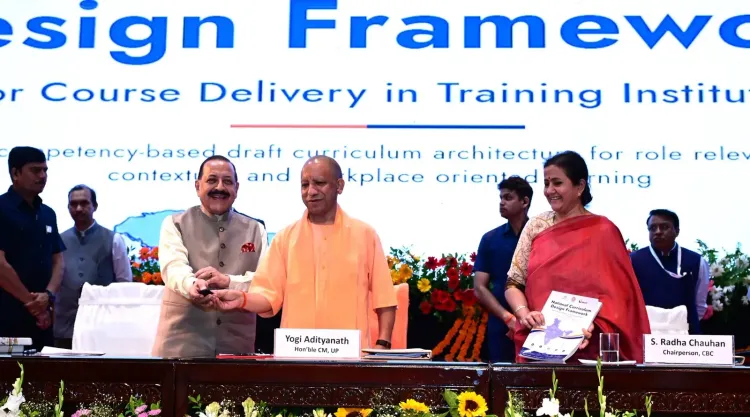
At the Sadhana Shrinkhla 2026 workshop in Lucknow, Union Minister Dr. Jitendra Singh highlighted that over 19 lakh UP officials are on iGOT Karmayogi and 370 state institutions have joined the UNNATI national training grid, underscoring Mission Karmayogi's deepening state-level reach.
Key Takeaways
Mission Karmayogi , approved in 2020 , marks a shift from rule-based to role-based governance for India's civil services.
The Capacity Building Commission , constituted in 2021 , was conceptualised by PM Narendra Modi as part of post-2014 governance reforms.
More than 19 lakh officials and employees from Uttar Pradesh have registered on the iGOT Karmayogi platform.
National participation on iGOT Karmayogi stands at approximately 1.7 crore registered users.
UNNATI (Unified New Age National Training Initiative) connects training institutions nationally; 370 institutions from UP have already joined.
The workshop in Lucknow was organised by the Capacity Building Commission under the DoPT banner as part of the Sadhana Shrinkhla 2026 series.
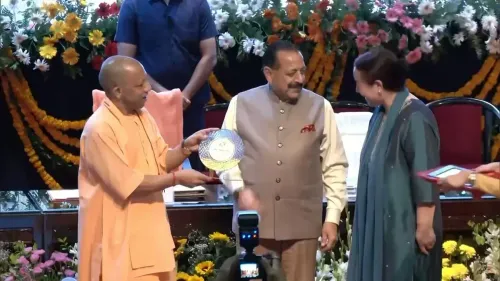
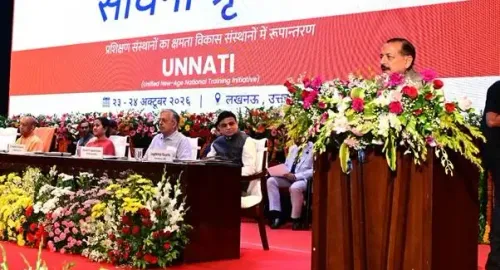
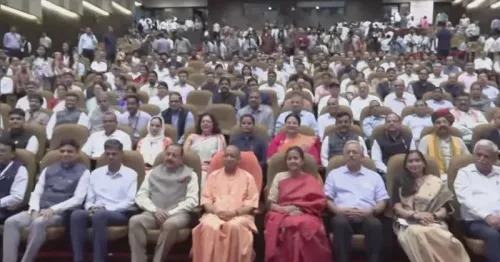
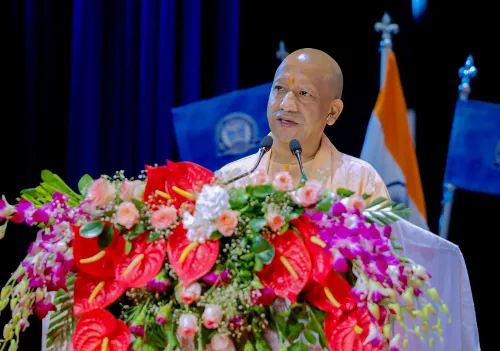
India's bureaucracy is being quietly rewired — not through transfers or tribunals, but through training. At the Sadhana Shrinkhla 2026 regional workshop in Lucknow on Friday, 23 October 2026, Union Minister of State (Independent Charge) for Science and Technology and Earth Sciences, and MoS in the Prime Minister's Office and Personnel, Dr. Jitendra Singh, laid out the ambitions of one of India's most consequential but under-discussed administrative reforms — the shift from a rule-bound civil service to one defined by roles, competencies, and continuous learning.
From file-pushing to role-playing: the Karmayogi doctrine
Mission Karmayogi, approved by the Union Cabinet in 2020, is the formal architecture behind this shift. Dr. Singh described it as 'a fundamental shift in governance from a rule-based system to a role-based approach' — meaning a government employee is no longer assessed purely on whether they followed procedure, but on whether they can actually discharge the responsibilities their post demands.
The Capacity Building Commission, constituted in 2021 to implement the programme, was the organisational muscle behind this ambition. Dr. Singh credited Prime Minister Narendra Modi with conceptualising the Commission as part of a series of governance reforms initiated after 2014. The Commission's mandate: pull the civil service out of rote compliance and into genuine competency.
Uttar Pradesh's 19-lakh strong footprint on iGOT
Numbers tell the story of scale. Dr. Singh highlighted that more than 19 lakh officials and employees from Uttar Pradesh have registered on the iGOT Karmayogi platform — the online training and capacity-building engine that sits at the heart of the programme. That single state's enrolment contributes to a national participation figure of approximately 1.7 crore registered users.
For a state the size of a continent and the administrative density that comes with governing Uttar Pradesh, that traction signals something real: the platform is being adopted well beyond the ministerial offices of New Delhi. The Lucknow workshop, organised under the banner of the Department of Personnel and Training (DoPT), was itself part of a broader regional outreach designed to deepen that footprint.
UNNATI: wiring 370 UP institutions into a national training grid
Perhaps the sharpest policy announcement at the workshop was about UNNATI — the Unified New Age National Training Initiative. Introduced recently, UNNATI is designed to connect training institutions across the country, enabling collaboration, resource sharing, and alignment with the government's capacity-building requirements. Think of it as a national training interoperability layer: instead of institutions operating in silos, they feed into and draw from a common grid.
Dr. Singh noted that 370 training institutions from Uttar Pradesh have already joined UNNATI — a number that underscores how aggressively the state has moved to plug into the framework. If replicated across other large states, UNNATI could fundamentally change how India produces its next generation of public servants.
The civil service reform story rarely makes front pages — but the compounding effect of retraining 1.7 crore government employees could reshape how India is governed for decades. Sadhana Shrinkhla 2026 is not just a workshop series; it is the field deployment of that bet.
Point of View
If genuine, represent one of the largest digital upskilling exercises in public administration globally, and UP's disproportionate share signals effective state-Centre coordination. UNNATI's 370-institution footprint in a single state also suggests the Centre is moving from soft nudges to hard infrastructure in how it delivers training. The unanswered question is outcomes: registration and completion rates are very different metrics, and the reform's credibility will ultimately rest on measurable changes in how government actually functions on the ground.
NationPress
23 Oct 2026
Frequently Asked Questions
What is Mission Karmayogi and why was it launched?
Mission Karmayogi, formally the National Programme for Civil Services Capacity Building, was approved by the Union Cabinet in 2020 to shift India's civil services from a rule-based to a role-based governance model — meaning officials are trained to develop competencies suited to their specific responsibilities, rather than simply following procedural rules.
What is the iGOT Karmayogi platform?
iGOT Karmayogi is an online platform for training and capacity building that serves as the digital delivery engine for Mission Karmayogi. As of the Lucknow workshop in October 2026, approximately 1.7 crore government officials have registered nationally, with over 19 lakh from Uttar Pradesh alone.
What is UNNATI and how does it work?
UNNATI stands for Unified New Age National Training Initiative. It is a recently introduced programme that connects training institutions across India to facilitate collaboration, resource sharing, and alignment with the government's capacity-building goals. As of October 2026, 370 training institutions from Uttar Pradesh have joined the initiative.
What is the Capacity Building Commission?
The Capacity Building Commission was constituted in 2021 to implement Mission Karmayogi. It operates under the Department of Personnel and Training (DoPT) and is responsible for driving competency-based training for civil servants across central and state governments.
What is Sadhana Shrinkhla 2026?
Sadhana Shrinkhla 2026 is a series of regional workshops organised by the Capacity Building Commission under DoPT. The Lucknow edition on 23 October 2026 was addressed by Union Minister Dr. Jitendra Singh and focused on the progress of Mission Karmayogi and UNNATI in Uttar Pradesh.