Mission Karmayogi: Dr. Jitendra Singh flags shift to role-based governance
Synopsis
India's Mission Karmayogi has crossed 1.7 crore registrations on iGOT — but the more significant shift, according to Union MoS Dr. Jitendra Singh, is philosophical: moving government officials from following rules to owning roles. With public grievance filings surging from 2 lakh to 25 lakh since 2014, the pressure on that competency model is only growing.
Key Takeaways
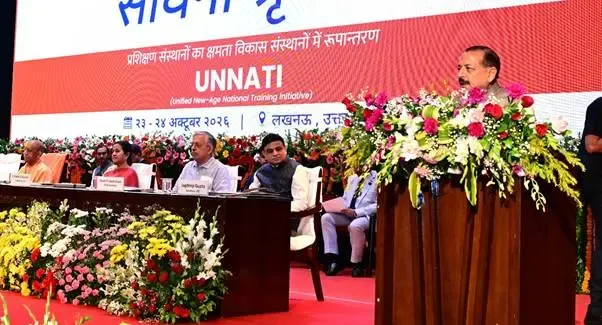
Jitendra Singh described Mission Karmayogi as a shift from rule-based to role-based governance at the Sadhana Shrinkhla 2026 workshop in Lucknow on 23 October 2026 .
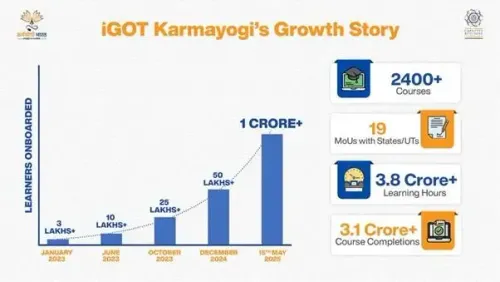
More than 19 lakh Uttar Pradesh officials have registered on iGOT Karmayogi , contributing to a national total of approximately 1.7 crore .
The workshop included representatives from eight states and four Union territories of the Northern Region.
Public grievance registrations have grown from around 2 lakh in 2014 to approximately 25 lakh , with 95–97% disposed of on time.
Reforms cited include removal of gazetted officer attestation requirements, discontinuation of some recruitment interviews, Rozgar Melas , CPGRAMS , and Digital Life Certificates .
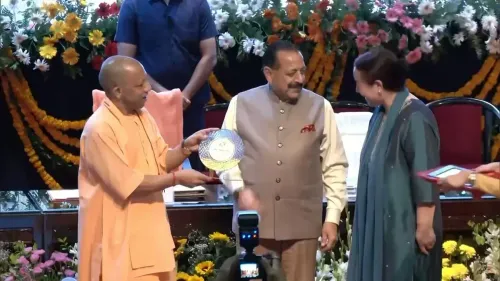
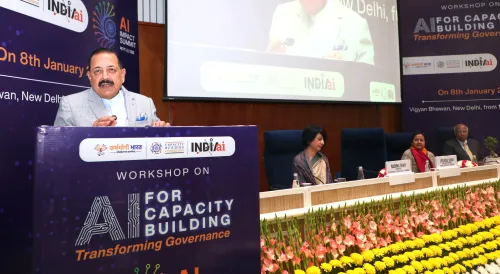
Union Minister of State for Science & Technology and Earth Sciences Dr. Jitendra Singh on Friday, 23 October 2026, said Mission Karmayogi marks a fundamental transition from a rule-based administrative framework to a role-based approach, designed to equip government officials with the competencies needed to deliver citizen-centric governance across India.
Speaking at Sadhana Shrinkhla 2026, a two-day workshop held in Lucknow, the minister underscored that capacity building lies at the heart of the Centre's ongoing civil services transformation, which has been pursued through a series of governance reforms since 2024.
Uttar Pradesh Leads National Participation
Dr. Singh praised the Uttar Pradesh government for its effective rollout of governance reforms, noting that more than 19 lakh officials and employees from the state have registered on the iGOT Karmayogi digital learning platform. This contribution has helped push national participation to approximately 1.7 crore — a figure that highlights the programme's scale and reach across government departments.
The Lucknow workshop brought together representatives from eight states and four Union territories of the Northern Region. The central agenda was to chart a roadmap for transforming conventional government training institutions into modern, competency-driven capacity-building bodies.
Key Reforms Highlighted
The minister pointed to several procedural reforms as evidence of a governance philosophy centred on public trust. These include the removal of the requirement for gazetted officers to attest documents, and the discontinuation of interviews for certain government recruitment processes — moves the minister described as reflecting confidence in citizens and a commitment to fairness in public administration.
Dr. Singh also cited Rozgar Melas, the CPGRAMS grievance portal, and Digital Life Certificates as concrete examples of reforms that have streamlined procedures and improved public service delivery. Collectively, these initiatives reflect a broader push to make governance more accessible and less procedure-heavy.
Grievance Redressal: A Decade of Growth
One of the more striking data points the minister offered was the surge in public grievance registrations — from roughly 2 lakh annually in 2014 to approximately 25 lakh today. Rather than treating this rise as a sign of dysfunction, Dr. Singh framed it as evidence of growing public confidence in the grievance-redressal mechanism.
He added that between 95 and 97 per cent of registered grievances are disposed of within a stipulated timeframe, suggesting that citizens have come to expect and receive timely responses to their concerns. This metric, he argued, reflects the system's improved accountability and responsiveness.
What This Means for Civil Services
Mission Karmayogi, launched by the Centre, represents a long-term structural bet on continuous learning for India's civil servants — moving away from one-time training events toward an ongoing, role-specific competency model. The iGOT Karmayogi platform serves as its digital backbone, aggregating learning modules across departments and levels of government.
With the Northern Region workshop now deliberating on institutionalising these changes at the training-institution level, the programme enters a phase focused on embedding reforms into the organisational fabric of government — rather than keeping them at the policy announcement stage. Further rollouts and reviews are expected as the programme advances through its implementation calendar.
Point of View
But registration is not transformation. The harder question is whether iGOT Karmayogi is changing on-the-job behaviour — and there is, as yet, no published independent audit of competency outcomes. The grievance-surge framing is also worth scrutinising: a jump from 2 lakh to 25 lakh filings could signal both improved access and a backlog of unaddressed citizen frustration. Mission Karmayogi's real test will come when states move from enrolling officials to verifying that learning has translated into measurably better service delivery — a link the government has so far asserted but not publicly evidenced.
NationPress
23 Oct 2026
Frequently Asked Questions
What is Mission Karmayogi?
Mission Karmayogi is a Central government programme aimed at building the competencies of India's civil servants through continuous, role-specific learning. It uses the iGOT Karmayogi digital platform to deliver training modules across departments and administrative levels, replacing the older model of one-time, rule-focused training events.
What is the iGOT Karmayogi platform and how many have joined?
iGOT Karmayogi is the digital learning backbone of Mission Karmayogi, offering competency-based modules to government officials. As of the Sadhana Shrinkhla 2026 workshop, approximately 1.7 crore officials have registered nationally, with over 19 lakh coming from Uttar Pradesh alone.
What reforms did Dr. Jitendra Singh highlight at the Lucknow workshop?
Dr. Singh cited the removal of the gazetted officer document-attestation requirement, the discontinuation of interviews for some government recruitment posts, and digital initiatives such as Rozgar Melas , CPGRAMS , and Digital Life Certificates as examples of reforms simplifying public service delivery and building citizen trust.
Why has the number of public grievance registrations risen so sharply?
Annual public grievance registrations have grown from around 2 lakh in 2014 to approximately 25 lakh today. The government attributes this to greater public confidence in the grievance-redressal system, noting that 95–97% of complaints are resolved within a stipulated timeframe.
Who attended the Sadhana Shrinkhla 2026 workshop in Lucknow?
The two-day workshop in Lucknow drew representatives from eight states and four Union territories of India's Northern Region. The focus was on converting traditional government training institutions into modern, competency-driven capacity-building bodies aligned with Mission Karmayogi's goals.