Shekhawat Holds Village Chaupal in Jodhpur for Panchayat Polls
Synopsis
Union Minister Gajendra Singh Shekhawat held a village chaupal in Jhanwar, Looni, Jodhpur on October 23 during Rajasthan's Panchayati Raj election campaign, urging rural voters to back BJP's Zila Parishad and Panchayat Samiti candidates and highlighting the 'double engine government' pitch.
Key Takeaways
Union Minister Gajendra Singh Shekhawat held a village chaupal at Jhanwar, Looni assembly constituency, Jodhpur on October 23, 2026 .
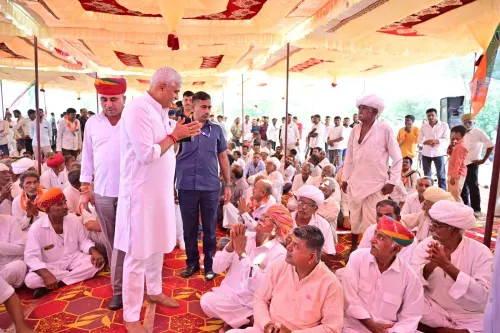
The meeting was framed as an open, informal gathering under a neem tree — a traditional chaupal format — signalling direct rural outreach.
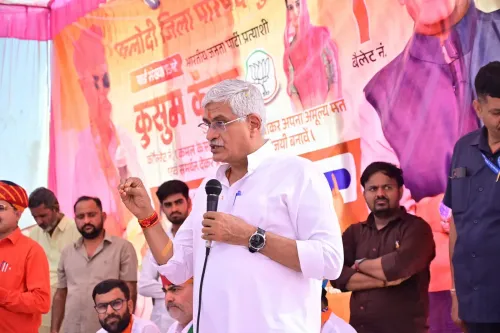
Shekhawat appealed to villagers to vote for BJP's Zila Parishad and Panchayat Samiti candidates in the ongoing Panchayati Raj elections.
Rajasthan Cabinet Minister Jogaram Patel was present, coordinating state and central campaign efforts.
The 'double engine government' narrative — linking BJP's central and state administrations to better welfare delivery — was the core message.
The campaign reflects a broader BJP strategy of deploying central ministers in local polls across its Rajasthan stronghold areas.
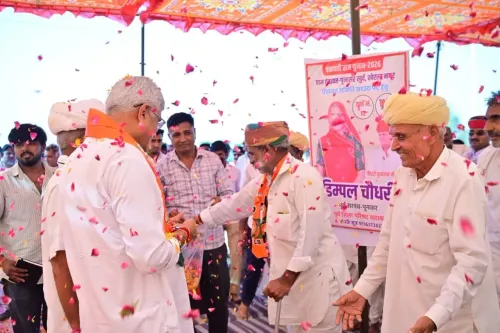
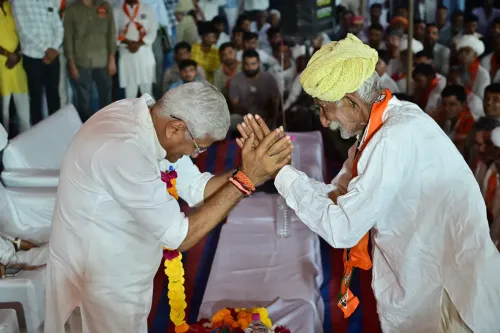
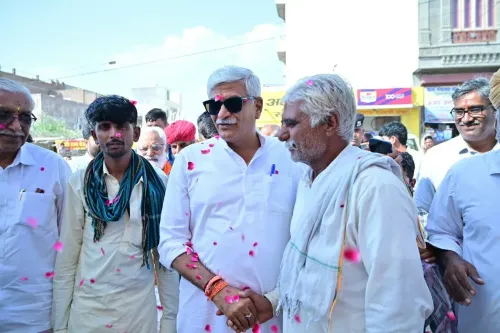
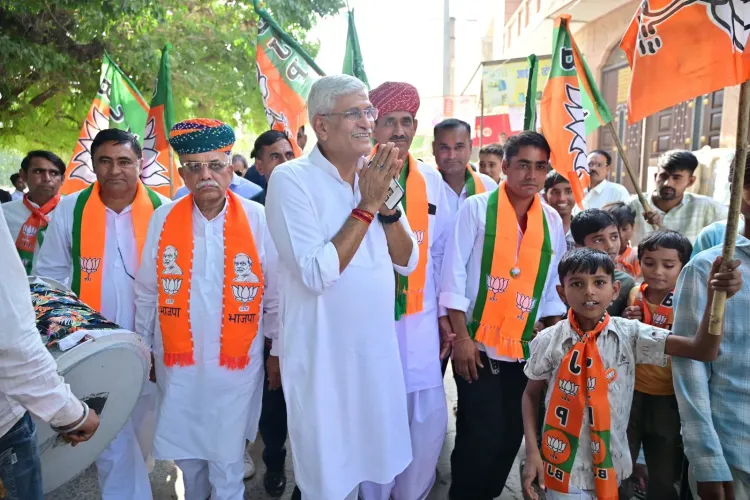
Under the shade of a neem tree in Jhanwar, Looni assembly constituency, Jodhpur, Union Culture and Tourism Minister Gajendra Singh Shekhawat sat on a village platform on Friday, October 23, 2026, and spoke directly to rural voters — a deliberate, ground-level push in Rajasthan's ongoing Panchayati Raj elections.
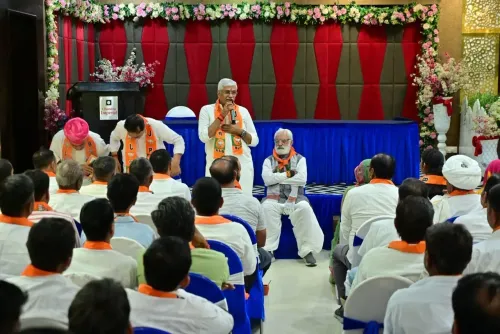
Posting on X, Shekhawat described the gathering as an 'aatmiy samvaad' (heartfelt dialogue), noting the warmth and enthusiasm of villagers at what was framed as an open chaupal rather than a conventional rally. Rajasthan Cabinet Minister Jogaram Patel was present alongside him, lending state government weight to the central minister's appeal.
The Double-Engine Pitch at the Grassroots
Shekhawat used the occasion to urge villagers to vote in favour of BJP's candidates for Zila Parishad (district council) and Panchayat Samiti members. The centrepiece of his message was the 'double engine government' argument — a BJP framing that casts a BJP-governed state working in step with a BJP-led Centre as a multiplier of welfare delivery at the village level.
The pitch is not incidental. Since the BJP's return to power in Rajasthan in the 2023 assembly elections, the party has consistently deployed this narrative at every tier of local elections, arguing that voters who align their panchayat representatives with the ruling dispensation above them unlock smoother access to central and state schemes alike.
Why a Union Minister Sits Under a Neem Tree
The setting was deliberate. A chaupal under a neem tree — the oldest grammar of rural Rajasthan's public life — signals accessibility far more visibly than a stage with banners. For Shekhawat, whose Lok Sabha constituency is Jodhpur, Looni is familiar political geography, and the personal presence of a Union minister in a village-level poll campaign is a signal of how seriously the BJP treats its western Rajasthan stronghold.
The involvement of state Cabinet Minister Jogaram Patel alongside a central minister also reflects a coordinated two-tier campaign strategy — local credibility combined with national reach — that the party has refined across multiple election cycles in Rajasthan.
What the Panchayat Results Will Signal
Panchayati Raj elections are rarely fought on national issues, but their outcomes are read carefully by both parties as a barometer of rural sentiment between assembly cycles. A strong showing for BJP's Zila Parishad and Panchayat Samiti candidates in Jodhpur district would reinforce the party's narrative heading into the next political season — and validate the chaupal strategy as a ground-game template.
The neem tree shade in Jhanwar today is, in that sense, a quiet but concrete test of whether the double-engine message lands where it most needs to: at the last mile of Indian democracy.
Point of View
Anchored by a state cabinet colleague. The 'double engine' framing has been the party's most consistent post-2023 narrative in Rajasthan, and its deployment even at the panchayat tier signals that the BJP treats every electoral layer as a building block of political capital. For the opposition, the challenge is that these village-level events are difficult to counter when they combine genuine access to central welfare schemes with the social currency of a neem-tree chaupal. The results in Jodhpur's Panchayati Raj seats will be an early indicator of whether that formula holds its grip in western Rajasthan heading into the next cycle.
NationPress
23 Oct 2026
Frequently Asked Questions
What is the 'double engine government' that Shekhawat mentioned at the Jodhpur chaupal?
The 'double engine government' is a BJP phrase describing a state and central government both run by BJP, arguing that alignment between the two speeds up welfare scheme delivery to beneficiaries at the grassroots level.
Where exactly did Shekhawat hold the village meeting in Jodhpur?
The chaupal was held at Jhanwar in the Looni assembly constituency of Jodhpur district, Rajasthan, under a neem tree on October 23, 2026 .
What elections are currently taking place in Rajasthan?
Rajasthan is holding Panchayati Raj elections for district councils (Zila Parishad) and Panchayat Samiti members, which are the two tiers of rural local self-governance below the state assembly level.
Who is Jogaram Patel and why was he at the Jhanwar event?
Jogaram Patel is a Cabinet Minister in the Rajasthan state government. His presence alongside Shekhawat reflects a coordinated BJP strategy of pairing central and state government figures at local election campaigns.
Why do Union ministers campaign in Panchayati Raj elections?
Parties like BJP deploy Union ministers in local body elections to link village-level candidates with central welfare schemes and to signal the national party's commitment to grassroots governance, especially in stronghold regions like Jodhpur.