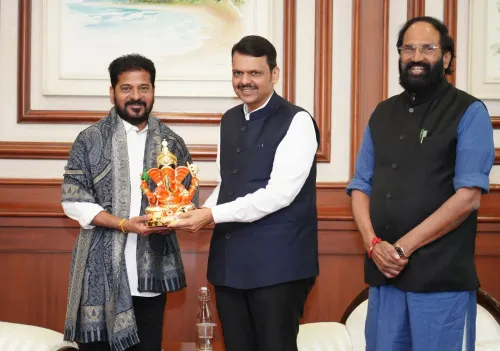
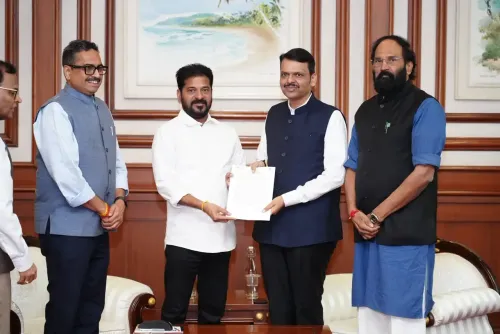
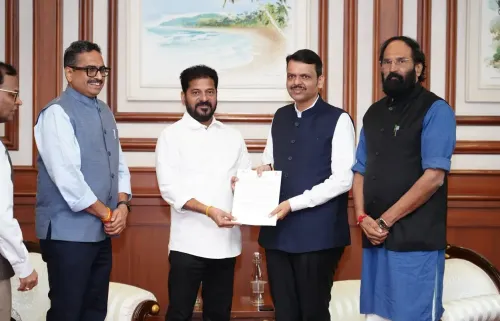
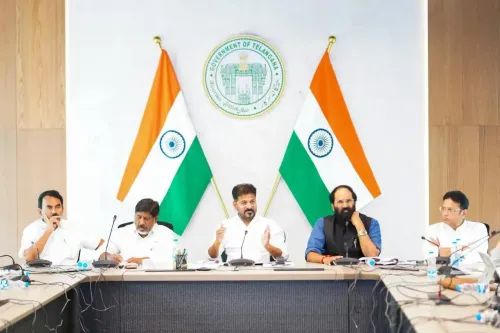
Telangana CM Revanth meets Fadnavis over Tummidihatti Barrage height
Synopsis
Telangana CM Revanth Anumula met Maharashtra CM Devendra Fadnavis in Mumbai on 26 October 2026 to push for raising the Tummidihatti Barrage from 148 m to 152 m, unlocking gravity-flow irrigation for tribal communities in the erstwhile Adilabad district. Maharashtra agreed to commission an independent study.
Key Takeaways
Revanth Anumula met Devendra Fadnavis in Mumbai on 26 October 2026 to discuss raising the Tummidihatti Barrage height from 148 m to 152 m .
The height increase would enable gravity-based water conveyance, reducing energy and operational costs for the Pranahita-Chevella project.
Irrigation Minister Uttam Kumar Reddy highlighted long-pending water demands of tribal and Adivasi communities in the erstwhile Adilabad district .
Telangana expressed willingness to compensate Maharashtra farmers affected by submergence at the higher barrage level.
Maharashtra CM Fadnavis agreed to commission an independent study assessing submergence impacts, construction site suitability, and land requirements at different heights.
Senior officials and experts from both states will jointly examine technical, environmental, and land-acquisition issues and develop a roadmap for action.
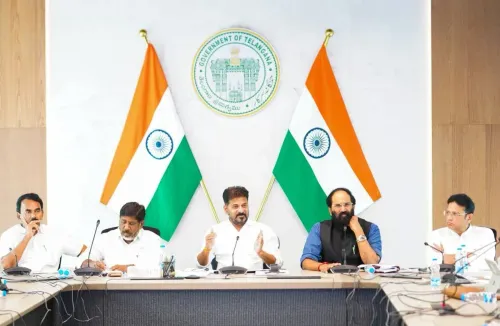
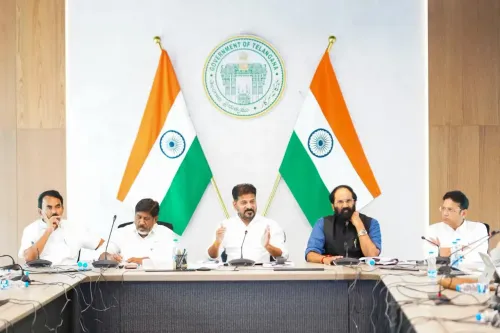
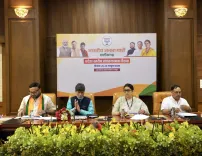
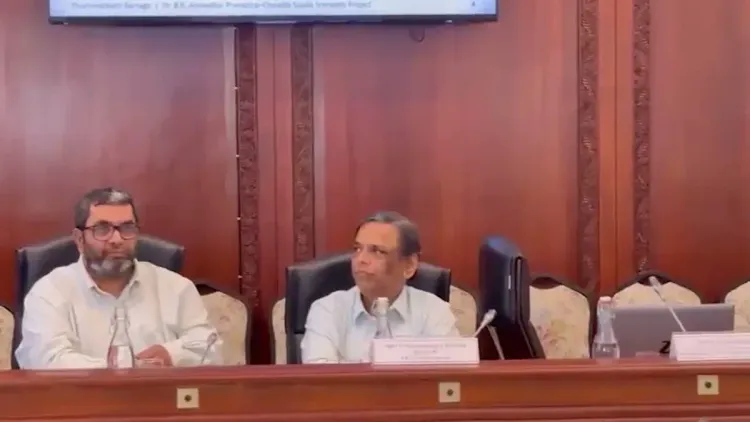
A decades-old irrigation dispute got a fresh push on Monday, 26 October 2026, when Telangana Chief Minister Revanth Anumula flew to Mumbai and sat across the table from Maharashtra Chief Minister Devendra Fadnavis — the clearest sign yet that both states are ready to stop letting the Tummidihatti Barrage gather dust in inter-state limbo.
The meeting, announced by the Chief Minister's Office of Telangana, centred on one pivotal number: raising the barrage on the Pranahita River from 148 metres to 152 metres. Four metres. But in the calculus of water politics, those four metres could mean the difference between a pump-dependent, energy-heavy lift system and a gravity-fed channel that slashes operational costs for generations.
Why Adilabad's tribal belt has waited this long
Irrigation Minister Uttam Kumar Reddy brought the human cost of delay into the room directly. He spotlighted the long-pending irrigation demands of tribal and Adivasi communities in the erstwhile Adilabad district — a region that has historically sat at the margins of both irrigation planning and political attention. These communities predate the 2014 bifurcation of Andhra Pradesh, and so does their water deficit. Reddy also made clear that Telangana is willing to compensate Maharashtra farmers whose land faces submergence — a concession that signals Hyderabad is serious about unblocking the project, not just registering protest. Reddy also flagged a broader technical case: current electricity requirements, rising energy costs, environmental protection, climate change adaptation, and project operational costs all tilt the argument toward gravity-based water conveyance. The 152-metre height makes gravity flow viable. At 148 metres, it doesn't.What Fadnavis agreed to — and what remains open
Fadnavis did not sign off on the height increase on the spot, but his response was substantive. He expressed willingness to reconsider the proposal and announced that Maharashtra will commission an independent study to assess the proposed construction site, submergence impacts at different heights, and land acquisition requirements. He further assured that any objections raised by Telangana would be examined jointly, with expert opinions sought where needed. That is a meaningful shift in posture. For years, Maharashtra's upstream concerns about submergence had effectively stalled the project. An independent study, however preliminary, injects technical rigour into what had been a largely political standoff.The joint technical roadmap both states agreed to build
Beyond the study, both sides agreed that senior officials from Telangana and Maharashtra, along with subject-matter experts, will examine technical issues, water availability, environmental concerns, land acquisition, and compensation frameworks — and collectively work towards a roadmap for further action. Both Chief Ministers formally reaffirmed their commitment to cooperation and the development of backward regions, with explicit emphasis on the welfare of tribal communities. The Pranahita-Chevella Lift Irrigation Project, of which the Tummidihatti Barrage serves as the proposed headworks, is designed to draw Godavari basin water into drought-prone districts including parts of former Adilabad. It has stalled through multiple state governments and survived state reorganisation — a symbol of how inter-state water infrastructure can outlast the political will to resolve it. The independent study's findings on submergence at 148 m versus 152 m will be the next real test of whether this bilateral goodwill translates into steel and concrete — or quietly stalls again.Point of View
Revanth Anumula reframes the conversation from a zero-sum water grab into a cooperative development agenda, which is harder for any government to publicly reject. Fadnavis's agreement to an independent study is a soft but real concession: it accepts that the 152-metre case deserves technical hearing, not just political resistance. The broader pattern here reflects a post-bifurcation reality — Telangana's ambition to complete Godavari-basin infrastructure is persistently constrained by upstream stakeholders, and only bilateral goodwill backed by joint expert frameworks has any chance of breaking the cycle.
NationPress
26 Oct 2026
Frequently Asked Questions
What is the Tummidihatti Barrage and why does it matter?
The Tummidihatti Barrage is the proposed headworks for the Pranahita-Chevella Lift Irrigation Project on the Pranahita River in Telangana. Raising it from 148 m to 152 m would enable gravity-based water flow, significantly reducing energy costs and making irrigation viable for drought-prone districts including the former Adilabad region.
Why has the Tummidihatti Barrage project been stalled?
The project has been stalled primarily due to Maharashtra's objections over submergence — a higher barrage height floods more land on the Maharashtra side of the Pranahita River. The dispute predates Telangana's creation in 2014 and has persisted through multiple state governments on both sides.
What did Devendra Fadnavis agree to in the October 2026 meeting?
Fadnavis agreed to reconsider the proposal and announced that Maharashtra will commission an independent study to assess submergence impacts at different barrage heights, evaluate the proposed construction site, and determine land acquisition requirements. He also assured that Telangana's objections would be examined jointly with expert input.
How will the Tummidihatti Barrage help tribal communities in Adilabad?
The Pranahita-Chevella project, once operational, would bring Godavari basin water to drought-prone districts including former Adilabad, home to large tribal and Adivasi populations that have historically lacked reliable irrigation. Irrigation Minister Uttam Kumar Reddy specifically raised their long-pending demands at the Mumbai meeting.
What happens next after the Telangana-Maharashtra meeting?
The immediate next step is Maharashtra's independent study on submergence at 148 m versus 152 m. In parallel, senior officials and technical experts from both states will jointly examine water availability, environmental concerns, land acquisition, and compensation frameworks, and work toward an agreed action roadmap.