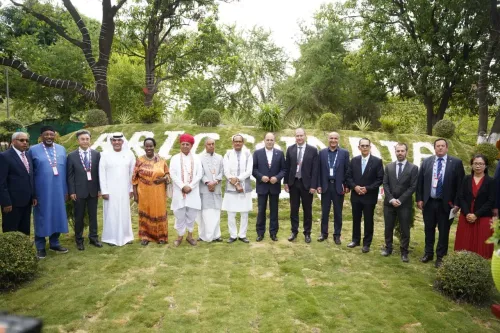
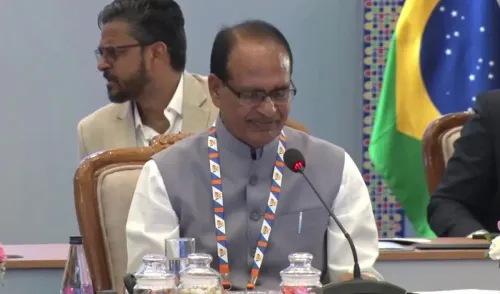
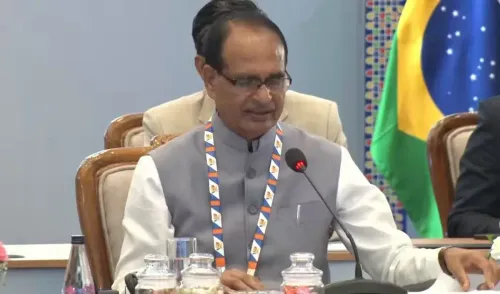
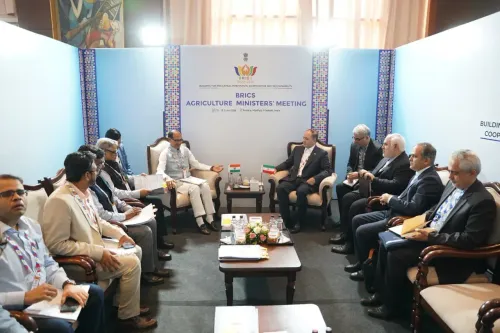
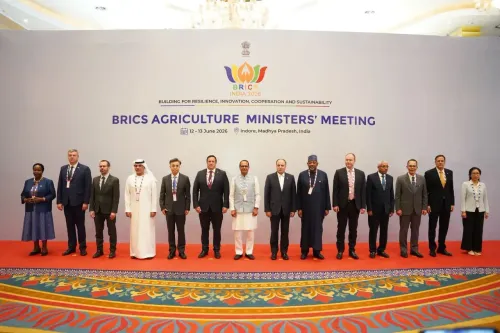
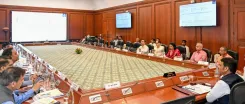
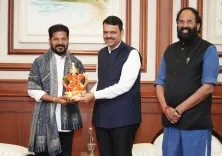
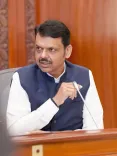
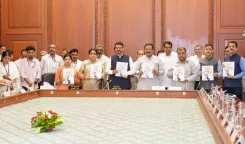
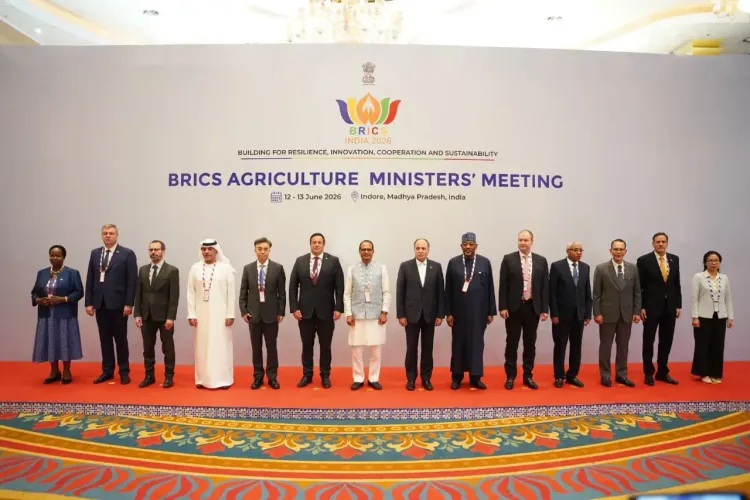
Shivraj Singh Chouhan at BRICS Agri Ministers' Meet, Indore
Synopsis
Union Agriculture Minister Shivraj Singh Chouhan joined BRICS agriculture ministers in Indore on June 12, 2026, for a ministerial dialogue on securing food security through inclusive policies for small farmers, women, and rural youth under the BRICS 2026 framework.
Key Takeaways
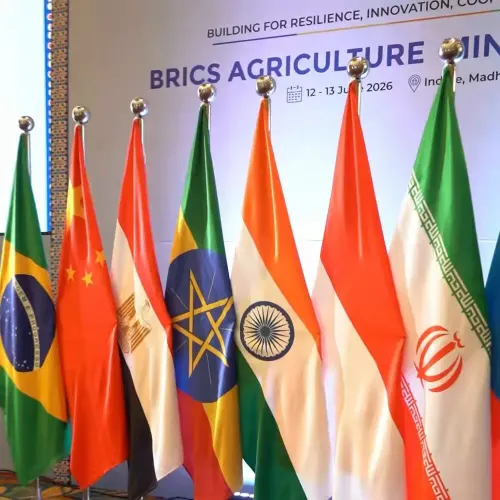
Union Agriculture Minister Shivraj Singh Chouhan attended the BRICS Agricultural Ministers' Meeting 2026 in Indore, Madhya Pradesh on June 12, 2026 .
The ministerial dialogue focused on small and marginal farmers , women , and youth as central to the future of food security.
The meeting is part of the BRICS 2026 framework, continuing a cooperation track that dates back to at least the 2021 BRICS agriculture ministers' dialogue .
India's National Policy for Farmers, 2007 established small and marginal farmers as priority beneficiaries — a domestic framework India is projecting onto the multilateral stage.
Outcome documents and joint statements from the meeting are expected to shape BRICS agricultural cooperation priorities and inform India's domestic farm policy agenda.
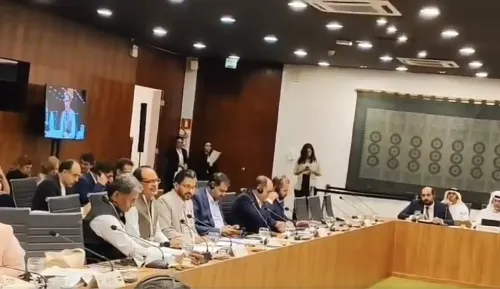
Union Agriculture Minister Shivraj Singh Chouhan participated in the BRICS Agricultural Ministers' Meeting 2026 in Indore, Madhya Pradesh, on Friday, June 12, 2026, taking part in a ministerial dialogue focused on small and marginal farmers, women, and youth under the theme of securing the future of food security.
Context
The ministerial dialogue, held under the BRICS 2026 framework, brought together agriculture ministers from BRICS member states to coordinate positions on food security, rural development, and inclusive agricultural growth. The session's stated focus — small and marginal farmers, women, and youth — reflects a deliberate broadening of the BRICS agriculture agenda beyond trade facilitation toward social inclusion and livelihood security.
Indore, a commercial and agricultural hub in Madhya Pradesh, served as the venue, continuing India's pattern of hosting high-profile multilateral events in its major cities. The choice of Indore also carries symbolic weight, given the city's role as an economic centre in a state where agriculture remains a dominant livelihood.
Policy Backdrop
India's domestic agricultural policy has long centred on the vulnerabilities of small and marginal farmers, who constitute the overwhelming majority of the country's farm households. The National Policy for Farmers, 2007, explicitly identified this group as priority beneficiaries for credit, insurance, and technology support — a framework that successive governments have built upon.
Within the BRICS agriculture cooperation track, India participated in the 2021 BRICS Summit agriculture ministers' dialogue, which focused on sustainable farming and food security cooperation. The 2026 meeting in Indore represents a continuation and expansion of that track, with the inclusion of women and youth as distinct policy constituencies signalling an evolution in the grouping's agenda.
Minister Chouhan, as a former four-term Chief Minister of Madhya Pradesh, brings direct state-level agricultural governance experience to this multilateral forum, having overseen farm policy in one of India's largest agrarian states for over a decade.
Stakeholders and Impact
The dialogue's three focal groups — small and marginal farmers, women farmers, and rural youth — together represent the most economically vulnerable segments of India's agrarian economy. Women perform a substantial share of agricultural labour in India yet have historically had limited access to land titles, credit, and institutional support.
Rural youth, meanwhile, face structural pressures including land fragmentation and limited non-farm employment, making their engagement with agriculture a long-term food security concern for all BRICS economies. A coordinated ministerial-level dialogue on these groups signals that member states are seeking to align domestic inclusion agendas with multilateral food security commitments.
For India specifically, the platform offers an opportunity to project its smallholder-centric policy experience — including schemes for farm credit, crop insurance, and direct income support — as a model for broader BRICS cooperation.
What's Next
Attention will now turn to any outcome documents, joint communiqués, or working group mandates that emerge from the BRICS Agricultural Ministers' Meeting 2026. Such documents typically set the agenda for technical-level cooperation in the months that follow and can shape member states' positions at broader multilateral forums including the United Nations Food and Agriculture Organisation.
India's hosting of this dialogue in Indore also positions the country as a proactive agenda-setter within BRICS on food security — a role that carries weight as global supply chains continue to face pressure from climate variability and geopolitical disruptions. The outcomes of this meeting could inform India's domestic policy priorities for smallholder support in the coming agricultural seasons.
Point of View
Women, and youth, India is effectively internationalising the inclusion framework it has pursued domestically — and positioning itself as a normative leader within BRICS on food security. For Chouhan personally, the forum provides a high-visibility platform that reinforces his credentials as a farmer-centric minister ahead of what is likely to be a politically significant agricultural policy period. The choice of Indore, his political home state's commercial capital, adds a layer of regional symbolism to an otherwise technocratic multilateral event.
NationPress
26 Oct 2026
Frequently Asked Questions
What is the BRICS Agricultural Ministers' Meeting 2026?
The BRICS Agricultural Ministers' Meeting 2026 is a ministerial-level gathering of agriculture ministers from BRICS member states held in Indore, India, focused on coordinating policies on food security, rural development, and inclusion of small farmers, women, and youth.
Why was the BRICS agriculture meeting held in Indore?
Indore, a major commercial and agricultural hub in Madhya Pradesh, was selected as the host city for the 2026 BRICS Agricultural Ministers' Meeting, continuing India's practice of hosting multilateral ministerial events in prominent regional cities.
What did Shivraj Singh Chouhan discuss at the BRICS meeting?
Union Agriculture Minister Shivraj Singh Chouhan participated in a ministerial dialogue on securing food security, with a specific focus on the roles of small and marginal farmers, women, and rural youth within BRICS member economies.
How does India's farm policy connect to the BRICS agriculture agenda?
India's domestic focus on small and marginal farmers — embedded in frameworks like the National Policy for Farmers, 2007 — aligns closely with the BRICS agriculture cooperation track, which has expanded from trade facilitation to include climate resilience and social inclusion.
What outcomes are expected from the BRICS Agricultural Ministers' Meeting 2026?
Observers are watching for joint communiqués or outcome documents that could set the agenda for technical cooperation among BRICS members and influence India's domestic agricultural policy priorities in the coming seasons.