Shivraj Singh Chouhan Chairs BRICS Agriculture Meet in Indore
Synopsis
Union Agriculture Minister Shivraj Singh Chouhan met BRICS member and partner country representatives in Indore on 12 June 2026, discussing smallholder livelihoods, women in agriculture, and food security. With BRICS nations home to nearly half the world's population and over 43% of global farm output, a joint Indore Declaration is expected on 13 June 2026.
Key Takeaways
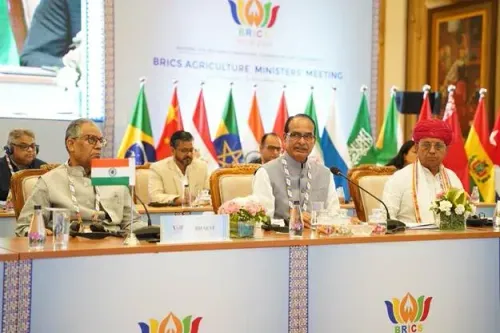
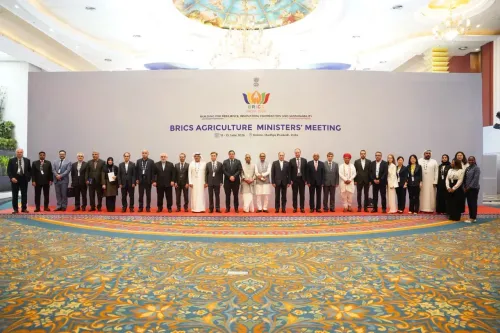
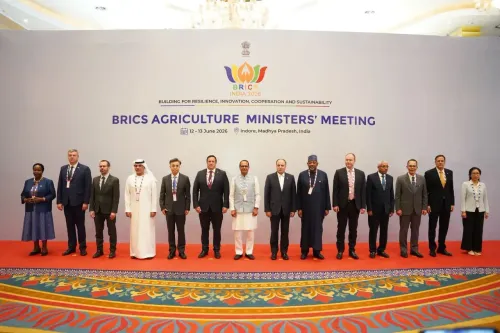
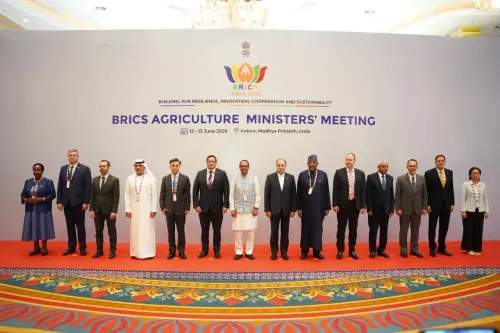
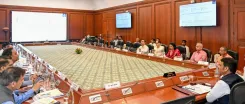
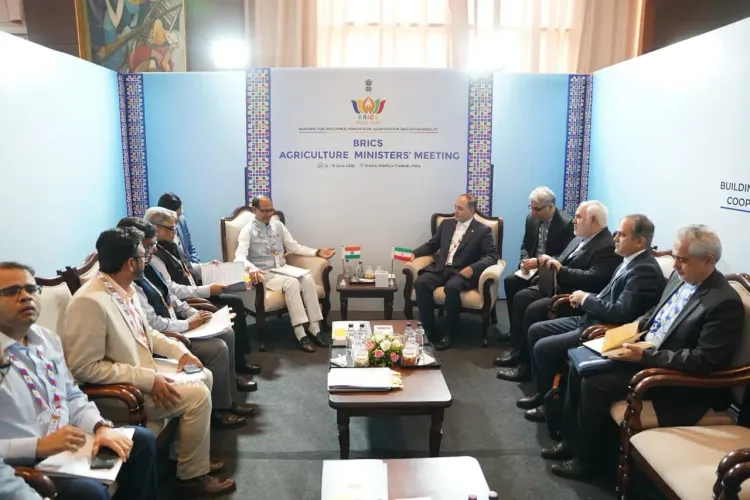
Union Agriculture Minister Shivraj Singh Chouhan chaired a BRICS agriculture ministers' meeting on 12 June 2026 in Indore .
Key agenda items included livelihoods of small and marginal farmers , women's participation in agriculture , and global food security.
BRICS nations collectively hold nearly half the world's population and account for over 43% of global agricultural production.
Bilateral interactions were held to advance cooperation in agricultural trade, research, innovation, and technology sharing .
A joint communiqué — the Indore Declaration — was expected to be adopted on 13 June 2026 .
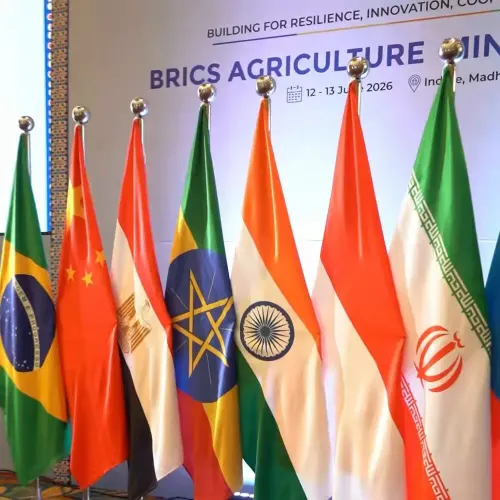
The BRICS grouping was expanded in 2024 to include Egypt, Ethiopia, Iran and the UAE , broadening the agricultural cooperation agenda.
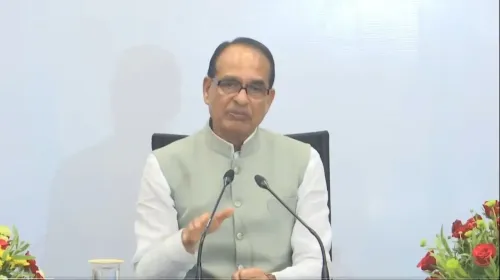
Union Agriculture Minister Shivraj Singh Chouhan on Friday, 12 June 2026, held a wide-ranging meeting with representatives from BRICS member and partner countries, focusing on the livelihoods of small and marginal farmers, women's participation in agriculture, and the strengthening of global food security — with a joint declaration, to be called the Indore Declaration, expected the following day.
Context
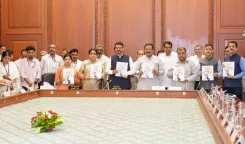
The meeting, held under the #BRICS2026 framework, brought together agricultural representatives from across the grouping to exchange best practices and hold bilateral interactions. Discussions covered agricultural trade, research, innovation, and technology sharing — areas that have formed the backbone of BRICS agricultural diplomacy since ministerial-level meetings began in the early 2010s.
Chouhan noted that nearly half of the world's population resides in BRICS nations, and that the grouping accounts for over 43% of global agricultural production — figures that underscore why cooperation within the bloc carries outsized significance for the trajectory of sustainable agriculture worldwide.
Policy Backdrop
BRICS agriculture ministers have convened periodically since at least 2013, with India's 2021 chairmanship producing a dedicated action plan on agricultural research. The grouping's expansion in 2024 — adding Egypt, Ethiopia, Iran and the UAE as full members, alongside partner countries — has widened the agricultural agenda considerably, bringing in African and Middle-Eastern economies with distinct agro-climatic profiles and food-security challenges.
India has consistently used BRICS and comparable South-South platforms to foreground the concerns of smallholder farmers and advocate for climate-resilient agricultural practices. The choice of Indore — located in Madhya Pradesh, the state Chouhan governed for four terms — lends the meeting a degree of personal and political resonance for the host minister.
Stakeholders and Impact
The explicit focus on small and marginal farmers and women in agriculture signals an intent to move beyond macro-level trade statistics and address structural vulnerabilities within member economies. Smallholders dominate farming in most BRICS nations, and women contribute a disproportionate share of agricultural labour while often lacking equal access to land, credit, and technology.
Bilateral interactions held on the sidelines are expected to open pathways for agricultural trade and technology transfer between member states — outcomes that could benefit Indian farmers through access to improved seed varieties, irrigation technologies, and export markets within the expanded bloc.
What's Next
Chouhan expressed confidence that the Indore Declaration, anticipated on 13 June 2026, will 'contribute to strengthening cooperation among BRICS nations and advancing global food security.' The final text of the declaration and any binding follow-up mechanisms will be closely watched as a measure of how much the expanded BRICS grouping can translate ministerial consensus into concrete agricultural deliverables.
The outcomes from Indore are also expected to feed into the agenda of the next full BRICS summit, where agriculture and food security are likely to figure among the core multilateral priorities.
Point of View
Giving India a broader coalition for its positions. The Indore Declaration, if it includes actionable follow-up mechanisms, could mark a meaningful step-up from the largely aspirational outputs of earlier BRICS farm ministerials.
NationPress
26 Oct 2026
Frequently Asked Questions
What is the Indore Declaration in BRICS 2026?
The Indore Declaration is a joint communiqué expected to be adopted by BRICS agriculture ministers on 13 June 2026 in Indore, aimed at strengthening agricultural cooperation and advancing global food security among member and partner countries.
Why did the BRICS agriculture meeting take place in Indore?
Indore, located in Madhya Pradesh, hosted the BRICS agriculture ministerial meeting under India's BRICS 2026 engagement. Union Agriculture Minister Shivraj Singh Chouhan, a four-term former Chief Minister of Madhya Pradesh, presided over the session.
What share of global agriculture does BRICS account for?
According to figures cited by Minister Chouhan at the meeting, BRICS nations account for over 43% of global agricultural production and are home to nearly half the world's population.
What issues were discussed at the BRICS agriculture meeting on 12 June 2026?
Discussions covered livelihoods of small and marginal farmers, greater participation of women in agriculture, food security, agricultural trade, research, innovation, and technology sharing among member and partner countries.
Which countries are part of BRICS in 2026?
The BRICS grouping includes founding members Brazil, Russia, India, China and South Africa, expanded in 2024 to add Egypt, Ethiopia, Iran and the UAE as full members, along with several partner countries.