Shivraj Singh Chouhan: BRICS Agri Meet Adopts Indore Declaration
Synopsis
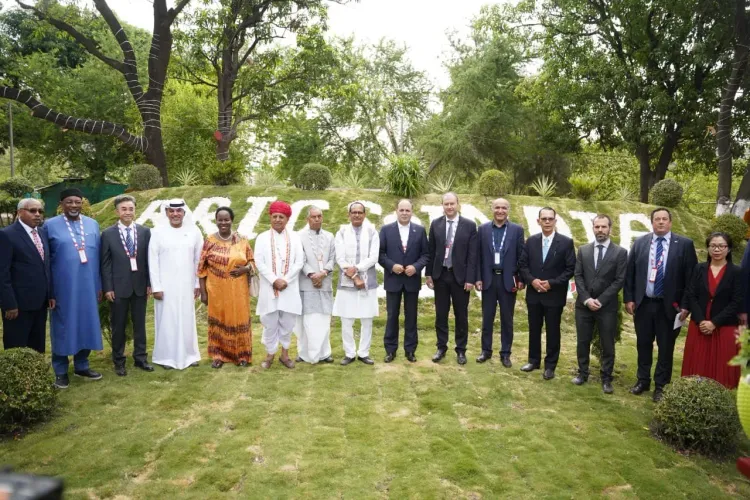
The 16th BRICS Agriculture Ministers' Meeting in Indore, held under India's presidency, adopted the Indore Declaration on food security and launched five new initiatives including networks on agroecology, digital agriculture and a Global Forum on Farmers' Rights in Seed Systems, Union Agriculture Minister Shivraj Singh Chouhan announced on 13 June 2026.
Key Takeaways
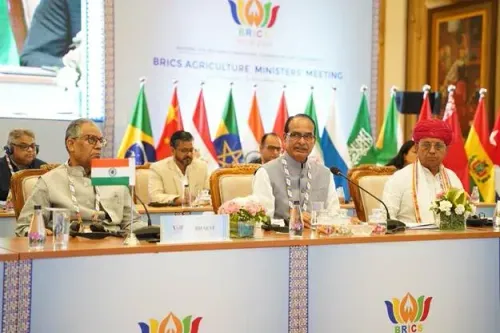
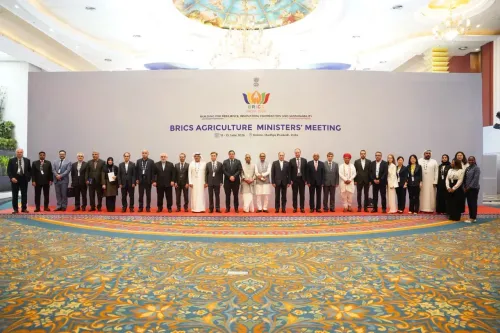
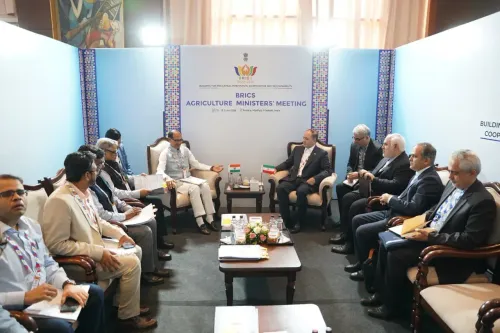
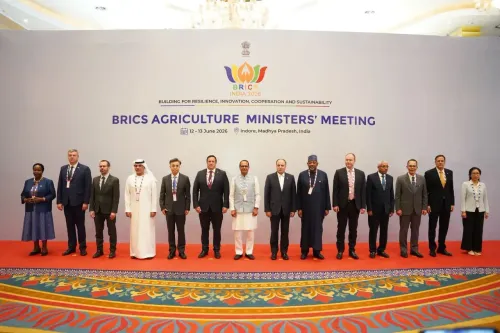
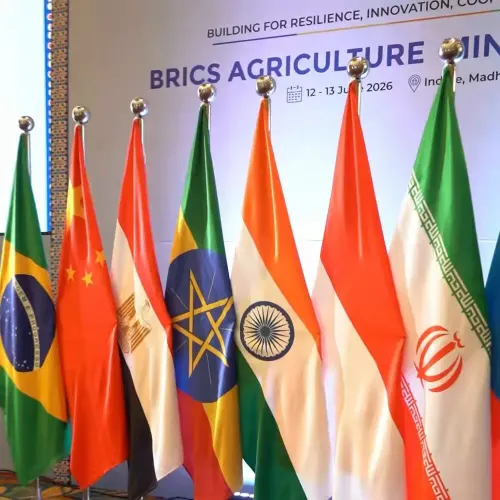
The 16th BRICS Agriculture Ministers' Meeting was held in Indore under India's BRICS presidency and adopted the Indore Declaration .
Five new initiatives were agreed upon, including a BRICS Network of Centres of Excellence on Agroecology and Regenerative Agriculture and a Network on Digital Agriculture .
The BRICS AGRIN Framework was adopted to coordinate agricultural innovation across member states.
The BRICS Agricultural Research Platform will be strengthened as a 'Knowledge-to-Action Hub'.
A Global Forum on Farmers' Rights in Seed Systems will be established — a significant step on seed sovereignty.
Union Agriculture Minister Shivraj Singh Chouhan announced the outcomes on 13 June 2026 .
Union Agriculture Minister Shivraj Singh Chouhan announced on Saturday, 13 June 2026 that the 16th BRICS Agriculture Ministers' Meeting, held in Indore under India's BRICS presidency, adopted the Indore Declaration — a joint commitment by member nations to strengthen agriculture, food security and nutrition.
Context
Chouhan stated that BRICS nations agreed on several new multilateral initiatives to translate the declaration's commitments into concrete action. These include a BRICS Network of Centres of Excellence on Agroecology and Regenerative Agriculture, a Network on Digital Agriculture, and the BRICS AGRIN Framework. The meeting also agreed to strengthen the existing BRICS Agricultural Research Platform as a 'Knowledge-to-Action Hub' and to establish a Global Forum on Farmers' Rights in Seed Systems.
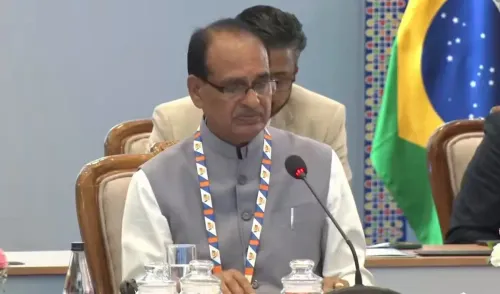
In his post, Chouhan wrote: 'Together, BRICS nations are shaping a more secure and sustainable future for global agriculture.' The meeting was held in Indore, Madhya Pradesh — a city with personal significance for Chouhan, who served as Chief Minister of the state for four terms.
Policy Backdrop
BRICS agriculture ministers have convened annually since at least 2015, producing successive joint declarations on sustainable farming, food systems and supply-chain resilience. India previously chaired BRICS in 2021, when agriculture and food security featured as cooperation priorities, establishing a pattern of incremental institutional building in the sector.
The BRICS Agricultural Research Platform is an existing mechanism for joint research and knowledge exchange among member states. The 2026 initiatives build on that foundation by adding specialised networks on agroecology and digital agriculture — areas that have gained prominence in global food-policy discussions amid climate stress and supply-chain disruptions.
BRICS grouping, which expanded in 2024 to include new member economies, now represents a significantly larger share of global agricultural output and smallholder farming populations. The emphasis on agroecology, regenerative practices and seed systems aligns with the bloc's earlier sustainability commitments while extending into farmers' rights — a politically sensitive domain in several member states.
Stakeholders and Impact
The declared initiatives are designed to benefit BRICS farmers and agricultural researchers across member nations. The Global Forum on Farmers' Rights in Seed Systems is particularly notable: seed sovereignty and access to genetic material have long been contentious issues between large agribusiness interests and smallholder farming communities across the developing world.
The Network on Digital Agriculture signals a push to leverage data and technology for crop planning, market access and climate adaptation — areas where BRICS nations collectively face large implementation gaps. The BRICS AGRIN Framework, while its precise mandate is yet to be detailed publicly, appears aimed at coordinating agricultural innovation and research investment across member states.
What's Next
Attention will now shift to the rollout timelines and funding arrangements for the five announced initiatives. BRICS cooperation frameworks have historically relied on voluntary contributions and bilateral arrangements rather than binding financial commitments, which can slow implementation. The 2026 BRICS summit under the next rotating presidency will be a key milestone to assess whether the Indore Declaration translates from ministerial consensus into operational programmes. For India, hosting this meeting in Indore and securing the declaration represents a visible diplomatic and agricultural-policy achievement under Chouhan's tenure as Union Agriculture Minister.
Point of View
Digital farming and farmers' rights — within a multilateral framework, lending them greater legitimacy and potential co-financing. For Chouhan, securing a named declaration in Indore carries political symbolism, tying his national ministerial tenure to his Madhya Pradesh political base. The five new initiatives follow BRICS's established pattern of building non-binding institutional networks rather than hard financial commitments, which means implementation will depend heavily on bilateral follow-through among member states. The inclusion of a Global Forum on Farmers' Rights in Seed Systems is the most politically charged element, signalling BRICS's collective intent to push back on intellectual-property regimes that constrain smallholder access to seeds.
NationPress
19 Sept 2026
Frequently Asked Questions
What is the Indore Declaration BRICS?
The Indore Declaration is a joint statement adopted at the 16th BRICS Agriculture Ministers' Meeting held in Indore, India, in June 2026. It reaffirms BRICS nations' shared commitment to strengthening agriculture, food security and nutrition, and outlines five new cooperative initiatives.
What new initiatives were announced at the BRICS Agriculture Ministers' Meeting 2026?
Five initiatives were announced: a BRICS Network of Centres of Excellence on Agroecology and Regenerative Agriculture, a Network on Digital Agriculture, the BRICS AGRIN Framework, upgrading the BRICS Agricultural Research Platform as a Knowledge-to-Action Hub, and a Global Forum on Farmers' Rights in Seed Systems.
Where was the 16th BRICS Agriculture Ministers' Meeting held?
The 16th BRICS Agriculture Ministers' Meeting was held in Indore, Madhya Pradesh, India, under India's BRICS presidency in June 2026.
What is the BRICS AGRIN Framework?
The BRICS AGRIN Framework is a newly agreed coordination mechanism announced at the 2026 BRICS Agriculture Ministers' Meeting, aimed at aligning agricultural innovation and research efforts across BRICS member states.
What is the Global Forum on Farmers' Rights in Seed Systems?
It is a new multilateral forum agreed upon by BRICS nations at the Indore meeting to address farmers' rights over seeds, including issues of seed sovereignty and access to plant genetic material — a significant policy concern for smallholder farming communities across the developing world.