Shivraj Singh Chouhan Announces New BRICS Agriculture Pacts
Synopsis
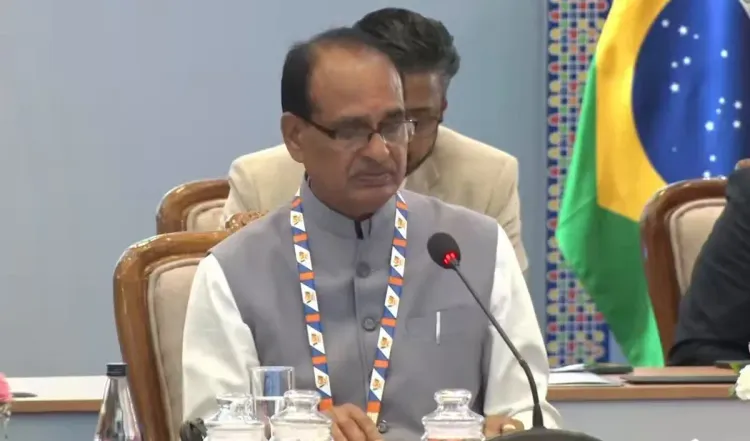
Union Agriculture Minister Shivraj Singh Chouhan announced that BRICS nations have agreed to establish a Global Forum on Farmers' Rights in Seed Systems, a new Agro Inputs and Genetic Resources Network, and a strengthened Agricultural Research Platform repositioned as a Knowledge to Action Hub, deepening multilateral farm-sector cooperation under #BRICS2026.
Key Takeaways
BRICS member nations have reached consensus on establishing a Global Forum on Farmers' Rights in Seed Systems to protect farmers' rights, traditional knowledge, and seed heritage.
A new BRICS Agro Inputs, Genetic Resources and Information Network will be formed to coordinate on agricultural inputs and genetic resource data across member states.
The existing BRICS Agricultural Research Platform will be upgraded and repositioned as a Knowledge to Action Hub .
Cooperation agreements span agricultural trade, food security, climate-resilient agriculture, digital innovation, fisheries, and animal husbandry .
India has been a consistent advocate for protecting traditional knowledge and seed systems within the BRICS framework, dating back to the 2010 Joint Working Group.
The announcements build on commitments made at the 2023 Johannesburg BRICS Summit on climate-resilient agriculture.
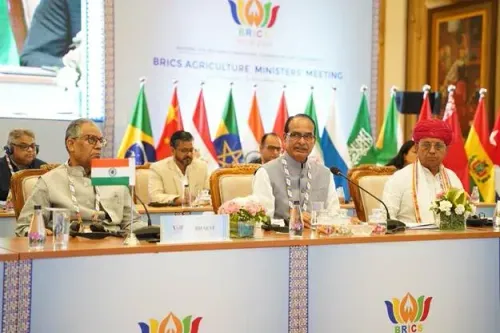
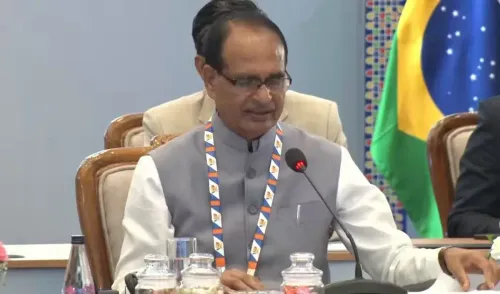
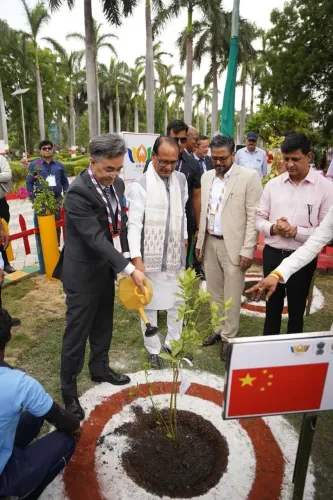
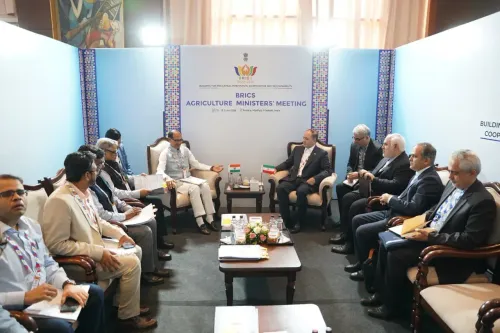
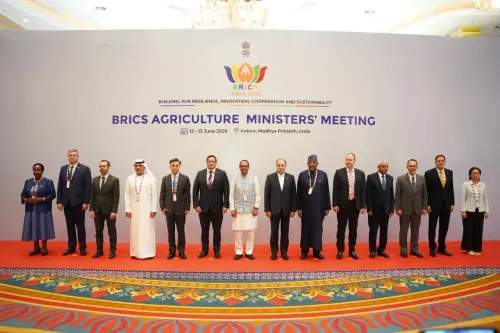
Union Agriculture Minister Shivraj Singh Chouhan announced on Saturday, June 13, 2026, that BRICS member nations have reached significant agreements to deepen agricultural cooperation, including consensus on establishing a new global forum to protect farmers' rights, traditional knowledge, and seed heritage.
Context
Posting on X under the hashtag #BRICS2026, Chouhan wrote that 'BRICS कृषि सहयोग को नई दिशा मिली है' — 'BRICS agricultural cooperation has received a new direction.' The announcements signal a fresh round of multilateral commitments among the grouping's member states on food systems and farm-sector governance.
Central to the announcement is the consensus on establishing a Global Forum on Farmers' Rights in Seed Systems, a proposed multilateral body aimed at safeguarding farmers' rights, traditional agricultural knowledge, and seed heritage. Chouhan also confirmed agreement on forming a BRICS Agro Inputs, Genetic Resources and Information Network to coordinate on agricultural inputs and genetic resource data across member countries.
Policy Backdrop
BRICS agriculture ministers have convened annually since 2010 under a Joint Working Group to coordinate on food security and research collaboration. At the 2023 Johannesburg Summit, BRICS leaders had endorsed expanded cooperation on climate-resilient agriculture and trade facilitation — the agreements announced by Chouhan build directly on that mandate.
India has consistently used the BRICS platform to advocate for the protection of traditional knowledge and seed systems alongside digital and research-driven agricultural initiatives. These multilateral efforts run parallel to similar positions India has taken in G20 agriculture working groups and bilateral channels with member states.
The minister also announced that the existing BRICS Agricultural Research Platform will be strengthened and repositioned as a Knowledge to Action Hub, giving the platform an operational mandate to translate research into field-level outcomes for farmers across member nations.
Stakeholders and Impact
The agreements span several critical sectors: agricultural trade, food security, climate-resilient farming, digital innovation, fisheries, and animal husbandry. Taken together, they represent a broad-based effort to make agricultural and food systems across BRICS nations more resilient, sustainable, and future-ready — the precise framing used by Chouhan in his post.
Farmers and agricultural research institutions across BRICS member states stand to be the primary stakeholders. The proposed Global Forum on Farmers' Rights in Seed Systems in particular addresses longstanding concerns among smallholder farming communities about the erosion of indigenous seed varieties and traditional agrarian knowledge under commercial pressures.
The BRICS Agro Inputs, Genetic Resources and Information Network is expected to facilitate data-sharing on genetic resources and farm inputs — a cooperation area that has gained urgency as climate change disrupts established crop cycles and supply chains across the developing world.
What's Next
The operationalisation of the announced bodies — particularly the Global Forum on Farmers' Rights in Seed Systems and the BRICS Agro Inputs, Genetic Resources and Information Network — will depend on follow-up ministerial and expert-group meetings among member nations. Observers will watch whether these commitments are reflected in formal BRICS 2026 summit documents.
If institutionalised effectively, the Knowledge to Action Hub model for the BRICS Agricultural Research Platform could set a precedent for how the grouping converts multilateral research consensus into tangible policy outcomes — a test that will define the credibility of this latest round of agricultural diplomacy.
Point of View
A framing that suits India's interest in demonstrating tangible multilateral deliverables ahead of the full BRICS 2026 summit. The breadth of sectors covered — from fisheries to digital innovation — also suggests India is working to ensure BRICS agriculture cooperation keeps pace with the grouping's expanded membership and the growing complexity of global food systems. The real test will be whether the announced bodies move from consensus to operational reality before the next ministerial cycle.
NationPress
27 Oct 2026
Frequently Asked Questions
What is the Global Forum on Farmers' Rights in Seed Systems announced at BRICS 2026?
It is a proposed multilateral body that BRICS member nations have agreed to establish to protect farmers' rights, traditional agricultural knowledge, and seed heritage, as announced by Union Agriculture Minister Shivraj Singh Chouhan on June 13, 2026.
What is the BRICS Agro Inputs, Genetic Resources and Information Network?
It is a new network agreed upon by BRICS members to coordinate the sharing of data and information on agricultural inputs and genetic resources across member countries, aimed at strengthening food system resilience.
What is the BRICS Agricultural Research Platform's new role as Knowledge to Action Hub?
BRICS nations have agreed to strengthen the existing Agricultural Research Platform by repositioning it as a 'Knowledge to Action Hub,' giving it a mandate to translate multilateral agricultural research into practical, field-level outcomes for farmers.
What sectors does the new BRICS agricultural cooperation cover?
The agreements cover agricultural trade, food security, climate-resilient agriculture, digital innovation, fisheries, and animal husbandry, according to Shivraj Singh Chouhan's announcement under #BRICS2026.
How long has BRICS been cooperating on agriculture?
BRICS agriculture ministers have met annually since 2010 under a Joint Working Group to coordinate on food security and research collaboration, with major endorsements at the 2023 Johannesburg Summit for climate-resilient agriculture cooperation.